

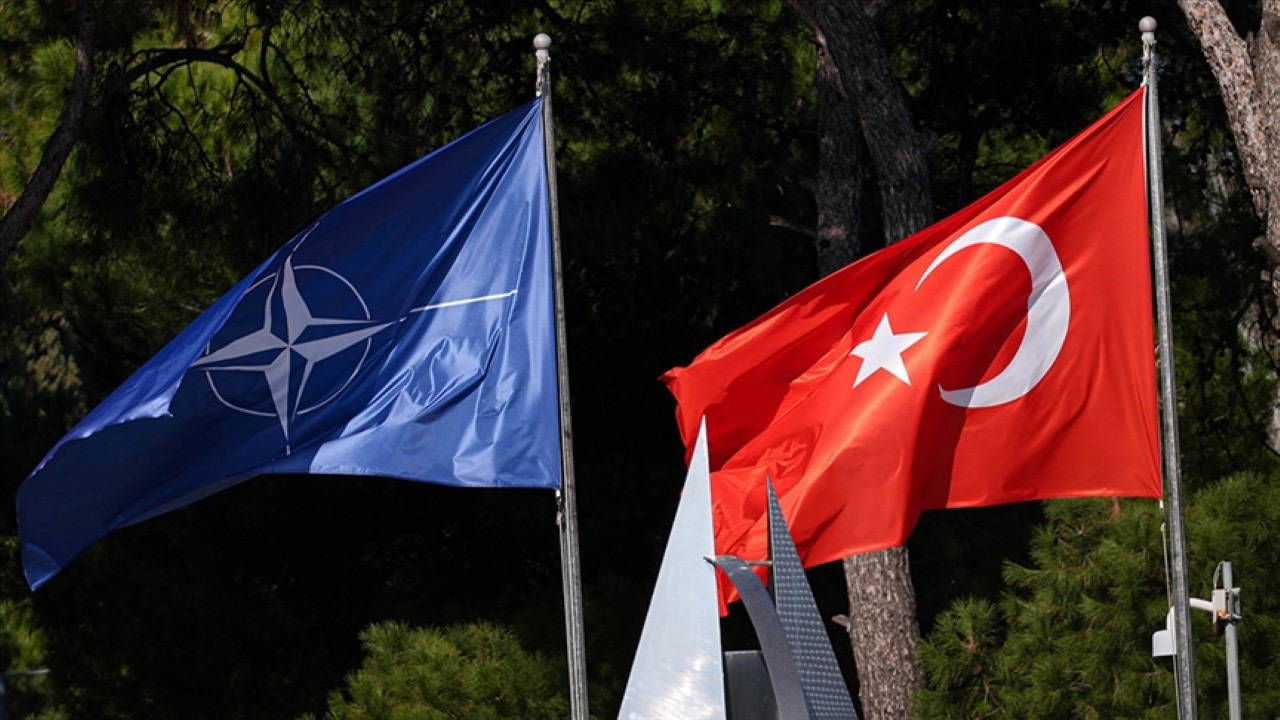
Dispute over NATO summit representation continues in Czech Republic
Translated from Turkish, summarized and contextualized by DistantNews.
TLDR
- Czech President Petr Pavel and Prime Minister Andrej Babis are in a dispute over who should represent the Czech Republic at the upcoming NATO summit in Ankara.
- Pavel insists on attending as the constitutional representative of the head of state, threatening legal action if blocked, while Babis advocates for a government delegation led by himself.
- The disagreement centers on the interpretation of constitutional authority for foreign representation, with Pavel asserting his right to participate in key summit segments.
A significant constitutional disagreement is brewing between Czech President Petr Pavel and Prime Minister Andrej Babis regarding the Czech Republic's representation at the upcoming NATO summit in Ankara. President Pavel has firmly stated his intention to attend the summit, asserting that representing the nation abroad falls under the President's constitutional authority. He has even indicated a willingness to take the matter to the Constitutional Court if his participation is obstructed.
The President plans to attend the summit, despite Babis's assertion that the President should not be part of the delegation going to Ankara.
Prime Minister Babis, however, holds a different view, advocating for a government-led delegation comprising himself, the defense minister, and the foreign minister. This stance suggests a desire to maintain governmental control over foreign policy representation, particularly at a high-profile international event like a NATO summit.
The crux of the dispute lies in the interpretation of constitutional powers. President Pavel emphasizes his role as the head of state, responsible for representing the nation on the international stage, particularly in matters of security and alliance. He is insistent on participating in the opening sessions, including informal dinners and discussions on global security.
Representing the Czech Republic abroad is the constitutional prerogative of the President.
This internal political friction, as reported by Cumhuriyet, is not just a matter of protocol but reflects underlying tensions in Czech foreign policy and governance. While Western media might focus on the implications for NATO cohesion, from a Czech perspective, this is a significant debate about the balance of power between the presidency and the government. The resolution of this dispute will not only determine who stands on the podium in Ankara but also set a precedent for presidential versus governmental authority in representing the nation abroad.
If my participation is prevented, I will consider, as a last resort, applying to the Constitutional Court.
DistantNews Editorial
Originally published by Cumhuriyet in Turkish. Translated, summarized, and contextualized by our editorial team with added local perspective. Read our editorial standards.
More Stories

From Our Blog

What Gets Lost (and Found) When News Is Translated

The Critical Role of Diaspora Media in Global News

What Travellers Should Know About Countries with Restricted Press

A Digital Nomad's Guide to Following Local News

How the Same Story Looks Different in Different Countries
