


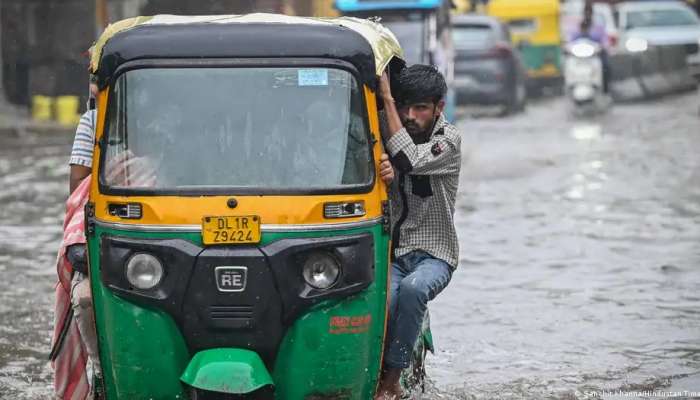
Disrupted monsoons force India to face climate threat
Summarized and contextualized by DistantNews.
At a glance
News
Sources not specified
Context piece
- India's monsoon patterns are becoming increasingly erratic, with longer dry spells followed by intense rainfall.
- This disruption has led to floods and landslides, causing over 100 deaths since late July, particularly in Assam.
- Scientists attribute these changes to climate change, noting a warmer atmosphere holds more moisture, intensifying rainfall events.
India's predictable monsoon season, crucial for its agriculture and water management, is undergoing a significant and concerning shift. The usual rhythm of rainfall, which farmers, cities, and businesses have long relied upon, is increasingly disrupted. This year, heavy monsoon rains have triggered widespread floods, landslides, and lightning strikes, resulting in over 100 fatalities since late July.
The northeastern state of Assam has been particularly hard-hit, with more than 120,000 people affected by severe flooding. Other regions, including Kerala, Jammu and Kashmir, Bihar, and Jharkhand, have also reported deaths and considerable disruption due to the extreme weather.
Active and break spells have always been part of the monsoon. What appears to be changing is their intensity.
The core issue is not necessarily a decrease in overall rainfall, but rather the manner in which it is arriving. Extended dry periods are now frequently followed by short, intense bursts of rain that overwhelm natural systems like rivers and hillsides, as well as urban drainage infrastructure. While El Nino has contributed to this year's variability, scientists emphasize that longer-term climate change is the primary driver.
The characteristics of the Indian monsoon have changed fundamentally. We are witnessing an increase in short-duration rainfall extremes, longer dry spells, and changes in the frequency, intensity and distribution of monsoon weather systems.
Experts caution against declaring a completely new monsoon regime, but acknowledge a significant change in intensity. A warmer atmosphere can hold more moisture, leading to more powerful "active spells" of rainfall. Climate scientist Madhavan Nair Rajeevan notes that while average seasonal rainfall hasn't shown a systematic long-term decline, the timing, intensity, and distribution of rain have fundamentally changed. He describes this as a "structural shift" in the monsoon system, characterized by an increase in short-duration rainfall extremes and longer dry spells.
These changes pose substantial risks to both agriculture and urban areas. Farmers face disrupted sowing cycles and crop damage from both drought and deluge. In cities, rapid construction exacerbates the problem, reducing natural water absorption. Furthermore, dry soil absorbs less water, increasing surface runoff when heavy rains do occur. India is increasingly challenged to adapt to these extreme weather hazards.
It represents a structural shift in the monsoon system.
DistantNews Editorial
Originally published by Times of Oman. Summarized and contextualized by our editorial team with added local perspective. Read our editorial standards.
More Stories



From Our Blog

What Gets Lost (and Found) When News Is Translated

The Critical Role of Diaspora Media in Global News

What Travellers Should Know About Countries with Restricted Press

A Digital Nomad's Guide to Following Local News

How the Same Story Looks Different in Different Countries
