

Dominican Republic minister rules out electricity tariff hike
Translated from Spanish, summarized and contextualized by DistantNews.
At a glance
News
Sources not specified
New plan
- The Dominican Republic's Minister of Energy and Mines, Joel Santos, stated the government is not planning to adjust electricity tariffs.
- This comes despite a national plan recommending tariff adjustments to address financial deficits in electricity distributors.
- The government's current focus is on improving infrastructure and operational efficiency, not tariff hikes.
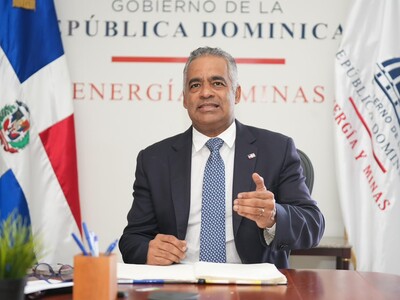
Dominican Republic's Minister of Energy and Mines, Joel Santos, has dismissed the possibility of an imminent electricity tariff adjustment. He clarified that while the National Pluriannual Public Sector Plan for 2025-2028 includes tariff revisions among its recommendations, the government is not currently working on implementing such a measure.
The plan, developed by the Ministry of Hacienda and Economy, suggests resuming tariff adjustments to tackle the financial deficits faced by state-owned distributors Edenorte, Edesur, and Edeeste. It also advocates for tariffs that reflect the true cost of service and facilitate the gradual phasing out of cross-subsidies.
Tariff adjustments were halted in 2022 due to inflationary pressures. Between 2014 and 2024, the Dominican state allocated over 505 billion pesos to cover the accumulated deficits of these three distribution companies.
Minister Santos emphasized that the government's immediate priorities lie in enhancing the electricity grid, strengthening metering systems, regularizing user accounts, integrating new power generation, and boosting operational efficiency. He also chairs the Unified Council of Electricity Distribution Companies (CUED) and believes the sector's sustainability requires a comprehensive approach, involving simultaneous progress in generation, transmission, distribution, efficiency, and management, rather than relying on a single variable like tariff adjustments.
DistantNews Editorial
Originally published by Diario Libre in Spanish. Translated, summarized, and contextualized by our editorial team with added local perspective. Read our editorial standards.
More Stories
From Our Blog

What Gets Lost (and Found) When News Is Translated

The Critical Role of Diaspora Media in Global News

What Travellers Should Know About Countries with Restricted Press

A Digital Nomad's Guide to Following Local News

How the Same Story Looks Different in Different Countries
