


Dominican Republic’s Electricity Capacity Surpasses 7,600 MW in 2026
Translated from Spanish and summarized by DistantNews. Read the original for the full story.
At a glance
News
Named sources
New plan
- Energy Minister Joel Santos said the Dominican Republic’s installed electricity capacity exceeded 7,600 megawatts in 2026, up from about 4,921 MW in 2020.
- Peak demand exceeded 4,300 MW in July 2026, while Santos said renewable growth requires firm generation, storage and transmission infrastructure.
- He said cooperation with the United States does not approve or commit the country to building a nuclear plant, but supports technical knowledge and institutional capacity.
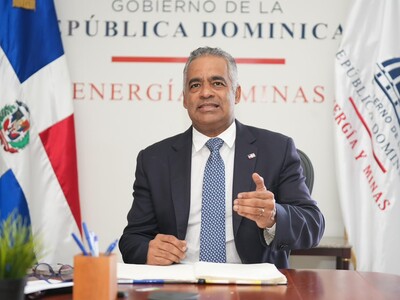
The Dominican Republic’s installed electricity capacity has grown by more than half since 2020, according to Energy and Mines Minister Joel Santos. He told the American Chamber of Commerce that capacity rose from about 4,921 megawatts to more than 7,600 MW in 2026.
Maximum demand exceeded 4,300 MW in July 2026. Santos said the expansion of solar and wind generation creates an opportunity for the country, but also brings new demands for operating the power system.
“The incorporation of solar and wind generation must be complemented by firm generation, storage, transmission infrastructure and technologies capable of responding continuously to demand, with the goal of building a more reliable, diversified, resilient and efficient system,” he said.
Santos described cooperation between the Dominican Republic and the United States as a way to support knowledge transfer, technical assistance, training and stronger institutions. He also highlighted nuclear technology beyond electricity generation, including possible uses in medicine, agriculture, water-resource management, environmental monitoring, scientific research and industry.
The minister said small modular reactors are expanding international discussion because of their smaller scale, flexibility and ability to generate continuously alongside renewables. For the Dominican Republic, however, he said the technology requires long-term study and evaluation, not an implementation decision. The bilateral agreement does not mean the country has chosen to build a nuclear plant, approved a project, selected a technology or committed investment.
The incorporation of solar and wind generation must be complemented by firm generation, storage, transmission infrastructure and technologies capable of responding continuously to demand, with the goal of building a more reliable, diversified, resilient and efficient system.
About this summary
Originally published by Diario Libre in Spanish. Translated, summarized, and contextualized automatically by DistantNews, with a note on how the source frames the story. Not individually reviewed before publishing. How this works.
More Stories
From Our Blog

What Gets Lost (and Found) When News Is Translated

The Critical Role of Diaspora Media in Global News

What Travellers Should Know About Countries with Restricted Press

A Digital Nomad's Guide to Following Local News

How the Same Story Looks Different in Different Countries
