


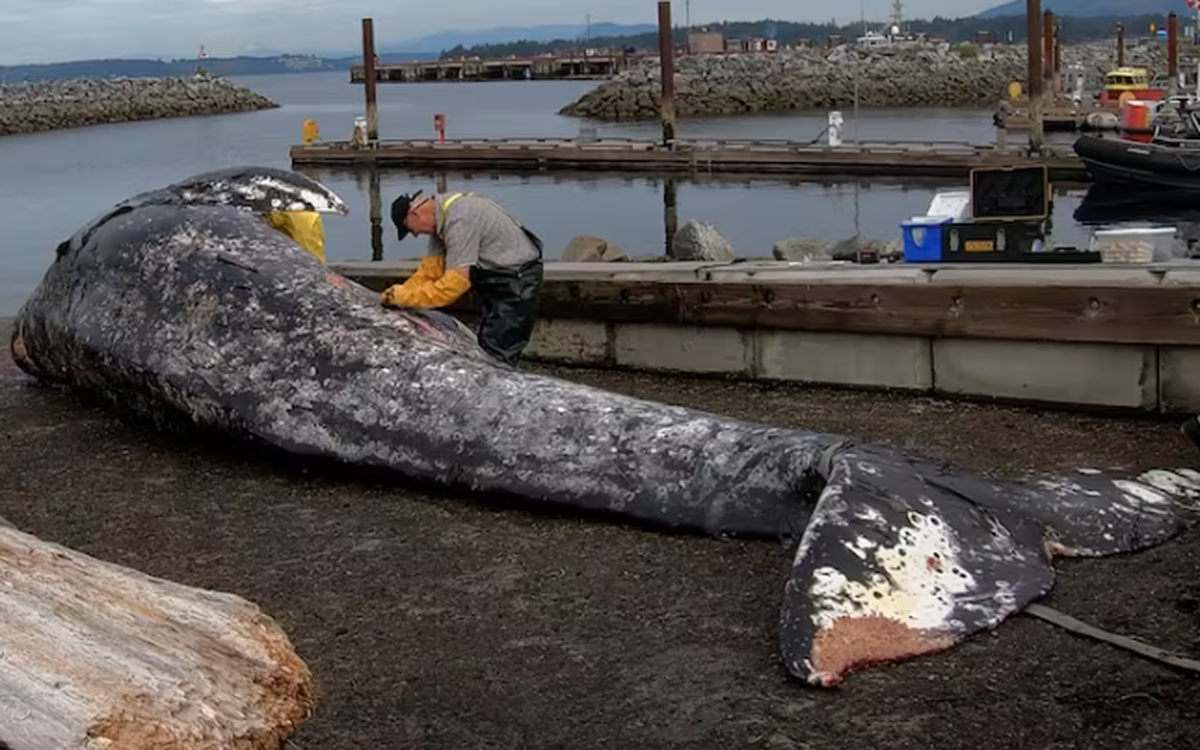
Dozens of Whales Die Off Canada Coast, Suspected Starvation Linked to Food Scarcity
Translated from Vietnamese, summarized and contextualized by DistantNews.
TLDR
- A concerning increase in gray whale deaths has been observed off the coast of British Columbia, Canada.
- Experts suspect starvation due to declining food sources in Arctic and sub-Arctic feeding grounds is the primary cause.
- This phenomenon is also being reported along the U.S. West Coast, with scientists studying the impact of environmental changes on whale populations.
British Columbia is witnessing a troubling surge in gray whale mortality, with experts pointing towards starvation as the likely culprit. The escalating number of deaths, particularly along the coast of Vancouver Island, has raised alarms among marine biologists and conservationists. The primary hypothesis centers on a significant decline in the whales' food sources in their traditional feeding grounds in the Arctic and sub-Arctic regions. This environmental stress is forcing these majestic creatures to undertake their arduous migration with depleted energy reserves, leading to widespread emaciation and, tragically, death.
Data indicates that the number of gray whale deaths recorded this year is rapidly approaching the record set in 2019. Marine mammal specialists have observed that many of the deceased whales are severely underweight, described as "skin and bones." While necropsies are underway to confirm the exact causes, the consistent finding of poor body condition strongly suggests malnutrition. The whales' feeding season last year was reportedly poor, hindering their ability to accumulate the necessary blubber and nutrients for their long migration south to breeding grounds in Mexico, during which they typically do not feed.
many whales are in severe condition and 'skin and bones'.
Compounding the issue, rising sea temperatures are impacting the availability and quality of the small crustaceans and other prey that form the staple of the gray whale diet. Earlier-than-usual ice melt in the Arctic further exacerbates the problem by affecting the marine ecosystem. This nutritional deficit not only increases mortality rates but also severely impacts reproductive success, as evidenced by a record low number of calves observed during the most recent breeding season. Similar trends are being noted along the U.S. West Coast, highlighting a widespread ecological challenge affecting this species. Scientists are intensifying their research into the feeding grounds, both in the Arctic and closer to British Columbia, to fully grasp the implications of environmental change on the Pacific coastal population of gray whales.
The general signs are poor body condition due to lack of nutrition.
DistantNews Editorial
Originally published by Tuổi Trẻ in Vietnamese. Translated, summarized, and contextualized by our editorial team with added local perspective. Read our editorial standards.
More Stories



From Our Blog

What Gets Lost (and Found) When News Is Translated

The Critical Role of Diaspora Media in Global News

What Travellers Should Know About Countries with Restricted Press

A Digital Nomad's Guide to Following Local News

How the Same Story Looks Different in Different Countries
