


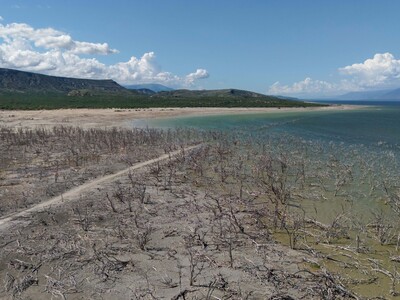
Drought concerns rise in Dominican Republic as rivers dwindle despite full reservoirs
Translated from Spanish, summarized and contextualized by DistantNews.
At a glance
News
Official statement
Ongoing story
- The Dominican Republic faces potential water shortages despite full reservoirs, as river levels decline due to a lack of rain.
- Authorities have implemented special water supply plans, including using water trucks, in affected areas like Santo Domingo.
- Projections indicate a higher risk of meteorological drought in the second half of 2026, potentially linked to El Niño, prompting contingency planning in the agricultural sector.
Despite having national reservoirs at 88.15% capacity following April rains, the Dominican Republic is signaling potential water scarcity issues. The contrast is stark: while reservoirs held 1,779.41 million cubic meters of water by May 1, the availability of water for consumption, irrigation, and electricity generation is threatened by declining river flows.
This situation is particularly acute in the capital region. On July 22, the Santo Domingo Water and Sewerage Corporation (CAASD) activated a special supply plan. This was a direct response to the prolonged absence of rain in the basins of the Duey and Isa-Mana rivers, which has caused significant reductions in their water levels. Consequently, areas like Los Alcarrizos, Pedro Brand, Pantoja, and Los Girasoles have experienced low water pressure and temporary service interruptions.
From CAASD we are giving permanent follow-up to this situation and executing the necessary measures to guarantee the supply of drinking water to the population while these climatic conditions persist.
Felipe Suberví, CAASD's director, stated that the institution is continuously monitoring the situation and implementing necessary measures to ensure potable water supply. "Our priority is to assist the communities facing the greatest difficulties in receiving the service," he assured.
Our priority is to assist the communities that present the greatest difficulties to receive the service.
The warning signs were present earlier. In late May, the Dominican Institute of Meteorology (Indomet) projected a gradual decrease in rainfall and an increased risk of meteorological drought for the latter half of 2026. This forecast is associated with the potential development of El Niño, a climate pattern known to affect precipitation levels.
In response, the agricultural sector is also preparing for potential impacts. The Ministry of Agriculture has included drought and El Niño in its 2026 Agricultural Contingency Plan, aiming to minimize production losses and safeguard food security. Meanwhile, neighboring Puerto Rico is already implementing water rationing due to extreme drought conditions, highlighting the regional climate challenges.
the projections pointed towards a gradual decrease in precipitation and a greater risk of meteorological drought during the second half of 2026, associated with the possible development of El Niño.
DistantNews Editorial
Originally published by Diario Libre in Spanish. Translated, summarized, and contextualized by our editorial team with added local perspective. Read our editorial standards.
More Stories
From Our Blog

What Gets Lost (and Found) When News Is Translated

The Critical Role of Diaspora Media in Global News

What Travellers Should Know About Countries with Restricted Press

A Digital Nomad's Guide to Following Local News

How the Same Story Looks Different in Different Countries
