

Drought's Invisible Threat: University of Warsaw Scientists Detail Most Dangerous Forms
Translated from Polish, summarized and contextualized by DistantNews.
TLDR
- Scientists from the University of Warsaw have published a monograph on drought, highlighting its multifaceted nature beyond meteorology.
- The research emphasizes hydrological drought as the most dangerous form, impacting drinking water security and long-term resources.
- Long-term studies in Kampinos National Park, using precise measurements from over 50 piezometers, contribute to a reliable database on groundwater changes.
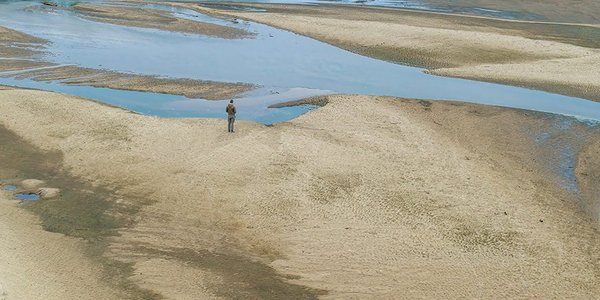
The University of Warsaw's comprehensive monograph, "Drought – Phenomenon, Contexts, Legal Frameworks," offers a crucial, interdisciplinary look at a growing crisis. While international coverage often focuses on immediate weather events, Polish scientists are delving into the less visible, yet more insidious, forms of drought. Hydrological drought, as highlighted by Professor Ewa Krogulec, poses the most significant threat because its effects are slow to manifest but can be devastating and long-lasting.
Our research, particularly the decades-long monitoring in Kampinos National Park, exemplifies the meticulous, ground-level work necessary to understand these slow-burn crises. The deployment and manual upkeep of over 50 piezometers, despite the advent of automated systems, underscore a commitment to data integrity. This dedication, often overlooked in broader scientific discourse, provides a uniquely reliable dataset for tracking groundwater level changes over time.
This is the most dangerous type of drought – one that is not visible at first glance, but whose consequences can be the most severe for us.
This work is vital for Poland, a nation heavily reliant on groundwater for drinking water. Unlike surface water, which industrial and agricultural sectors often utilize, groundwater depletion directly threatens our most essential resource. The monograph's approach, integrating natural sciences, social sciences, and law, is essential for developing effective policy responses. It moves beyond simply reporting on dry riverbeds to understanding the complex human and natural interactions that exacerbate drought conditions and impact everything from food prices to social stability.
I will start by saying that these are not solely my studies, but the result of teamwork. I am particularly keen to acknowledge the contribution of my colleagues from the Department of Hydrogeology.
DistantNews Editorial
Originally published by Rzeczpospolita in Polish. Translated, summarized, and contextualized by our editorial team with added local perspective. Read our editorial standards.
More Stories


From Our Blog

What Gets Lost (and Found) When News Is Translated

The Critical Role of Diaspora Media in Global News

What Travellers Should Know About Countries with Restricted Press

A Digital Nomad's Guide to Following Local News

How the Same Story Looks Different in Different Countries
