


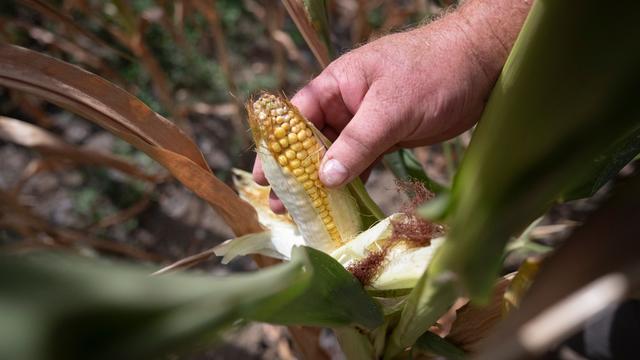
Drought Threatens Farms in Baden-Württemberg, Farmers' Association Warns
Translated from German, summarized and contextualized by DistantNews.
At a glance
News
Named sources
Context piece
- Farmers in Baden-Württemberg face existential threats due to prolonged drought and heat, impacting crop yields.
- Water scarcity has led to a significant shortage of animal feed, forcing some farmers to send livestock for early slaughter.
- The Farmers' Association is calling for immediate government aid, including financial support and reduced diesel taxes, to alleviate the crisis.
Farmers in Baden-Württemberg are facing an existential crisis as weeks of drought and heat decimate crops and deplete vital water resources, according to the State Farmers' Association. President Joachim Rukwied described the situation as dire, with many farms lacking water for months. Recent rainfall has offered little relief, failing to penetrate the parched soil.
The drought is hitting our agriculture with full force. Many farms have been without water for months.
Crop yields for wheat, rapeseed, and spring barley have fallen significantly below average. Corn and sugar beet crops have also suffered from the prolonged lack of water. The association anticipates a total grain harvest of 2.57 million tons, with winter wheat yields around 8% lower than the six-year average.
Ten centimeters of precipitation, and it's still bone dry further down in the soil.
The situation is particularly challenging for livestock farmers. With little regrowth on pastures after the second cut, feed supplies are critically low across the state, with some regions experiencing a 50% deficit. Many farms are already using winter reserves, and some are sending animals to slaughter prematurely. Hay and straw are scarce and have increased in price by approximately 50% compared to last year.
On meadows and pastures, hardly any feed is growing back after the second cut.
While the association welcomes planned state aid, it urges the federal government to implement an immediate support program. This includes increased fertilizer subsidies, earlier direct payments, and a reduction in diesel taxes. Long-term, the association advocates for better protection against extreme weather events.
Hay, Öhmd, and straw are scarce and in some cases around 50 percent more expensive than last year.
DistantNews Editorial
Originally published by Die Zeit in German. Translated, summarized, and contextualized by our editorial team with added local perspective. Read our editorial standards.
More Stories

From Our Blog

What Gets Lost (and Found) When News Is Translated

How the Same Story Looks Different in Different Countries

The Critical Role of Diaspora Media in Global News

What Travellers Should Know About Countries with Restricted Press

A Digital Nomad's Guide to Following Local News
