

Dry Kakhovka Reservoir becomes new battlefield as Russians use dense vegetation for cover
Translated from Polish and summarized by DistantNews. Read the original for the full story.
At a glance
News
Named sources
Context piece
- Russian troops are using the overgrown dry bed of the Kakhovka Reservoir as a new battlefield, attempting to advance toward Zaporizhzhia.
- The dense vegetation limits the use of drones, forcing close-quarters combat on this nearly 100 km long stretch of land.
- Ukrainian soldiers report an increase in Russian surrenders due to fear and the disorienting nature of the terrain.
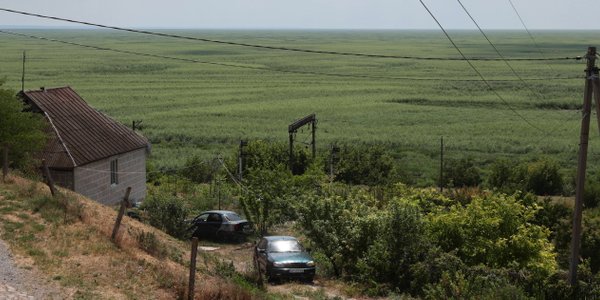
Russian forces are leveraging the dense, overgrown terrain at the bottom of the now-dry Kakhovka Reservoir to advance towards Zaporizhzhia in southeastern Ukraine. The New York Times reported that this unique landscape, which emerged after the Kakhovka Dam was destroyed in 2023, has become a new front line characterized by close-quarters combat.
It's opaque, difficult, disorienting, and very dangerous terrain.
The nearly 100-kilometer-long area, now covered in trees and reeds, severely restricts the use of reconnaissance drones, a tactic previously crucial for both sides. "It's opaque, difficult, disorienting, and very dangerous terrain," an officer from the Ukrainian "Bratstvo" (Brotherhood) battalion, identified by the call sign "Diviziya," told the NYT.
We are looking for them, and they are looking for us.
Hundreds of Russian soldiers have been deployed to this area, establishing observation posts and troop concentration zones. "We are looking for them, and they are looking for us," said Oleksiy Serediuk, commander of the "Bratstvo" battalion. "Diviziya" likened the Russian supply routes through the reeds to the Ho Chi Minh Trail during the Vietnam War.
Many of them surrender out of fear of being hunted in the reeds, seeing their comrades disappear without a trace.
This challenging environment has led to a decrease in Russian surrenders. Ukrainian officers report that many Russian soldiers are surrendering out of fear, especially after witnessing comrades disappear without a trace in the dense vegetation. "Many of them surrender out of fear of being hunted in the reeds, seeing their comrades disappear without a trace," a Ukrainian officer stated. Serediuk added that his unit treats prisoners with respect and tries to impress upon them the futility of the war, questioning the high cost in lives for unclear objectives.
So many people they send to fight, and they die, die, and die. My question is: why?
About this summary
Originally published by Rzeczpospolita in Polish. Translated, summarized, and contextualized automatically by DistantNews, with a note on how the source frames the story. Not individually reviewed before publishing. How this works.
More Stories

From Our Blog

What Gets Lost (and Found) When News Is Translated

The Critical Role of Diaspora Media in Global News

What Travellers Should Know About Countries with Restricted Press

A Digital Nomad's Guide to Following Local News

How the Same Story Looks Different in Different Countries
