


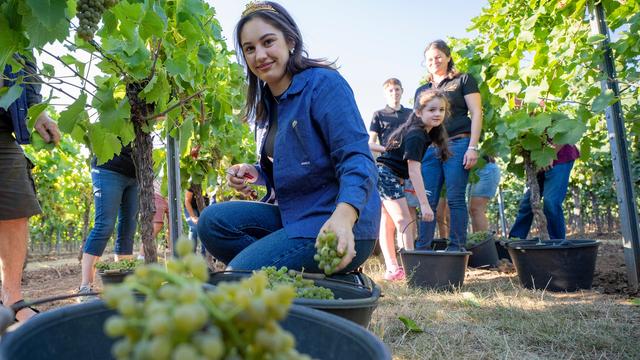
Early harvest begins for 2026 vintage, Federweißer season starts soonest
Translated from German, summarized and contextualized by DistantNews.
At a glance
News
From a news agency
New plan
- Wine harvest for Federweißer has begun in the Pfalz and Baden regions of Germany, starting earlier than usual due to exceptionally sweet grapes.
- The early harvest, initiated with the early-ripening Solaris variety, is expected to transition seamlessly into harvesting other early-ripening grape varieties for winemaking.
- Federweißer, a partially fermented grape must, is a seasonal, regional product known for its fresh, sparkling, and sweet taste, often consumed with onion or tarte flambée.
The German wine harvest for Federweißer has kicked off in the Pfalz and Baden regions, marking an earlier start than typical. This early beginning is attributed to grapes showing exceptional sweetness, according to Ernst Büscher, spokesperson for the German Wine Institute (DWI).
The first grapes were already exceptionally sweet.
The initial harvest focused on the early-ripening Solaris variety. Büscher announced that the harvest for sparkling wine base wines will commence in the coming days, directly leading into the collection of early-ripening grapes for general winemaking. He noted that the anticipated cooler temperatures and moderate rainfall in the upcoming week would be ideal for the grapes, provided there isn't excessive rain and the harvest conditions remain dry.
The harvest for sparkling wine base wines will also begin in the next few days and will seamlessly transition into the harvest of early-ripening grape varieties for winemaking.
This year's grapes are characterized not only by their high sugar content but also by their relatively small size. The Federweißer harvest began in the second week of August, approximately one week earlier than the average of the past five years, though slightly later than the exceptionally early harvests of 2018 and 2020.
It must not rain too much.
Federweißer, described as "drunk on the way from must to wine," typically has an alcohol content of around five percent. It ferments in the bottle, necessitating storage upright and sale in loosely sealed containers to allow carbon dioxide to escape. This "partially fermented grape must" is a seasonal and regional product, also known by names like "Neuer Wein," "Rauscher," or "Süßer." It is rarely made from red grape varieties. The drink is prized for its fresh, sparkling, and sweet profile, commonly paired with onion cake or tarte flambée, with an estimated five to six million liters sold annually across Germany.
The harvest should be dry.
DistantNews Editorial
Originally published by Die Zeit in German. Translated, summarized, and contextualized by our editorial team with added local perspective. Read our editorial standards.
More Stories



From Our Blog

What Gets Lost (and Found) When News Is Translated

How the Same Story Looks Different in Different Countries

The Critical Role of Diaspora Media in Global News

What Travellers Should Know About Countries with Restricted Press

A Digital Nomad's Guide to Following Local News
