


East Sea’s First Marine Science Hub Begins Full Operations to Monitor Climate Change in Real Time
Translated from Korean and summarized by DistantNews. Read the original for the full story.
At a glance
News
Named sources
New plan
- South Korea’s Wangdolcho Marine Science Base, the first such facility in the East Sea, has begun full operations off Uljin, North Gyeongsang Province.
- Built with a 24.3 billion won budget, the base will monitor sea levels, temperatures, ocean acidification, ecosystems and atmospheric pollution in real time.
- The facility will also support biodiversity research through autonomous monitoring structures and cooperation with international experts.
South Korea’s first advanced marine science base in the East Sea has entered full operation, giving researchers a permanent platform to watch a rapidly changing marine environment.
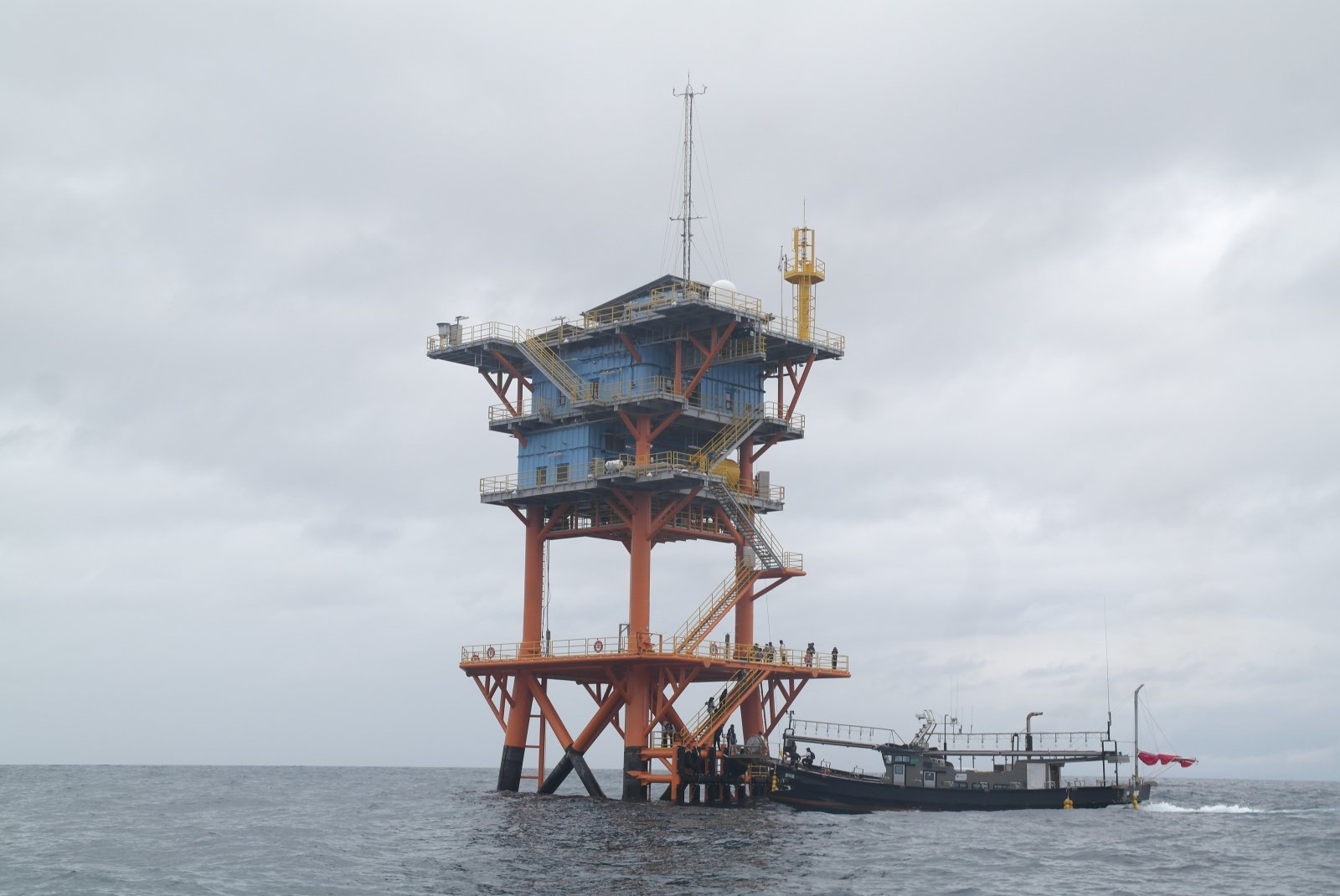
The Wangdolcho base sits about 25 kilometers east of Hupo Port in Uljin County, North Gyeongsang Province. Construction ran from 2021 through this year and cost 24.3 billion won. It is the fourth marine science base in South Korean waters, following facilities at Ieodo, Gageocho and Sochengcho, but the first in the East Sea.
The structure stands in 23 meters of water and rises 53 meters in total, with 30 meters above sea level and 23 meters below it. Its four-leg jacket steel frame covers 570 square meters and weighs 928 tons. Engineers designed it for a 50-year service life and protection against waves reaching 19.24 meters, winds of 60 meters per second and magnitude 6.5 earthquakes.
The Wangdolcho area is a treasure trove of an ecosystem where the East Korea Warm Current moves northward and warm and cold currents intersect.
The base houses 80 pieces of equipment across 34 types, along with an intelligent operating system, communications facilities, solar and diesel power, desalination equipment and accommodation for four researchers for up to seven days. It will join the national marine observation network and track long-term changes in sea level, temperature, acidification and marine ecosystems. Research vessels, unmanned surface vessels, underwater gliders and autonomous underwater vehicles will expand the monitoring system, while instruments will track pollution moving toward the Korean Peninsula and study background air conditions over the East Sea.
International work has already begun. A workshop involving experts from the Smithsonian Institution and the European Marine Biological Resource Centre examined images from autonomous reef monitoring structures installed at depths of 5 to 20 meters. Wangdolcho lies along the northward path of the East Korea Warm Current, where warm and cold currents meet, and supports more than 120 marine species.
Through the full operation of the Wangdolcho base, where advanced observation equipment is integrated with unmanned systems, we expect to capture changes in the East Sea’s marine environment more accurately and quickly.
About this summary
Originally published by Dong-A Ilbo in Korean. Translated, summarized, and contextualized automatically by DistantNews, with a note on how the source frames the story. Not individually reviewed before publishing. How this works.
More Stories


From Our Blog

What Gets Lost (and Found) When News Is Translated

The Critical Role of Diaspora Media in Global News

What Travellers Should Know About Countries with Restricted Press

A Digital Nomad's Guide to Following Local News

How the Same Story Looks Different in Different Countries
