


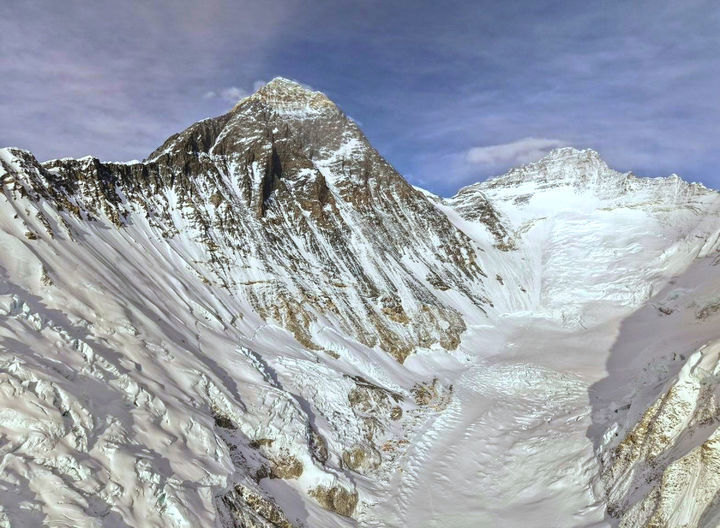
Human Activity at Everest Base Camp May Melt Thousands of Tons of Glacier Ice Each Year
Translated from Korean and summarized by DistantNews. Read the original for the full story.
At a glance
News
Named sources
Context piece
- Researchers estimate that fuel use and human waste at Everest base camp can generate enough heat to melt about 2,500 tons of glacier ice and snow during the spring climbing season.
- The study estimates that urine from climbers contributes enough heat to melt about 154 tons of ice, with more than 6,000 liters discharged each day.
- The researchers propose moving the base camp from the glacier to more stable ground to reduce melting and improve logistics.
At Everest base camp, the heat generated by climbers’ daily activities may melt thousands of tons of glacier ice and snow each year.
Researchers focused on the spring climbing season, when human activity is concentrated at the camp. Fuel used for heating and cooking, along with heat from facilities such as espresso bars and hot showers, was estimated to be capable of melting about 2,500 tons of glacier ice and snow. That amount of water could fill an Olympic-sized swimming pool.
The study examined activity at a camp with 1,600 tents during about 50 days in spring 2023. Researchers recorded the use of 824 LPG cylinders, 18,935 liters of kerosene and 5,130 liters of gasoline. They also estimated that the heat carried in climbers’ urine could melt about 154 tons of ice in the Khumbu Glacier. More than 6,000 liters of urine are discharged each day, according to the study.
Climbers need to drink a lot of water to prevent dehydration at high altitude. The more water they drink, the more they have to excrete.
Kim Lal Gautam, Nepal’s chief survey officer and the study’s lead researcher, said climbers need to drink heavily to avoid dehydration at high altitude, which increases the amount of urine produced. Virginia Burkett, an emeritus scientist with the U.S. Geological Survey who took part in the research, said relocating the base camp could help logistical operations and slow glacier melting.
The researchers proposed moving the camp from the glacier onto stable ground. Their findings place the everyday energy and waste generated by one of the world’s busiest high-altitude camps within the wider question of how human activity is affecting the Khumbu Glacier.
Moving the base camp would also help logistical operations and could slow the rate of glacier melting.
About this summary
Originally published by Dong-A Ilbo in Korean. Translated, summarized, and contextualized automatically by DistantNews, with a note on how the source frames the story. Not individually reviewed before publishing. How this works.
More Stories
From Our Blog

What Gets Lost (and Found) When News Is Translated

The Critical Role of Diaspora Media in Global News

What Travellers Should Know About Countries with Restricted Press

A Digital Nomad's Guide to Following Local News

How the Same Story Looks Different in Different Countries
