


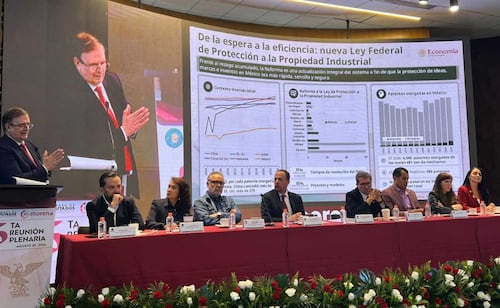
 Image: Antonio López/ EL UNIVERSAL
Ebrard touts Mexico’s advantage in USMCA review: “We export the most and pay the least”
Translated from Spanish and summarized by DistantNews. Read the original for the full story.
At a glance
News
Named sources
Ongoing story
- Economy Secretary Marcelo Ebrard said Mexico faces one of its most difficult trade negotiations of the century as it reviews the USMCA with the United States.
- He said Mexico avoided an initially proposed 25% blanket tariff on Mexican goods and now has an average effective tariff of 3.4%, compared with 6.7% for the rest of the world.
- Ebrard said Mexico’s priority is to preserve its advantage in the next stages of the negotiations.
Mexico has entered the review of its trade agreement with the United States in a stronger position than expected, Economy Secretary Marcelo Ebrard told Morena senators.
This is the most difficult negotiation there is going to be.
Ebrard said the negotiation represented one of the most difficult processes Mexico has faced this century. He recalled that US President Donald Trump initially threatened to impose a 25% tariff on all Mexican goods, a move that could have put the existing trade framework at risk.
Instead, Ebrard argued, President Claudia Sheinbaum’s negotiating strategy helped contain pressure from Washington. He presented senators with figures on the effective tariff, which measures what countries actually pay on goods exported to the United States, including products that face different rates or enter duty-free.
I am going to impose a 25 percent tariff on all the products Mexico sends.
Mexico’s current average effective tariff stands at 3.4%, according to the figures Ebrard cited. The average for the rest of the world is 6.7%, while Vietnam, described as one of Mexico’s main competitors for the position of leading supplier to the US market, faces an effective tariff of about 6.4%.
We export the most and pay the least.
“We export the most and pay the least,” Ebrard said. He added that the advantage reflected the strategy followed by Sheinbaum and implemented by his ministry. The next priority, he said, is to maintain that position as the commercial negotiations continue, particularly given the scale of Mexico’s trade with the United States and competition among economies seeking to protect or expand their share of the market.
This is the result of the strategy followed by President Sheinbaum, which we have been responsible for implementing in the trade negotiation.
About this summary
Originally published by El Universal in Spanish. Translated, summarized, and contextualized automatically by DistantNews, with a note on how the source frames the story. Not individually reviewed before publishing. How this works.
More Stories


From Our Blog

What Press Freedom Means for the News You Read

What Gets Lost (and Found) When News Is Translated

The Critical Role of Diaspora Media in Global News

What Travellers Should Know About Countries with Restricted Press

A Digital Nomad's Guide to Following Local News
