


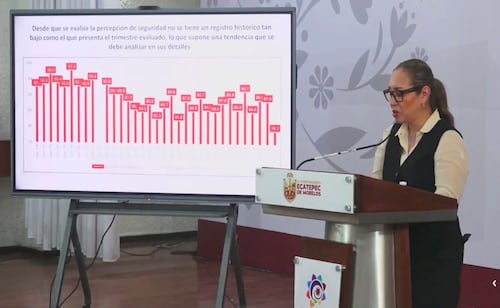
Ecatepec Sees Historic Drop in Insecurity Perception
Translated from Spanish, summarized and contextualized by DistantNews.
At a glance
News
Official statement
Outcome reported
- Ecatepec, Mexico, recorded its lowest-ever citizen perception of insecurity in the second quarter of 2026, falling to 78.7%.
- This marks the first time the municipality has dropped below 80% and exited the top 10 cities with the highest insecurity perception.
- Mayor Azucena Cisneros highlighted that Ecatepec's reduction in insecurity perception was five times greater than the national average.
Ecatepec, Mexico, has achieved a historic low in citizen perception of insecurity, registering 78.7% in the second quarter of 2026. This figure, based on the National Urban Security Public Survey (ENSU), represents the lowest point since measurements began in March 2018 and is the first time the municipality has fallen below the 80% threshold.
Mayor Azucena Cisneros announced the significant improvement, noting a sustained downward trend from the over 90% rates recorded between 2018 and 2020. Between March and June 2026 alone, the perception of insecurity in Ecatepec dropped by 8.9 percentage points. Cisneros emphasized that Ecatepec's reduction was nearly five times greater than the national decrease of 1.7 percentage points during the same period.
Within the State of Mexico, all eight municipalities surveyed showed decreases in insecurity perception, with the state average dropping from 74.2% to 67%. Ecatepec's improvement surpassed this state average by 1.7 points. Cisneros stated that such a significant reduction in a municipality of Ecatepec's size impacts hundreds of thousands of people and positively influences both state and national trends.
The mayor reflected on Ecatepec's past reputation, often cited as an example of problems in the State of Mexico, including neglect, insecurity, and corruption. She noted that the stigma affected the entire state but that the situation is now reversing. Confidence in authorities remains high, with over 92% trust in the Navy. Municipal police, historically poorly rated, now see 47.6% confidence and 42.2% effectiveness, a marked improvement from a previous low of 13% confidence.
DistantNews Editorial
Originally published by El Universal in Spanish. Translated, summarized, and contextualized by our editorial team with added local perspective. Read our editorial standards.
More Stories


From Our Blog

What Press Freedom Means for the News You Read

What Gets Lost (and Found) When News Is Translated

The Critical Role of Diaspora Media in Global News

What Travellers Should Know About Countries with Restricted Press

A Digital Nomad's Guide to Following Local News
