

Eclipse Calculation vs. Biodiversity Crisis: We Understand Space Better Than Earth's Life Support
Translated from Polish, summarized and contextualized by DistantNews.
At a glance
Analysis
Sources not specified
Context piece
- Humans are better at calculating celestial events like eclipses than understanding the value of biodiversity on Earth.
- Economic models often fail to account for the loss of natural capital, which has declined significantly while human-made capital has increased.
- Unlike CO2 emissions, there is no single unit to measure biodiversity loss, making it difficult to integrate into economic calculations.
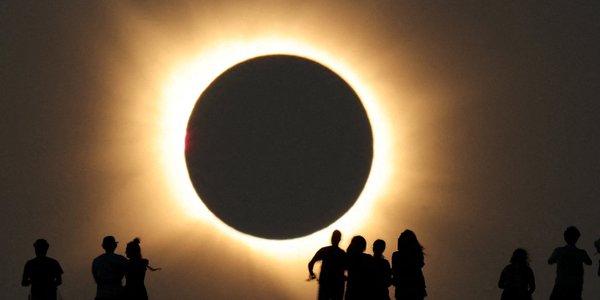
While humanity can precisely calculate the trajectory of a solar eclipse's shadow and predict visibility, we struggle to grasp the value of what lies beneath our feet: life itself. Forests, soils, wetlands, insects, birds, and microorganisms form a complex system essential for human survival and the economy, yet biodiversity remains largely absent from our economic calculations.
We are much worse at dealing with something that is under our feet. Life.
Unlike climate change, where we have a common language of CO2 equivalents, carbon budgets, and emission prices, there is no "ton of biodiversity." The loss of wetlands in Poland, pollinators in France, Amazonian forests, and Australian coral reefs cannot be aggregated into a single metric. While various methods exist to measure biodiversity, no single unit has emerged to serve as a common economic accounting tool.
There is no single moment when nature goes dark. There are fewer insects and birds, a wetland disappears, the soil degrades. Each change seems small. Only after years do we notice the change in the entire system.
Professor Partha Dasgupta's 2021 report, "The Economics of Biodiversity," highlighted this issue, stating that economies are not separate from nature but embedded within it. Between 1992 and 2014, while human-made and human capital increased, the estimated value of natural capital per person decreased by nearly 40%. This indicates a pattern of economic growth fueled by consuming our natural assets. By 2020, the mass of human-made objects equaled the mass of all living things on Earth, a stark illustration of this imbalance.
There is no ton of biodiversity.
The challenge is not a lack of data on species decline. The IUCN has classified around 47,000 species as threatened, while IPBES estimates that about a million species could be threatened. However, aggregating these diverse losses into a single economic figure remains elusive, hindering our ability to fully account for the cost of nature's degradation.
The economy is not next to nature. It is immersed in it.
DistantNews Editorial
Originally published by Rzeczpospolita in Polish. Translated, summarized, and contextualized by our editorial team with added local perspective. Read our editorial standards.
More Stories

From Our Blog

What Gets Lost (and Found) When News Is Translated

The Critical Role of Diaspora Media in Global News

What Travellers Should Know About Countries with Restricted Press

A Digital Nomad's Guide to Following Local News

How the Same Story Looks Different in Different Countries
