


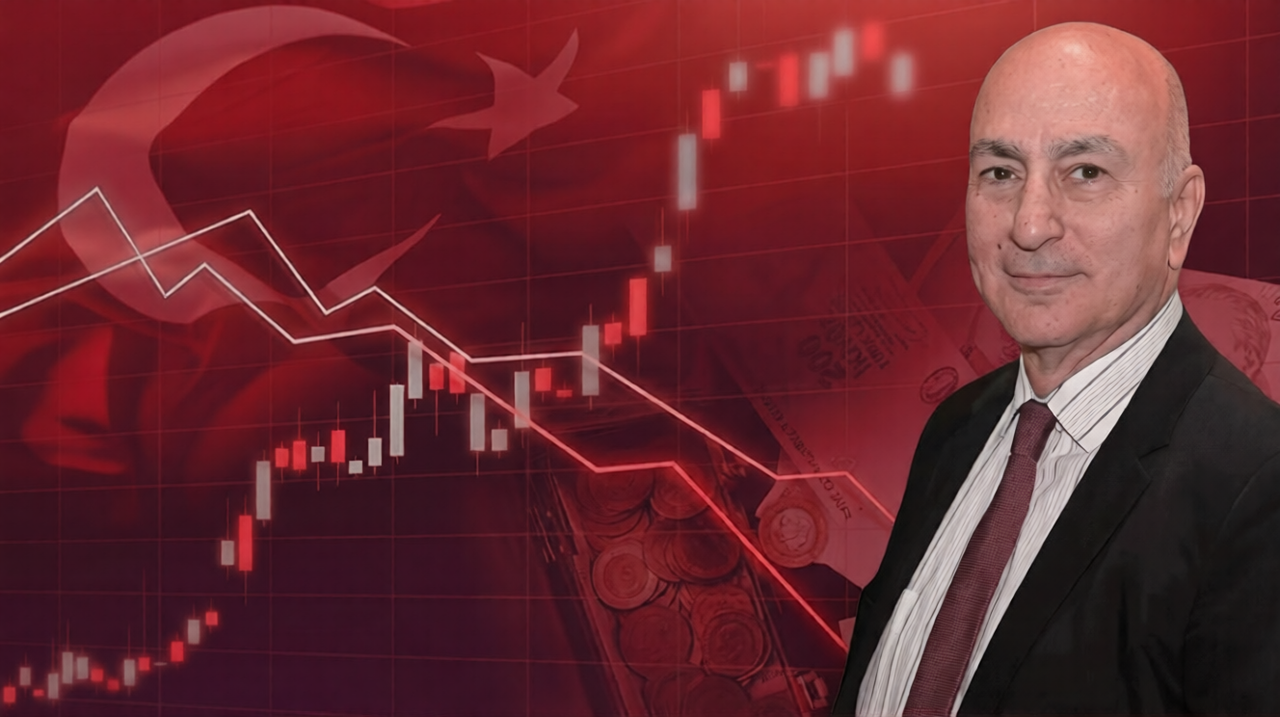
Economist Mahfi Eğilmez Lists Errors Fueling Inflation: 'We Lowered Interest Rates While Inflation Was Rising, and It Exploded'
Translated from Turkish, summarized and contextualized by DistantNews.
TLDR
- Economist Mahfi Eğilmez criticized Turkey's current economic policies, particularly regarding monetary policy and taxation.
- Eğilmez argued that incorrect monetary policies, such as lowering interest rates while inflation rises, have exacerbated inflation.
- He also pointed to unmanaged expectations and inconsistent fiscal policies as contributing factors to the country's economic woes.
Economist Mahfi Eğilmez has sharply criticized Turkey's prevailing economic policies, identifying several key errors that he believes are fueling the nation's persistent inflation. Speaking on a live broadcast, Eğilmez focused on what he described as a "wrong monetary policy" as a primary driver of rising prices. He explained that in situations of demand-driven inflation, increasing the money supply is counterproductive, leading to further price hikes. Furthermore, he stressed the importance of correctly setting interest rates, noting that negative real interest rates stimulate demand and consequently inflation.
Errors that increase inflation. First, the implementation of wrong monetary policy. If there is demand inflation, the money supply should not be increased. The money supply will create higher demand, leading to an increase in inflation.
Eğilmez also highlighted the detrimental impact of fiscal policies, specifically mentioning how low taxes and tax-exempt earnings encourage increased spending, thereby pressuring prices upward. He cautioned that contradictory economic strategies can worsen inflation, emphasizing the critical role of interest rates. "In normal conditions, when inflation rises, the interest rate should immediately step in and stop it," he stated, adding that while not sufficient on its own, it is a crucial measure. He cited the experience of September 2021, when Turkey lowered interest rates amidst rising inflation, leading to a significant surge in prices.
If there is a negative real interest rate, this also affects the impact of demand inflation.
Beyond monetary and fiscal missteps, Eğilmez pointed to the failure to manage public expectations as another significant factor. He argued that if people's expectations about the future are negative, corrective measures must be taken to restore economic confidence. "If they believe the economy will improve, expectations will improve and inflation will start to fall," he observed, drawing a parallel to the period after the 2001 crisis when structural reforms helped improve expectations and reduce inflation. He stressed that a comprehensive approach is necessary to curb inflation effectively.
Contradictory economic policies can also reduce inflation. In normal conditions, when inflation rises, the interest rate should immediately step in and stop it. It is not sufficient on its own, but it is a very important measure.
Cumhuriyet, reflecting a common sentiment among critical economists in Turkey, provides a platform for such analyses. Eğilmez's critique resonates with concerns about the government's unconventional economic approach. His comments on the repeated use of "asset amnesties" (varlık barışı) also drew attention, as he argued that these measures, implemented eight times in 22 years, encourage the informal economy by creating an expectation that undeclared assets can be regularized later. This practice, he contends, undermines tax compliance and the formal economy.
If you lower the interest rate while inflation is rising, inflation will skyrocket. We did this in September 2021. We lowered the interest rate while inflation was rising, and inflation exploded.
DistantNews Editorial
Originally published by Cumhuriyet in Turkish. Translated, summarized, and contextualized by our editorial team with added local perspective. Read our editorial standards.
More Stories


From Our Blog

What Gets Lost (and Found) When News Is Translated

The Critical Role of Diaspora Media in Global News

What Travellers Should Know About Countries with Restricted Press

A Digital Nomad's Guide to Following Local News

How the Same Story Looks Different in Different Countries
