

Elections in the US Behind Accusation Against Rocha Moya: Laura Itzel Castillo; Trump Seeks Votes, She Maintains
Translated from Spanish, summarized and contextualized by DistantNews.
TLDR
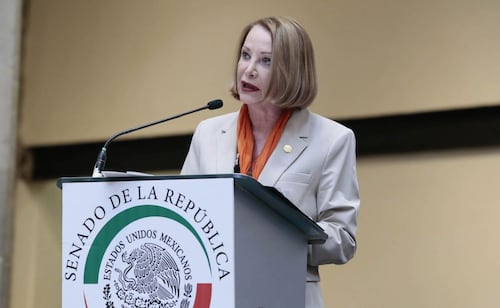
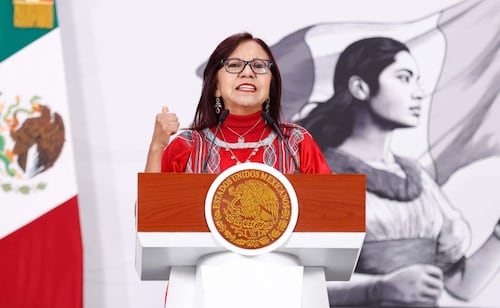
- The President of Mexico's Senate, Laura Itzel Castillo, suggested that US accusations against Mexican officials are politically motivated due to upcoming US elections.
- Castillo implied that extradition requests for Governor Rubén Rocha Moya and others might be linked to a desire to gain votes in the US.
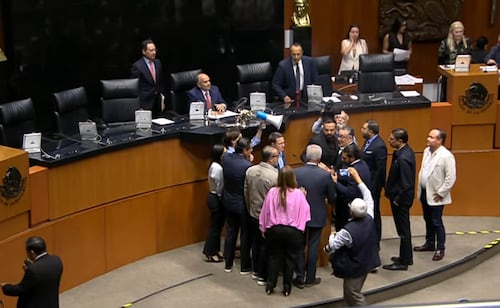
- She also criticized the process of installing the Permanent Commission, citing violations of the Organic Law of the General Congress.
From the perspective of El Universal, a leading Mexican newspaper, the statements by Senate President Laura Itzel Castillo regarding the US accusations against Mexican officials are significant and reflect a common sentiment within Mexico concerning US political interference.
Castillo's assertion that the US accusations, particularly those targeting Governor Rubén Rocha Moya and other officials, are tied to the upcoming US elections is a critical point. This perspective suggests that Mexico often becomes a pawn in US political games, with accusations being leveraged for domestic political gain. For Mexican readers, this narrative resonates with past experiences where bilateral relations have been strained by US electoral cycles. The implication is that the timing and nature of these accusations should be viewed through the lens of American political strategy, rather than solely on their legal or factual merits.
The article also touches upon Castillo's criticism of the procedures within the Mexican Congress, specifically the installation of the Permanent Commission. Her citing of violations of the Organic Law of the General Congress indicates a concern for due process and legislative integrity within Mexico itself. This internal critique, juxtaposed with the external pressure from the US, paints a picture of a complex political environment where national sovereignty and internal governance are under scrutiny.
I believe we have to take into account that there are elections in the United States and that there are many elements that in this case would have to be considered, right, for the obtaining of votes.
From a Mexican national perspective, the framing of these events is crucial. El Universal would likely emphasize the importance of national sovereignty and the need to investigate such accusations thoroughly within Mexico's own legal framework. The narrative would likely highlight the resilience of Mexican institutions and officials in the face of external pressure, while also acknowledging the potential for political maneuvering by the US. The article's focus on Castillo's statements positions the Mexican Senate as a voice defending national interests against what is perceived as potentially politically motivated actions from the United States.
This story is uniquely interesting from a Mexican perspective because it directly addresses the power dynamics between Mexico and the United States, particularly how US domestic politics can impact bilateral relations and judicial processes. While international coverage might focus on the drug trafficking allegations themselves, a Mexican outlet would prioritize the political context, the potential for US electoral manipulation, and the defense of Mexican officials and institutions.
It is very clear what the law is regarding the procedure that must be carried out for the installation of the Permanent Commission, and that is what should have been done, following the steps that are specifically marked in these articles. That is what I would say, but well, what can we expect?
DistantNews Editorial
Originally published by El Universal in Spanish. Translated, summarized, and contextualized by our editorial team with added local perspective. Read our editorial standards.
More Stories
From Our Blog

What Press Freedom Means for the News You Read

What Gets Lost (and Found) When News Is Translated

The Critical Role of Diaspora Media in Global News

What Travellers Should Know About Countries with Restricted Press

A Digital Nomad's Guide to Following Local News
