

Electoral Board Suspends Survey Ban, Opening New Debate Over Its Powers
Translated from Spanish and summarized by DistantNews. Read the original for the full story.
At a glance
Analysis
Named sources
In the courts
- The Central Electoral Board suspended Article 13 of its polling regulation while a court challenge examines the provision’s legality and constitutionality.
- Civil society groups welcomed the decision, saying the ban could restrict freedom of expression and access to information.
- Two board judges opposed the suspension because they questioned whether an administrative resolution could set aside a regulation previously approved by the board.
The Dominican Republic’s Central Electoral Board has temporarily lifted a restriction it imposed on electoral polling, but the decision has not settled the dispute. Instead, it has created a second question: whether the board had the power to suspend its own rule through an administrative resolution.
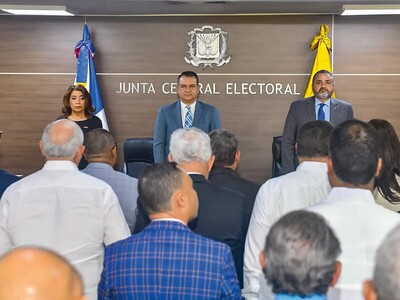
The board’s full panel voted on Aug. 20 to suspend Article 13 of a regulation governing polling firms and the publication of electoral surveys. The suspension will remain in place while a judicial controversy examines whether the article is legal and constitutional.
Civil society representatives consulted by Diario Libre viewed the move favorably. They argued that the prohibition could have limited freedom of expression and the public’s right to receive information about political preferences. The regulation, approved on May 22, 2026, prohibited the publication or distribution of electoral polls outside the legal pre-campaign period. In the Dominican Republic, that period begins on the first Sunday of July in the year before an election.
The rule covered more than publicly commissioned or publicly conducted surveys. It also included internal polls carried out for political parties, groups and movements. Publishing or leaking those results could have led to sanctions, a provision that drew criticism from sectors that said electoral law did not expressly authorize such a restriction.
The decision was not unanimous. Judges Hirayda Marcelle Fernández Guzmán and Rafael Armando Vallejo Santelises voted against it, although their objections did not defend the polling ban itself. They argued that the board lacked authority to nullify a previously approved regulatory provision through an administrative decision. Servio Tulio Castaños Guzmán, executive vice president of the Institutionalism and Justice Foundation, said the decision should be viewed positively. The debate now has two tracks: whether the original restriction was lawful, and whether the mechanism used to suspend it was valid.
It is a decision that should be viewed positively because, ultimately, it is
About this summary
Originally published by Diario Libre in Spanish. Translated, summarized, and contextualized automatically by DistantNews, with a note on how the source frames the story. Not individually reviewed before publishing. How this works.
More Stories
From Our Blog

What Gets Lost (and Found) When News Is Translated

The Critical Role of Diaspora Media in Global News

What Travellers Should Know About Countries with Restricted Press

A Digital Nomad's Guide to Following Local News

How the Same Story Looks Different in Different Countries
