


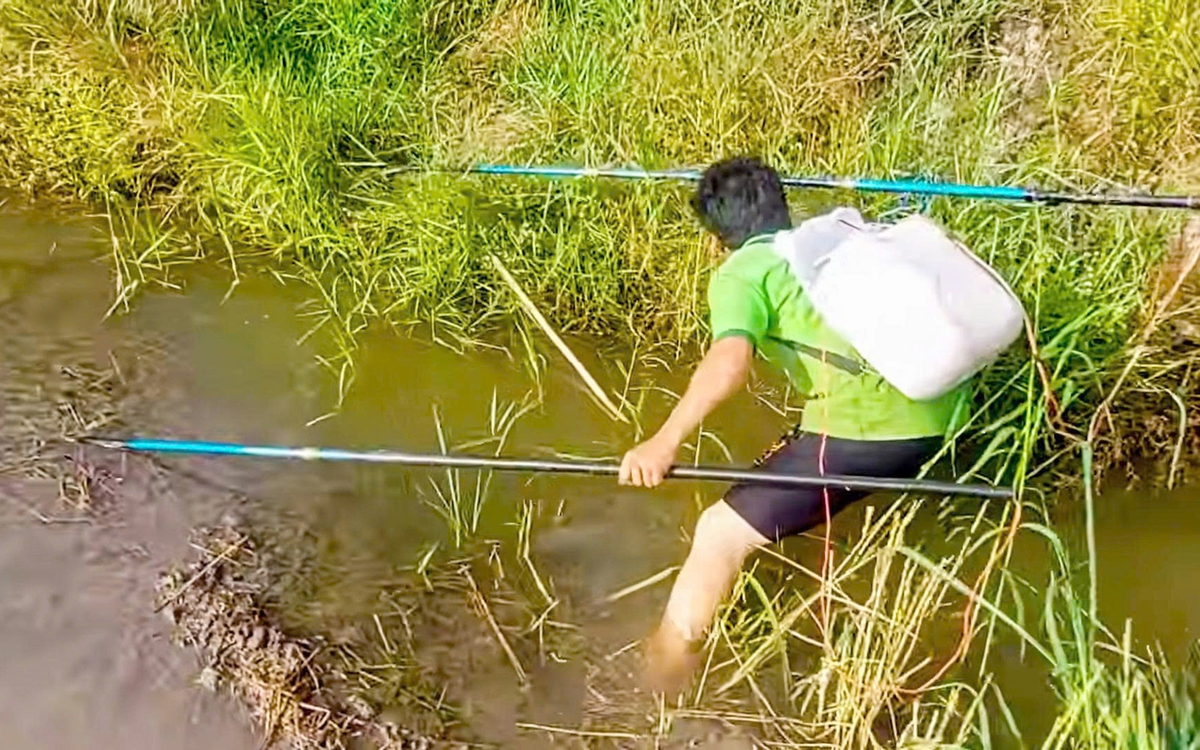
Electric Fishing Devastates Vietnam's Waterways, Experts Warn of 'Biological Desertification'
Translated from Vietnamese, summarized and contextualized by DistantNews.
TLDR
- The use of electric fishing devices is decimating fish populations and causing "biological desertification" in waterways.
- These devices indiscriminately kill all aquatic life, from fish eggs to adult fish, and damage the ecosystem's regenerative capacity.
- Experts call for stricter control over the sale of electric fishing equipment, seasonal fishing bans, and the promotion of sustainable livelihoods like aquaculture and ecotourism.
The pervasive use of electric fishing devices is pushing Vietnam's rivers and streams towards a devastating "biological desertification," as highlighted by experts in Tuổi Trẻ. This destructive practice, often employed to catch a single fish, results in the indiscriminate slaughter of entire aquatic ecosystems. From fish eggs and larvae to adult fish, shrimp, and crabs, nothing is spared. The electrical current not only kills but also causes severe neurological damage, internal bleeding, and reproductive impairment in survivors, shattering the delicate balance of life.
Bắt 1 con cá, hàng trăm sinh vật chết theo
Dr. Nguyễn Đính from the Institute of Environmental Technology, Disaster Mitigation, and Climate Change, warns that this "biological desertification" is not just about depleted fish stocks; it's about the destruction of the river's ability to regenerate. The loss of plankton, the primary food source for smaller fish, creates a cascading effect, leading to the disappearance of larger fish and the elimination of natural water purifiers. This ecological collapse threatens the long-term viability of our waterways and the livelihoods dependent on them.
Xuyệt điện còn phá luôn khả năng tái tạo của dòng sông.
Addressing this crisis requires a multi-pronged approach. Experts advocate for stringent government control over the sale of electric fishing equipment at its source. Implementing seasonal fishing bans during breeding periods and providing support for alternative, sustainable livelihoods such as eco-tourism and responsible aquaculture are crucial steps. The concept of co-management, empowering local communities to become stewards of their aquatic resources, is also vital. When communities feel a sense of ownership, they are more likely to protect these resources for future generations.
Như vậy, phải gây thiệt hại thủy sản từ 100 triệu đồng hoặc dưới định mức này mà có tiền án tiền sự chưa xóa án tích mà tái phạm mới bị xem là phạm tội.
Legal frameworks, such as Article 242 of the Criminal Code, exist to penalize destructive fishing practices. However, as Mr. Võ Văn Tài, Head of the Department of Criminology and Criminal Investigation at the Ho Chi Minh City University of Law, points out, clearer guidelines are needed. The law must be explicitly interpreted to cover all instances of electric and explosive fishing, regardless of the size of the water body, ensuring that even small-scale destruction in canals and fields is adequately addressed. In Cà Mau province, over 67,000 households have pledged to abandon electric fishing, demonstrating a growing awareness and commitment to conservation.
Hơn 67.000 hộ cam kết không dùng xuyệt điện
DistantNews Editorial
Originally published by Tuổi Trẻ in Vietnamese. Translated, summarized, and contextualized by our editorial team with added local perspective. Read our editorial standards.
More Stories
From Our Blog

What Gets Lost (and Found) When News Is Translated

The Critical Role of Diaspora Media in Global News

What Travellers Should Know About Countries with Restricted Press

A Digital Nomad's Guide to Following Local News

How the Same Story Looks Different in Different Countries
