


Erbil's Crucial Role: Will Kurdistan Unlock Iraq's Golden Era?
Translated from Arabic, summarized and contextualized by DistantNews.
TLDR
- The Iraqi Prime Minister-designate's visit to Kurdistan is a pivotal moment for Iraq's future, signaling a potential new era of recovery and prosperity, with US support.
- The article questions whether a new Iraq can thrive without the active participation of the Kurds, who were key architects of the post-2003 federal, democratic state.
- Deep-seated issues, including financial dues, salary payments, and the implementation of Article 140 concerning disputed territories, have eroded trust between Erbil and Baghdad, jeopardizing Kurdish willingness to support the central government.
The current political landscape in Iraq, particularly the relationship between the Kurdistan Region and Baghdad, is at a critical juncture, as highlighted in this analysis from Az-Zaman. The visit of Iraq's Prime Minister-designate, Ali Faleh al-Zaidi, to Kurdistan is presented not merely as a procedural step but as a crucial determinant of the nation's future trajectory. The article underscores the significant role Kurds have played since 2003, not just as participants but as foundational architects of the new Iraqi state, instrumental in drafting the constitution and holding key federal positions.
The eyes of Iraq, America, and even the decision-making centers in the region are all turning towards the Kurdistan Region and the city of Erbil.
However, the piece raises a poignant and bitter question: can the Kurds remain committed to building an Iraq that has systematically violated their constitutional rights? The failure of successive Iraqi governments to provide basic rights, such as financial dues and salaries for Kurdistan's public employees, has created a deep chasm of distrust. This neglect extends to national issues, including the unresolved implementation of Article 140 concerning Kurdish territories outside the region's administration and the marginalization of the Peshmerga forces within the national defense system.
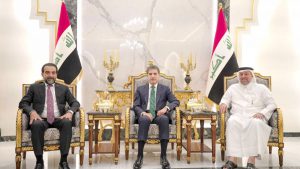
The visit of Ali Faleh al-Zaidi, the Iraqi Prime Minister-designate, to Kurdistan is not just an ordinary protocol visit, but carries a message and represents a decisive station for the future of Iraq.
From the perspective of Az-Zaman, the path to a stable and prosperous Iraq, envisioned by figures like Donald Trump, is inextricably linked to genuine Kurdish inclusion. The article argues that any Baghdad government lacking the full and active participation of key components, especially the Kurds and Sunnis, is doomed to instability. True federalism and democracy, as initially conceived, require more than symbolic representation; they demand the constitutional rights and equitable distribution of resources be upheld. Without this, Iraq risks remaining a nation riddled with internal conflicts and external vulnerabilities, unable to achieve the golden era it aspires to.
Can this new Iraq take a single step without its main actor, the Kurds?
DistantNews Editorial
Originally published by Az-Zaman in Arabic. Translated, summarized, and contextualized by our editorial team with added local perspective. Read our editorial standards.
More Stories

From Our Blog

What Gets Lost (and Found) When News Is Translated

The Critical Role of Diaspora Media in Global News

What Travellers Should Know About Countries with Restricted Press

A Digital Nomad's Guide to Following Local News

How the Same Story Looks Different in Different Countries
