


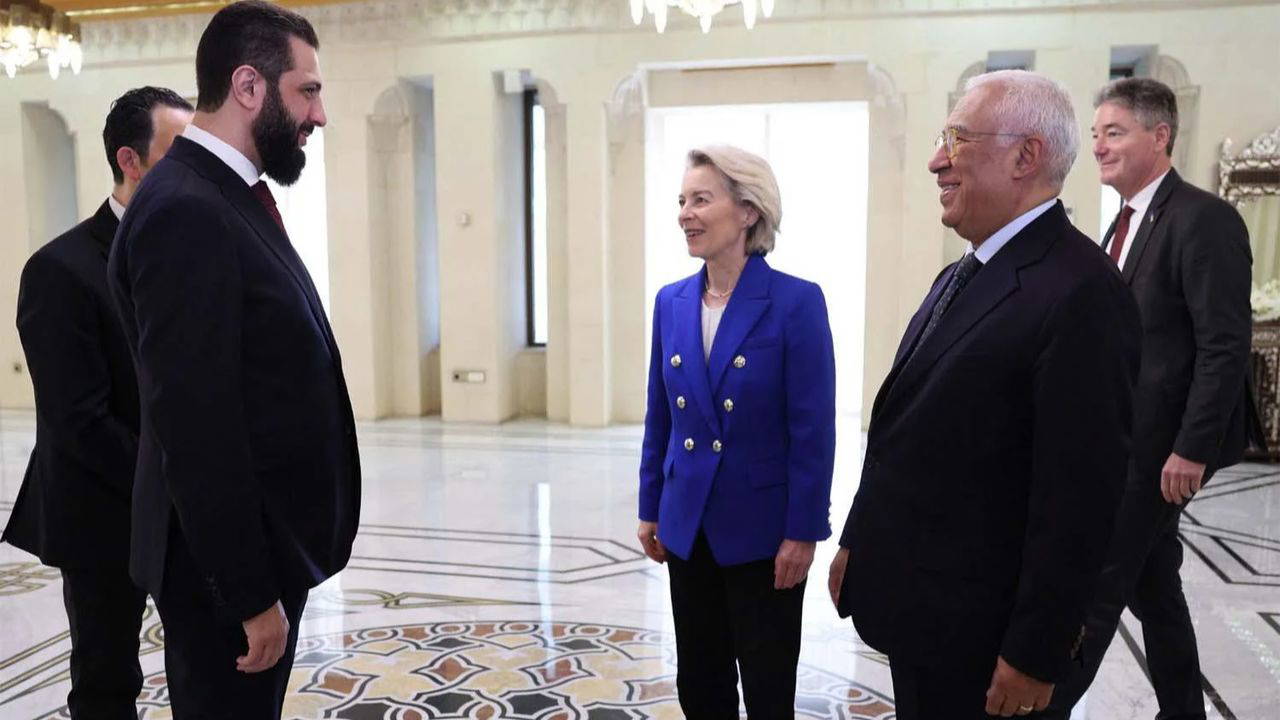
EU Prepares New Chapter in Syria Relations: Comprehensive Plan Unveiled
Translated from Turkish, summarized and contextualized by DistantNews.
TLDR
- The EU is preparing to deepen ties with the Syrian government, including political dialogue and economic cooperation.
- Plans include reviving a 1978 cooperation agreement and initiating high-level political dialogue.
- The EU aims to facilitate the return of Syrian refugees while maintaining a revised sanctions regime.
In a significant shift in its foreign policy, the European Union is reportedly preparing to deepen engagement with the Syrian government, marking a new chapter in relations that have been largely frozen for years. According to Reuters, the bloc intends to relaunch political dialogue and enhance cooperation in economic and security spheres. A document prepared by EU diplomatic units and presented to member states outlines a plan to fully reactivate a 1978 cooperation agreement and initiate a "High-Level Political Dialogue" with the Syrian administration on May 11. This move signals a notable change in the EU's approach to Syria, moving towards normalization after years of conflict.
A key aspect of the proposed strategy involves the EU's stance on sanctions. Instead of completely lifting existing sanctions, the EU plans to maintain them within a "revised framework." This approach aims to engage with the Damascus government while simultaneously targeting actors who may undermine the transition process. Economically, the EU seeks to strengthen ties by establishing a trade and investment framework, encouraging private sector investment, and supporting reforms to improve the business environment. The establishment of a new center for technical assistance is also under consideration.
Central to the EU's agenda is the facilitation of the "safe, voluntary, and dignified" return of Syrian refugees. With over a million Syrian refugees and asylum seekers residing in Europe, roughly half of whom are in Germany, their repatriation has become a paramount issue. This focus intensified following the Syrian government's consolidation of power, making refugee return a key topic in discussions between European capitals and Damascus.
Furthermore, the EU plans to bolster security cooperation with Syria. This includes initiatives such as training Syrian police forces, strengthening the institutional capacity of the Ministry of Interior, and collaborating on counter-terrorism, drug trafficking, and organized crime. These steps are viewed as a critical juncture in Syria's reintegration into the international system following a devastating 14-year civil war. From a Turkish perspective, while engagement with the Syrian regime is a complex issue, the EU's move reflects a pragmatic shift towards addressing the realities on the ground and managing the refugee crisis, albeit with a cautious approach to sanctions and a focus on stability.
DistantNews Editorial
Originally published by Cumhuriyet in Turkish. Translated, summarized, and contextualized by our editorial team with added local perspective. Read our editorial standards.
More Stories

From Our Blog

What Gets Lost (and Found) When News Is Translated

The Critical Role of Diaspora Media in Global News

What Travellers Should Know About Countries with Restricted Press

A Digital Nomad's Guide to Following Local News

How the Same Story Looks Different in Different Countries
