

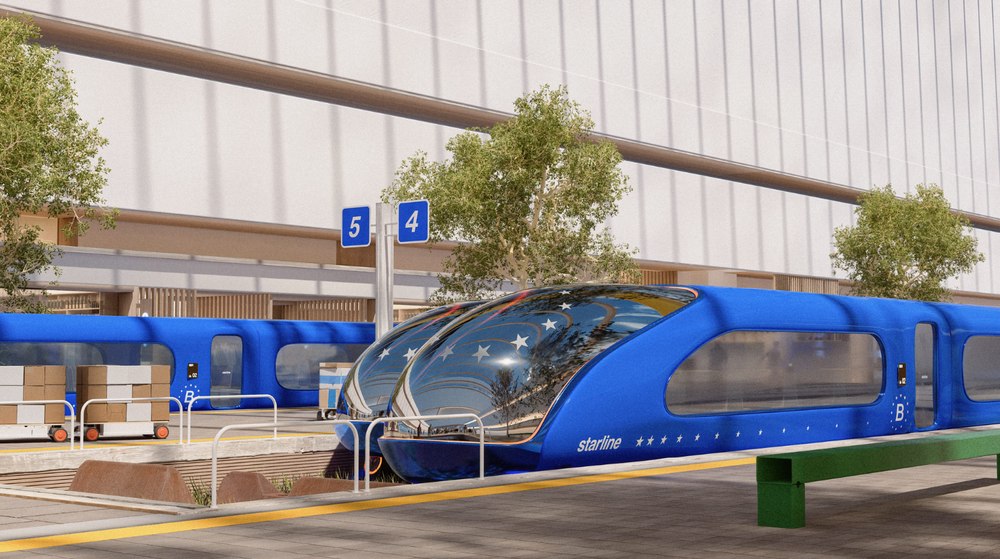
Europe could have a high-speed rail network comparable to air travel. The 22,000 kilometers will connect 39 cities
Translated from Romanian, summarized and contextualized by DistantNews.
TLDR
- A proposal called Starline aims to create a 22,000-kilometer high-speed rail network connecting 39 European cities by 2040.
- The network, envisioned as a continental metro system, would allow trains to travel at speeds of 300-400 km/h, significantly reducing travel times.
- The project, proposed by 21st Europe, seeks to integrate Europe's fragmented rail system and is planned to be publicly funded and operated by national rail companies.
Europe stands on the cusp of a potential transportation revolution with the ambitious Starline project, a vision for a high-speed rail network designed to knit the continent together like never before. Spearheaded by the Copenhagen-based think tank 21st Europe, this initiative proposes a staggering 22,000-kilometer web connecting 39 key cities, from Lisbon to Kyiv, and Helsinki to Dublin, by 2040. The goal is not merely faster travel, but a fundamental reimagining of European connectivity, transforming the continent into a seamless, interconnected entity.
Un sistem feroviar cu adevărat integrat nu mai este doar o chestiune de confort, ci o necesitate strategică pentru reziliența Europei în secolul XXI
The Starline network promises speeds of up to 400 km/h, drastically cutting journey times. Imagine traveling from Helsinki to Berlin in just over five hours, a trip that currently takes a full day. This isn't just about convenience for passengers; it's about fostering economic integration and resilience. The project's proponents argue that a truly integrated rail system is a strategic necessity for Europe in the 21st century, moving beyond the current fragmented and often sluggish network.
What sets Starline apart is its innovative approach to passenger experience. Instead of traditional classes, trains will feature distinct zones catering to different needs: quiet spaces for work, family compartments, and relaxation areas. This thoughtful design aims to make long-distance travel more comfortable and productive. Furthermore, the project emphasizes public funding and operation by national rail companies, suggesting a collaborative model for its realization.
Conceput ca un sistem de metrou, Starline schimbă modul în care europenii își percep propriul continent – nu ca pe o colecție de capitale îndepărtate, ci ca pe o rețea unică, rapidă și interconectată, unde fiecare legătură, fie pentru pasageri, fie pentru mărfuri, este ușor accesibilă
From a European perspective, Starline represents a bold step towards a more unified and efficient continent. While Western media might focus on the technological marvel, for many in Eastern Europe, like those in Ukraine, it signifies a crucial link to the rest of the continent, overcoming historical and infrastructural barriers. This project could redefine how Europeans perceive their continent, shifting from a collection of distant capitals to a readily accessible, interconnected network for both people and goods. It’s a vision that promises not just speed, but a deeper sense of shared European space.
Dorința pentru călătorii deschise și accesibile este cla
DistantNews Editorial
Originally published by Adevărul in Romanian. Translated, summarized, and contextualized by our editorial team with added local perspective. Read our editorial standards.
More Stories


From Our Blog

What Gets Lost (and Found) When News Is Translated

The Critical Role of Diaspora Media in Global News

What Travellers Should Know About Countries with Restricted Press

A Digital Nomad's Guide to Following Local News

How the Same Story Looks Different in Different Countries
