


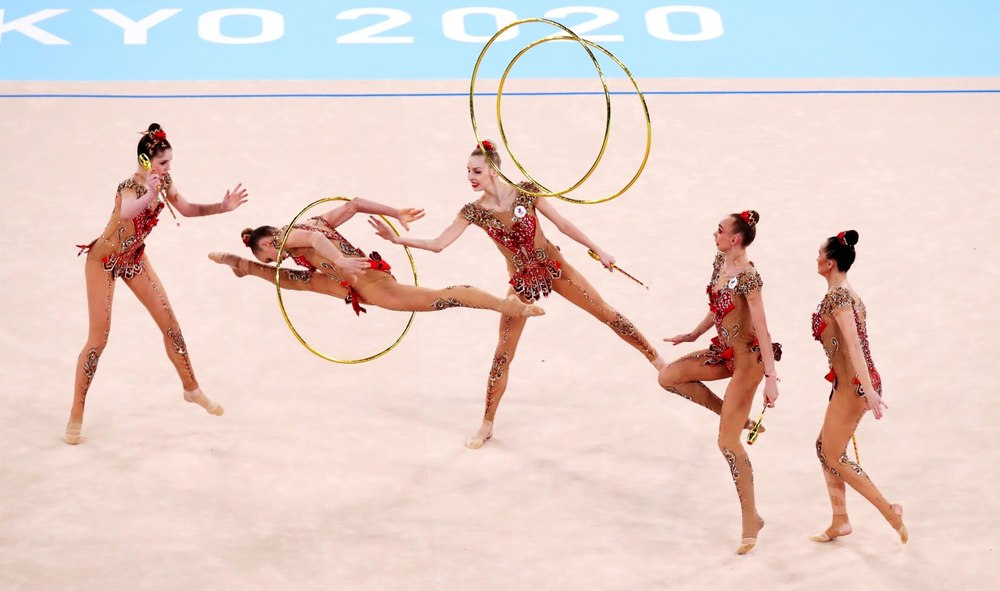
European Gymnastics Allows Russian, Belarusian Athletes to Compete with National Symbols, With Caveats
Translated from Romanian, summarized and contextualized by DistantNews.
At a glance
News
Sources not specified
Approved/passed
- European Gymnastics will allow Russian and Belarusian athletes to compete under national symbols, unless the host country prohibits it.
- In such cases, athletes will compete under the World Gymnastics flag.
- This decision follows a controversy where Cluj Mayor Emil Boc banned Russian symbols at a rhythmic gymnastics event, leading to Russia's withdrawal.
European Gymnastics has decided that Russian and Belarusian athletes can compete under their national symbols, reversing a previous stance that had led to controversy. However, this participation is conditional: if a host country implements measures against the use of national symbols, the athletes will compete under the World Gymnastics flag instead.
The European Gymnastics Federation announced that Russian and Belarusian athletes will be able to compete carrying their national symbols, except in events whose host countries have taken measures against their use.
The decision was made during an extraordinary General Assembly meeting. The debate intensified after the mayor of Cluj, Emil Boc, banned the use of Russian and Belarusian flags and anthems at a rhythmic gymnastics World Cup Challenge event held in the city from June 26-28. This local ban created a complex situation for the athletes.
In this last case, they will participate under the flag of the world governing body.
Following the invasion of Ukraine in February 2022, the International Gymnastics Federation (World Gymnastics) had lifted sanctions against Russia and Belarus on May 18. This lifting of sanctions coincided with Cluj agreeing to host the event. Russia's team ultimately withdrew from the World Cup stage because their athletes could not compete under the national flag, and the national anthem would not be played in case of victory.
I agreed to host the competition in my city at a time when Russian gymnasts were still under the effect of international sanctions and were only allowed to participate in such events as 'neutral' athletes.
Mayor Emil Boc had strongly stated that he would not permit the Russian anthem or flag to be displayed in Cluj. He explained that he had agreed to host the competition when Russian gymnasts were still considered "neutral" athletes under international sanctions. The Russian Olympic Committee condemned Boc's declaration as a "flagrant violation of the Olympic Charter and the principle of political neutrality in sport" and informed the International Olympic Committee.
This declaration was considered by the Russian Olympic Committee as 'a flagrant violation of the Olympic Charter and the principle of political neutrality in sport'.
DistantNews Editorial
Originally published by Adevărul in Romanian. Translated, summarized, and contextualized by our editorial team with added local perspective. Read our editorial standards.
More Stories
Shame for Europe for FCSB! Crushed by Auda after 7-3 on aggregate, the red-blues leave Conference Le…
Romanian football's image tarnishes abroad: Superliga ranks poorly among world's strongest leagues
FRF takes a stand! Răzvan Burleanu's clear announcement on World Cup 'sale' amid Gianni Infantino's …
From Our Blog

What Gets Lost (and Found) When News Is Translated

The Critical Role of Diaspora Media in Global News

What Travellers Should Know About Countries with Restricted Press

A Digital Nomad's Guide to Following Local News

How the Same Story Looks Different in Different Countries
