


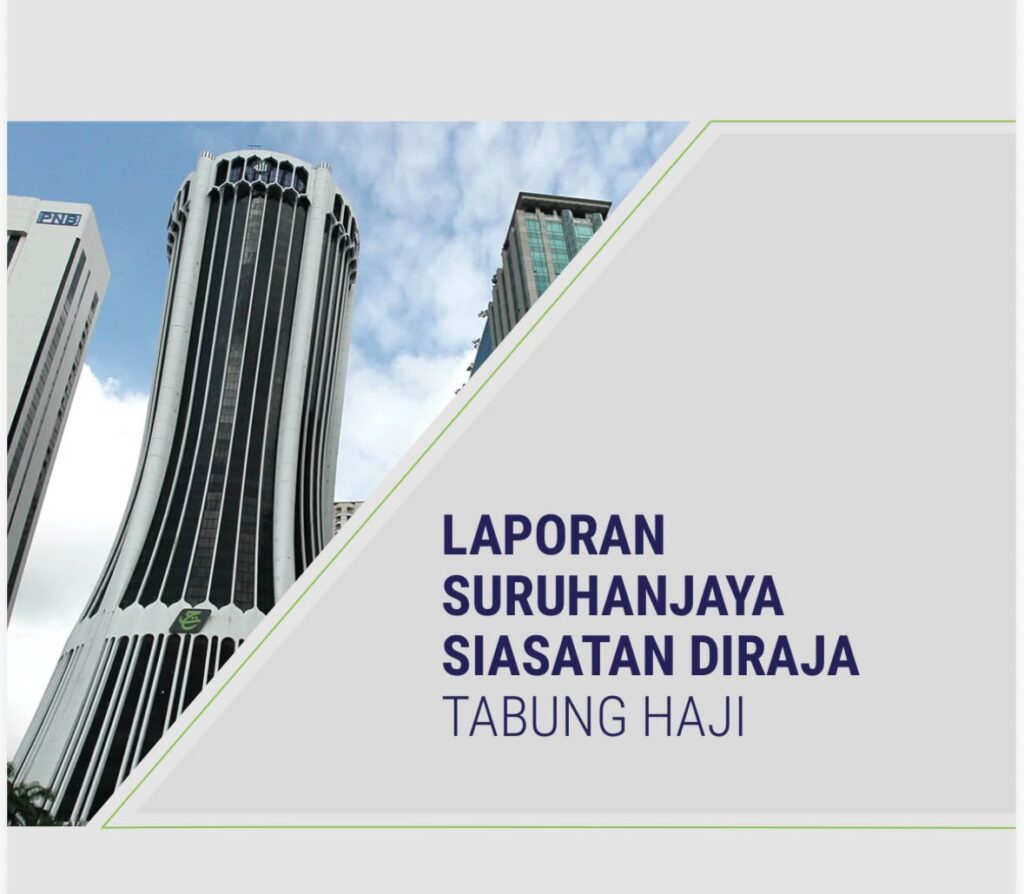
Excessive Dividends Drove Tabung Haji's Financial Crisis, RCI Report Finds
Translated from Malay, summarized and contextualized by DistantNews.
At a glance
News
Official statement
Outcome reported
- A Royal Commission of Inquiry (RCI) found that excessive dividend payouts were a primary cause of Lembaga Tabung Haji's (TH) past financial crisis.
- TH's eagerness to pay high profit distributions from 2014 to 2017 exceeded its financial capacity, depleting reserves and attracting depositors seeking high returns.
- The RCI also criticized the National Audit Department (JAN) for its lack of assertiveness in auditing TH's financial statements, which allowed the institution to declare high dividends despite audit concerns.
Lembaga Tabung Haji (TH), the Malaysian Hajj savings fund, faced a severe financial crisis largely due to its aggressive payment of high profit distributions, according to a Royal Commission of Inquiry (RCI) report. Between 2014 and 2017, TH's eagerness to distribute profits beyond its financial capabilities led to a depletion of its reserves.
This practice, while attracting depositors seeking high returns, ultimately deviated TH from its core purpose and exposed it to the risk of large depositors withdrawing funds if profit distributions were perceived as too low. The report notes that in 2019, after TH announced a profit distribution rate of 1.25 percent, its deposits decreased from approximately RM73 billion to RM69 billion by the end of the year. Fortunately, the scale of withdrawals was less severe than feared.
Consequently, TH was compelled to take on excessive investment risks. The RCI found that TH's investments leaned heavily towards equities, making them vulnerable to market fluctuations. The commission also pointed to a lack of assertiveness from the National Audit Department (JAN) as a contributing factor to TH's financial woes.
The RCI observed that TH's financial statements from 2014 to 2017 received clean audit certificates, despite the 2017 audit report containing an "Emphasis of Matter" note. The commission argued that JAN should not have issued a clean audit certificate for 2017 and should have classified the "Emphasis of Matter" issues as non-compliance. Without a clean audit, TH should not have declared annual profit distributions of 4.50 percent and Hajj profit distributions of 1.75 percent, totaling RM2.75 billion for the financial year 2017.
DistantNews Editorial
Originally published by Utusan Malaysia in Malay. Translated, summarized, and contextualized by our editorial team with added local perspective. Read our editorial standards.
More Stories
From Our Blog

What Gets Lost (and Found) When News Is Translated

The Critical Role of Diaspora Media in Global News

What Travellers Should Know About Countries with Restricted Press

A Digital Nomad's Guide to Following Local News

How the Same Story Looks Different in Different Countries
