


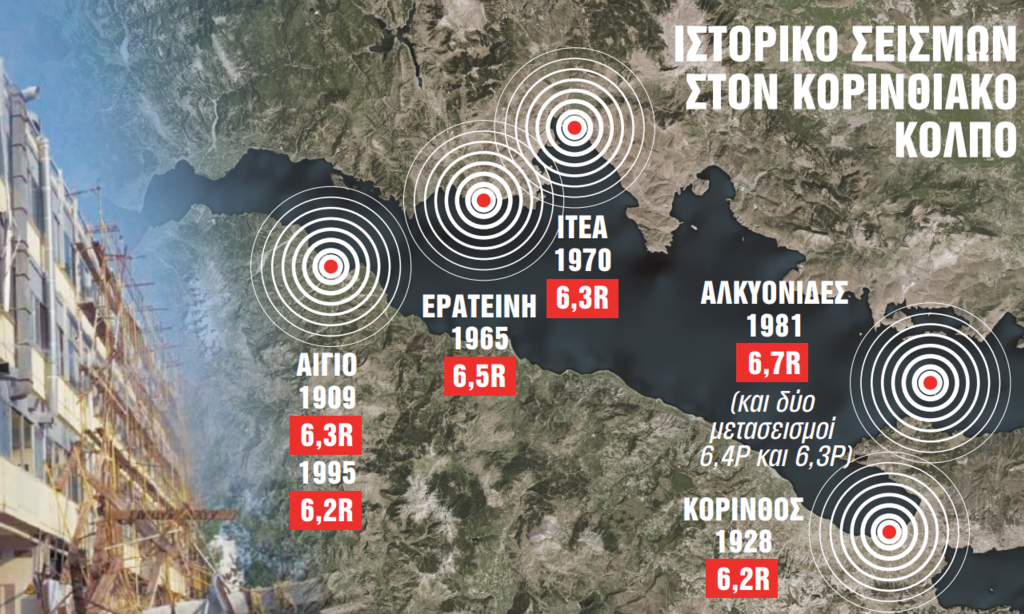
Fear of a Major Earthquake in the Corinthian Gulf: Hidden Concerns, the Triple Blow of the Alkyonides, and Forgotten Tsunamis
Translated from Greek, summarized and contextualized by DistantNews.
TLDR
- A Greek seismologist warns that the Corinthian Gulf is at increased risk of a major earthquake.
- The region, which experienced devastating earthquakes in 1981, is characterized by high crustal deformation and is closely monitored by scientists.
- Experts are concerned about the potential for a large quake, citing the area's geological activity and proximity to densely populated areas.
The Corinthian Gulf, a region with a complex geological makeup and a history of seismic activity, is once again at the center of scientific concern. Seismologist Gerasimos Papadopoulos has issued a stark warning, suggesting that the area is in a phase of heightened risk for a powerful earthquake. This warning echoes the anxieties felt 45 years ago when the Alkyonides islands, located within the gulf, unleashed a series of destructive tremors that terrorized Athens.
According to calculations that have been completed, the Corinthian Gulf is in a phase of increased risk for the occurrence of a strong earthquake.
The scientific community has long recognized the Corinthian Gulf as a particularly dangerous zone. Its unique geomorphology and tectonic underpinnings keep scientists on constant alert. The fact that this seismically active area is situated so close to the densely populated Attica basin only amplifies these concerns. Researchers have installed specialized monitoring stations and are conducting extensive research programs to better understand the seismic potential of this region.
The countdown in this area – where 45 years ago it sowed terror in Athens – has begun.
The 1981 Alkyonides earthquakes, a sequence of three major tremors between February 24 and March 4, serve as a grim reminder of the gulf's destructive power. These events caused significant damage in areas like Loutraki. While the region has been relatively quiet since then, the underlying geological processes continue, leading to a steady separation of its northern and southern coastlines at a rate of up to 15 millimeters per year. This constant deformation underscores the persistent seismic threat.
The Alkyonides are islands in the eastern part of the Corinthian Gulf... And it is known that the Corinthian Gulf is the area with the highest crustal deformation in all of Greece.
While the current warnings focus on the potential for a large earthquake, the memory of 1981 looms large. The potential consequences of a similar event today, given the increased development and population density, are a cause for serious apprehension. The scientific community's ongoing monitoring and research are crucial for preparedness and mitigation efforts in this vulnerable part of Greece.
There is a potential danger in the Alkyonides.
DistantNews Editorial
Originally published by Ta Nea in Greek. Translated, summarized, and contextualized by our editorial team with added local perspective. Read our editorial standards.
More Stories

From Our Blog

What Gets Lost (and Found) When News Is Translated

The Critical Role of Diaspora Media in Global News

What Travellers Should Know About Countries with Restricted Press

A Digital Nomad's Guide to Following Local News

How the Same Story Looks Different in Different Countries
