


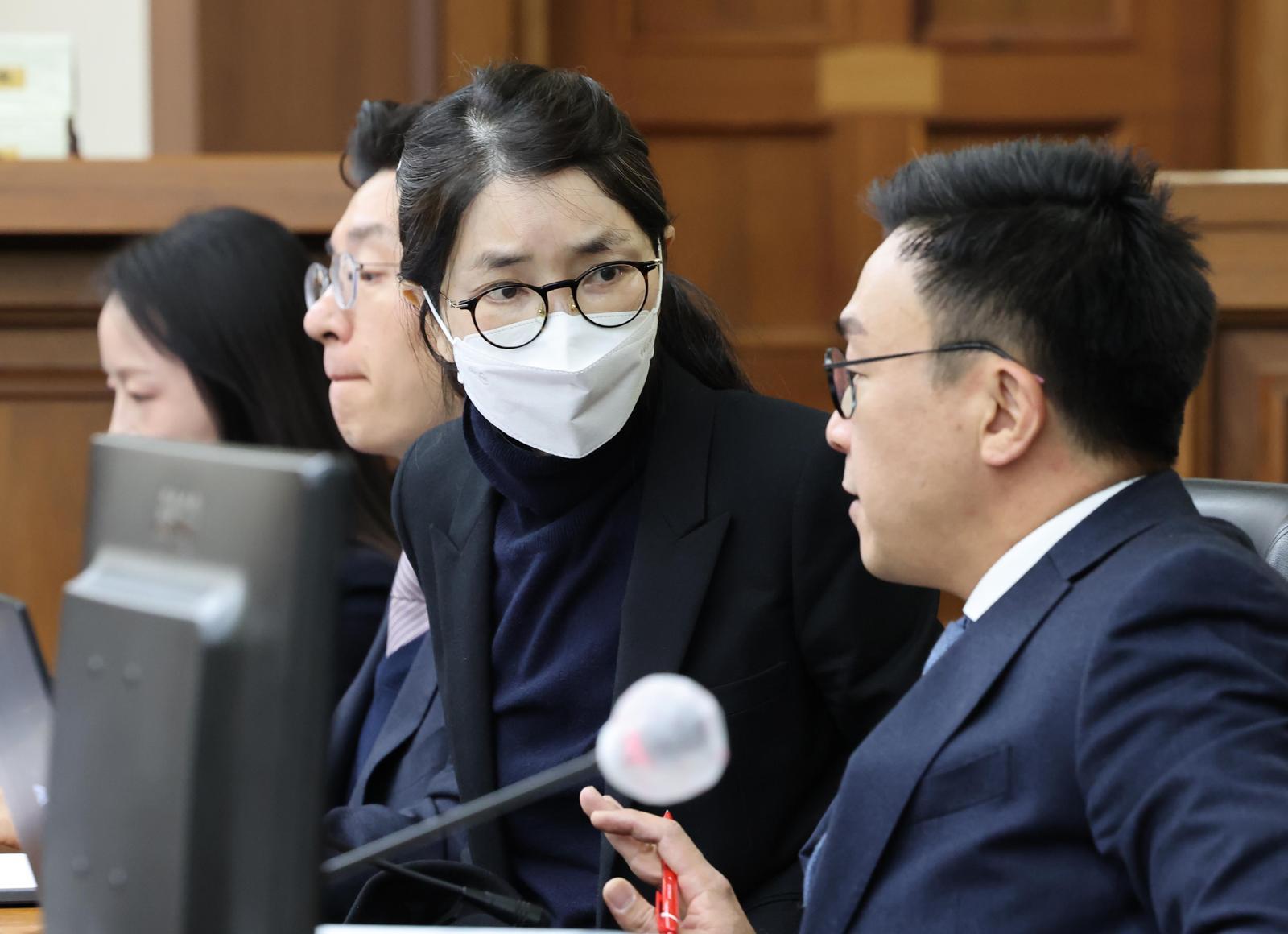
First Lady Kim Keon-hee found responsible as joint offender in stock manipulation case
Translated from Korean, summarized and contextualized by DistantNews.
TLDR
- An appellate court ruled that Kim Keon-hee, the First Lady, actively participated in stock price manipulation related to Deutsch Motors.
- The court found her responsible as a joint offender, stating she knew and condoned the use of accounts and funds for market manipulation.
- The ruling suggests that a significant portion of the profits from the scheme may have been compensation for artificially inflated stock prices.
The Seoul High Court's appellate ruling on the Deutsch Motors stock manipulation case has delivered a significant blow to First Lady Kim Keon-hee, finding her responsible as a joint offender. This decision directly contradicts previous interpretations and elevates the allegations of her involvement from passive knowledge to active participation in market manipulation. The court's reasoning, focusing on the transfer of 2 billion won and accounts to Black Pearl Investment, suggests this was far from a simple investment.
She knew and condoned the fact that the accounts and funds provided to Black Pearl Investment could be mobilized for market manipulation, and went beyond that.
From our perspective at Dong-A Ilbo, this ruling is critically important. It directly addresses the public's deep-seated concerns about potential corruption and abuse of power involving high-profile figures. The court's emphasis on the artificial inflation of stock prices and the potential for profit sharing as a reward for this manipulation strikes at the heart of fair market principles. The fact that the amount provided was substantial, without a clear guarantee of profit, and that Deutsch Motors was not a large-cap stock, adds weight to the court's conclusion that Kim Keon-hee was aware of and condoned the illicit activities.
It must be seen as participating in market manipulation through wash trading by handing over to Black Pearl.
This verdict is particularly resonant in South Korea, where public scrutiny of political figures and their families is intense. The court's finding that Kim Keon-hee's actions were not merely negligent but constituted active participation as a joint offender sets a new legal precedent in this high-profile case. The implications for the First Lady and the Yoon Suk-yeol administration are profound, raising questions about accountability and the integrity of public service. The court's analysis, suggesting that 40% of the profits could have been a direct payment for stock price manipulation, underscores the gravity of the findings and the potential for systemic issues within the financial markets.
It cannot be ruled out that 40% of the profits were compensation for the stock price increase artificially created by Black Pearl.
DistantNews Editorial
Originally published by Dong-A Ilbo in Korean. Translated, summarized, and contextualized by our editorial team with added local perspective. Read our editorial standards.
More Stories



From Our Blog

What Gets Lost (and Found) When News Is Translated

The Critical Role of Diaspora Media in Global News

What Travellers Should Know About Countries with Restricted Press

A Digital Nomad's Guide to Following Local News

How the Same Story Looks Different in Different Countries
