


Floods cripple Nepal's local governments, hindering rescue and relief
Translated from English and summarized by DistantNews. Read the original for the full story.
At a glance
News
Named sources
Ongoing story
- Catastrophic flooding in Nepal's Rasuwa and Nuwakot districts has crippled local governments, the primary responders to natural disasters.
- Many local officials and employees are missing or out of contact, and municipal offices have been destroyed, halting rescue, relief, and data collection.
- The disaster strikes at the heart of Nepal's disaster response system, highlighting the vulnerability of local institutions to extreme weather events.
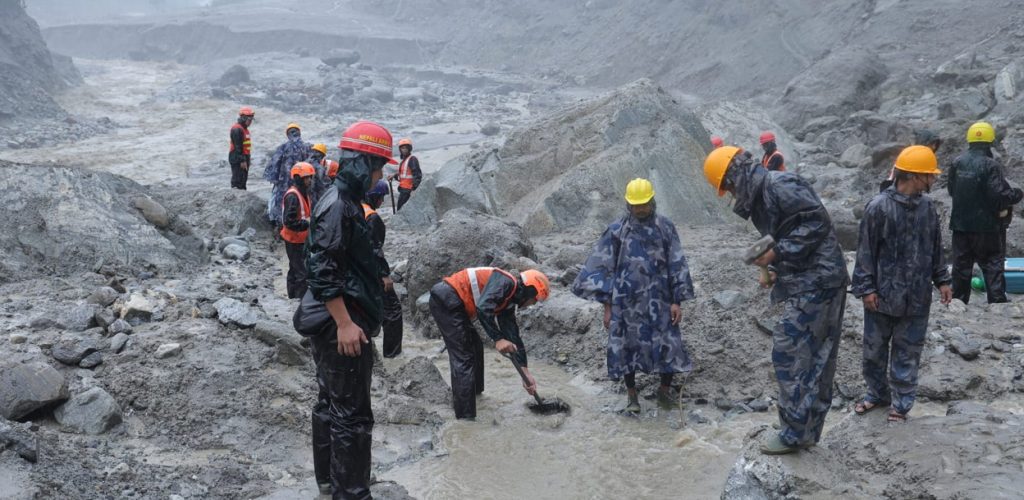
In the wake of devastating floods along the Bhotekoshi river, Nepal's disaster management efforts in the Rasuwa and Nuwakot districts face a severe crisis. Local governments, constitutionally mandated to lead rescue and relief operations, have been physically dismantled and overwhelmed by the disaster.
In Gosaikunda Rural Municipality, the vice-chair, two ward chairpersons, and several employees are missing. Chairman Kaisang Nurpu Tamang reported that seven members of his own family are also unaccounted for. The rural municipality office and two ward offices were washed away, leaving officials struggling to communicate and coordinate. "My rural municipality has more than 2,000 people, including the vice-chair, two ward chiefs and seven members of my own family, who have gone missing in the flood," Tamang stated. "The vice-chair has been out of contact since the flood and the search is continuing. How can we work in such a situation?"
Roads, electricity, and telephone connections are severely disrupted, fostering fear among residents, elected representatives, and employees. Despite these challenges, efforts for rescue and relief are ongoing. The flood has struck at the core of the country's disaster response system, as local governments are legally required to prepare response plans, coordinate efforts, and maintain data. However, these institutions have become victims themselves, leaving immediate challenges in not only rescuing people but also reconstructing the basic machinery needed for relief.
My rural municipality has more than 2,000 people, including the vice-chair, two ward chiefs and seven members of my own family, who have gone missing in the flood. The vice-chair has been out of contact since the flood and the search is continuing. How can we work in such a situation?
About this summary
Originally published by Kathmandu Post in English. Translated, summarized, and contextualized automatically by DistantNews, with a note on how the source frames the story. Not individually reviewed before publishing. How this works.
More Stories


From Our Blog

What Gets Lost (and Found) When News Is Translated

The Critical Role of Diaspora Media in Global News

What Travellers Should Know About Countries with Restricted Press

A Digital Nomad's Guide to Following Local News

How the Same Story Looks Different in Different Countries
