


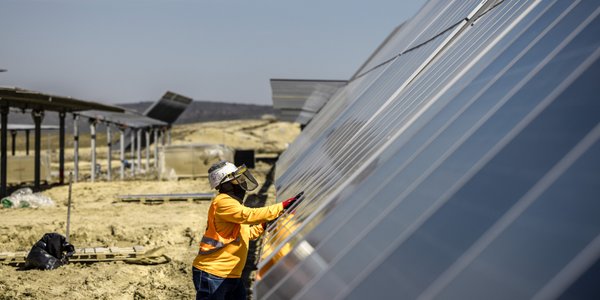
Forest Fires Hit Solar Power; Billions in Damages
Translated from Polish, summarized and contextualized by DistantNews.
At a glance
News
Named sources
Context piece
- Canada experienced extreme forest fires in 2023, burning over 15 million hectares and releasing nearly 1 gigaton of CO2.
- Smoke from these fires reduced solar energy production in North America and Europe by 6.38 TWh, costing an estimated $1.9 billion.
- Scientists warn that such fires can impact pollution, health, weather, and clean energy production, with smoke already reaching Europe again this year.
Canada's 2023 wildfire season was catastrophic, with blazes scorching over 15 million hectares, more than seven times the average annual area affected over the past 40 years. This environmental disaster resulted in the evacuation of over 200,000 people and widespread air quality issues, while releasing nearly 1 gigaton of CO2 into the atmosphere, significantly exceeding emissions from all other Canadian sources combined.
The far-reaching consequences of these fires extended to the energy sector. A recent study published in "Nature" reveals that smoke plumes drifting from Canada caused a substantial drop in solar energy production across North America and Europe. Over five months, solar output decreased by approximately 6.38 terawatt-hours (TWh), representing about 2.8% of potential generation. The financial impact of this reduction is estimated at $1.9 billion, with an additional environmental cost of 2.1 megatons of CO2 due to the increased reliance on fossil fuels to compensate for the shortfall in renewable energy.
Researchers attribute the decline in solar power generation to smoke particles that obstructed or scattered sunlight before it reached solar panels. Analyzing 2023 electricity prices, the study calculated North America's losses at $711 million, while Europe faced higher costs of nearly $1.17 billion. These figures reflect Europe's generally higher electricity prices and the geographical distribution of solar panels, which were less affected by smoke in some southern and western U.S. states.
Iulian-Alin Roșu, a study co-author from the Technical University of Crete, cautioned that smoke from Canadian fires has already reached Europe this year, though its full impact remains to be assessed. He stressed the need for a deeper understanding of how wildfires can affect pollution levels, public health, weather patterns, and even the production of clean energy. The smoke's influence was so significant that it contributed to a nearly 1°C drop in temperatures across the Northern Hemisphere, though 2023 still became the warmest year on record, a title later surpassed in 2024.
DistantNews Editorial
Originally published by Rzeczpospolita in Polish. Translated, summarized, and contextualized by our editorial team with added local perspective. Read our editorial standards.
More Stories


From Our Blog

What Gets Lost (and Found) When News Is Translated

The Critical Role of Diaspora Media in Global News

What Travellers Should Know About Countries with Restricted Press

A Digital Nomad's Guide to Following Local News

How the Same Story Looks Different in Different Countries
