


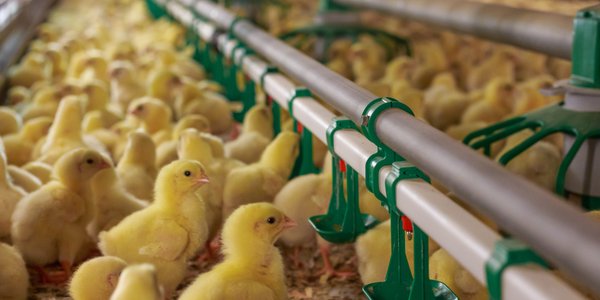
Producing More Food While Harming the Environment Less
Translated from Polish, summarized and contextualized by DistantNews.
At a glance
News
Sources not specified
Context piece
- Modern animal husbandry aims to balance food security, animal welfare, and environmental protection.
- Advanced farming techniques focus on reducing emissions at the source through precise feeding, better litter management, and climate control.
- Continuous monitoring of air quality, water, energy consumption, and feed use is crucial for evaluating modern farm performance.
Modern animal husbandry seeks to reconcile food security, animal welfare, and environmental protection, goals often seen as contradictory. While traditional views pit small farms against large, environmentally damaging operations, the reality is more complex. All agricultural production impacts air, water, and soil. The ultimate environmental balance depends on factors like animal density, feed and energy efficiency, and waste management.
Modernity in farming isn't just about automation for higher yields. It requires integrating animal welfare and environmental considerations from the initial design phase through every production step. This includes building structure, ventilation, heating, bedding, feeding, water management, waste handling, and measurement systems.
Modern animal husbandry combines three goals that are often presented as contradictory: food security, animal welfare, and environmental protection.
In poultry farming, a key challenge is managing litter moisture to reduce ammonia emissions, improve air quality, and prevent animal health issues. Modern barns use solutions like more absorbent bedding, underfloor heating, and precise climate control to keep litter dry. For example, using straw pellets instead of loose straw absorbs moisture more effectively, especially with heated floors, creating better living conditions for poultry and reducing odors.
Modernity in husbandry does not mean a single device or automation applied solely to increase efficiency.
Precise feeding, tailored to species, breed, and growth stage, is also vital. Excess nutrients in feed increase nitrogen and phosphorus in manure, risking air emissions and nutrient loss to soil and water. Advanced systems also include leak-reducing watering systems, microclimate sensors, ventilation controls, and filters. Surrounding vegetation can help limit dust and odor spread.
Evaluating a modern farm relies on results, not just installed equipment. Continuous monitoring of air quality, water and energy use, climate parameters, and feed consumption is integral. This approach is used at Wipasz's Nasze Fermy, where automatic measurements of PM10, PM2.5, ammonia, and hydrogen sulfide are taken every 30 minutes, day and night.
The results matter. Therefore, continuous monitoring of air quality, water and energy consumption, microclimate parameters, and the amount of feed used becomes an integral part of such production.
DistantNews Editorial
Originally published by Rzeczpospolita in Polish. Translated, summarized, and contextualized by our editorial team with added local perspective. Read our editorial standards.
More Stories

From Our Blog

What Gets Lost (and Found) When News Is Translated

The Critical Role of Diaspora Media in Global News

What Travellers Should Know About Countries with Restricted Press

A Digital Nomad's Guide to Following Local News

How the Same Story Looks Different in Different Countries
