


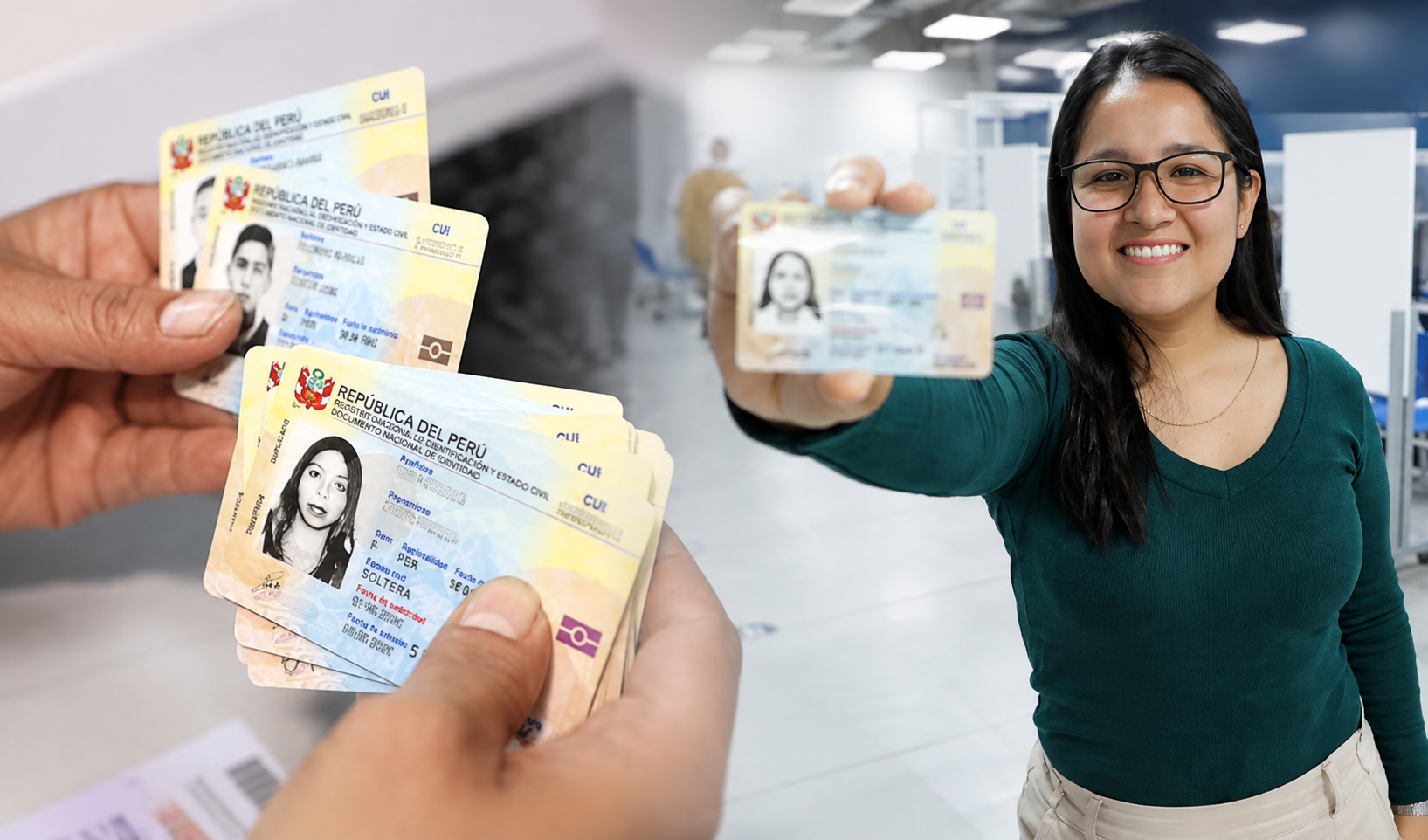
Free electronic ID services available through September 6 in 16 Peruvian regions
Translated from Spanish and summarized by DistantNews. Read the original for the full story.
At a glance
News
Official statement
New plan
- Reniec's mobile campaign will offer free electronic national ID services in 16 Peruvian regions through September 6.
- The campaign targets children, older adults, people with disabilities and others in vulnerable situations.
- Residents can check local dates, locations, hours and available services through Reniec's schedule and verify whether a previously requested DNIe 3.0 is ready for collection.
Peru's National Registry of Identification and Civil Status, known as Reniec, is taking free electronic ID services to public spaces across 16 regions through Sunday, September 6.
The campaign covers Amazonas, Ancash, Arequipa, Ayacucho, Cajamarca, Cusco, Huancavelica, Huanuco, Ica, Junin, La Libertad, Loreto, Lima, Puno, Tacna and Ucayali. Reniec will set up attention points in municipal buildings, plazas, community facilities and other public locations.
In metropolitan Lima, scheduled locations include Carabayllo, Comas, El Agustino, Independencia, Lima, Los Olivos, Lurigancho, Miraflores, Puente Piedra, San Juan de Lurigancho, San Juan de Miraflores, Santa Anita, Santa Rosa, Villa El Salvador and Villa Maria del Triunfo. Callao will also have points at Grupo 8 Airport and two health centers in Ventanilla.
The campaign is aimed at minors, older adults, people with disabilities and citizens in vulnerable situations. Depending on the location, residents may receive document-related services, collect already issued IDs or obtain registration assistance. Reniec advises people to check the local schedule first because the services, dates and hours vary.
The agency will also distribute DNI electronic 3.0 cards to people whose earlier applications show 100 percent completion. Applicants can use Reniec's online application-status platform to confirm whether their document is ready for collection. The campaign seeks to bring identification services closer to people who face greater difficulty completing these procedures.
About this summary
Originally published by La República in Spanish. Translated, summarized, and contextualized automatically by DistantNews, with a note on how the source frames the story. Not individually reviewed before publishing. How this works.
More Stories

From Our Blog

What Gets Lost (and Found) When News Is Translated

The Critical Role of Diaspora Media in Global News

What Travellers Should Know About Countries with Restricted Press

A Digital Nomad's Guide to Following Local News

How the Same Story Looks Different in Different Countries
