


From Xín Mần to the Southern Rubber Forests, Hmong People Seek a New Life
Translated from Vietnamese and summarized by DistantNews. Read the original for the full story.
At a glance
In-depth
Named sources
Context piece
- Many Hmong families have migrated from Xín Mần in northern Vietnam to southern rubber plantations in search of better economic opportunities.
- These migrants are adapting to new climates and learning the labor-intensive work of tapping rubber to build a stable future.
- The move represents a significant life change, with the southern lands offering not just a livelihood but also a new beginning for these families.
Leaving behind the misty mountain villages of Xín Mần, many Hmong families from the highlands of Hà Giang and Tuyên Quang have embarked on a journey of over a thousand kilometers to the southern regions of Vietnam. Their goal: to find a new life and economic stability through the demanding work of tapping rubber.
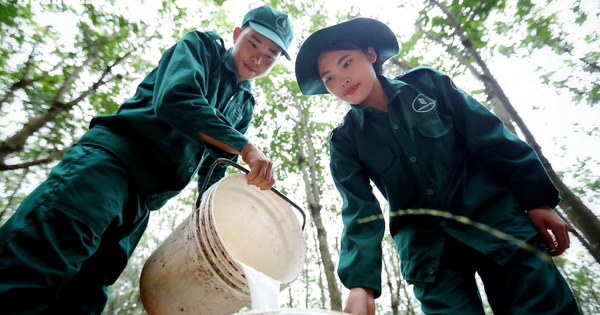
Among them are Hán Seo Đằng, 28, and Thào Thị Chấu, 25, who left their home in Xín Mần commune to start anew at the Long Thành Rubber Plantation, part of the Đồng Nai Rubber Corporation. Their belongings were few, but their hopes for a more secure future were immense. They joined hundreds of other highland laborers drawn to the vast rubber forests of Đồng Nai and Ho Chi Minh City, where the red basalt soil has become a new home.
Initially, the transition was challenging. The southern climate differed greatly from their mountainous homeland, and the art of rubber tapping was entirely new. Đằng and Chấu had to learn every step, from handling the tapping knife to collecting the latex. "When we left Xín Mần for the South, we were very worried, not knowing what life would be like," Đằng shared. "Back home, we mainly farmed, and income was unstable. We wanted a job we could do long-term, with regular pay to support our family and save for the future."
Now, clad in their green uniforms before dawn, they work in tandem. One taps the trees while the other positions the collection cups, a rhythmic dance along the rows of rubber trees, carefully gathering each drop of white latex. Though the work is arduous, requiring patience and skill, it provides a steady income, allowing them to build their lives, save for the future, and nurture their dreams in this new land. The red dirt roads of the plantation have become a familiar part of their daily rhythm, a testament to their resilience and determination.
When we left Xín Mần for the South, we were very worried, not knowing what life would be like. Back home, we mainly farmed, and income was unstable. We wanted a job we could do long-term, with regular pay to support our family and save for the future.
About this summary
Originally published by Thanh Niên in Vietnamese. Translated, summarized, and contextualized automatically by DistantNews, with a note on how the source frames the story. Not individually reviewed before publishing. How this works.
More Stories
From Our Blog

What Gets Lost (and Found) When News Is Translated

The Critical Role of Diaspora Media in Global News

What Travellers Should Know About Countries with Restricted Press

A Digital Nomad's Guide to Following Local News

How the Same Story Looks Different in Different Countries
