


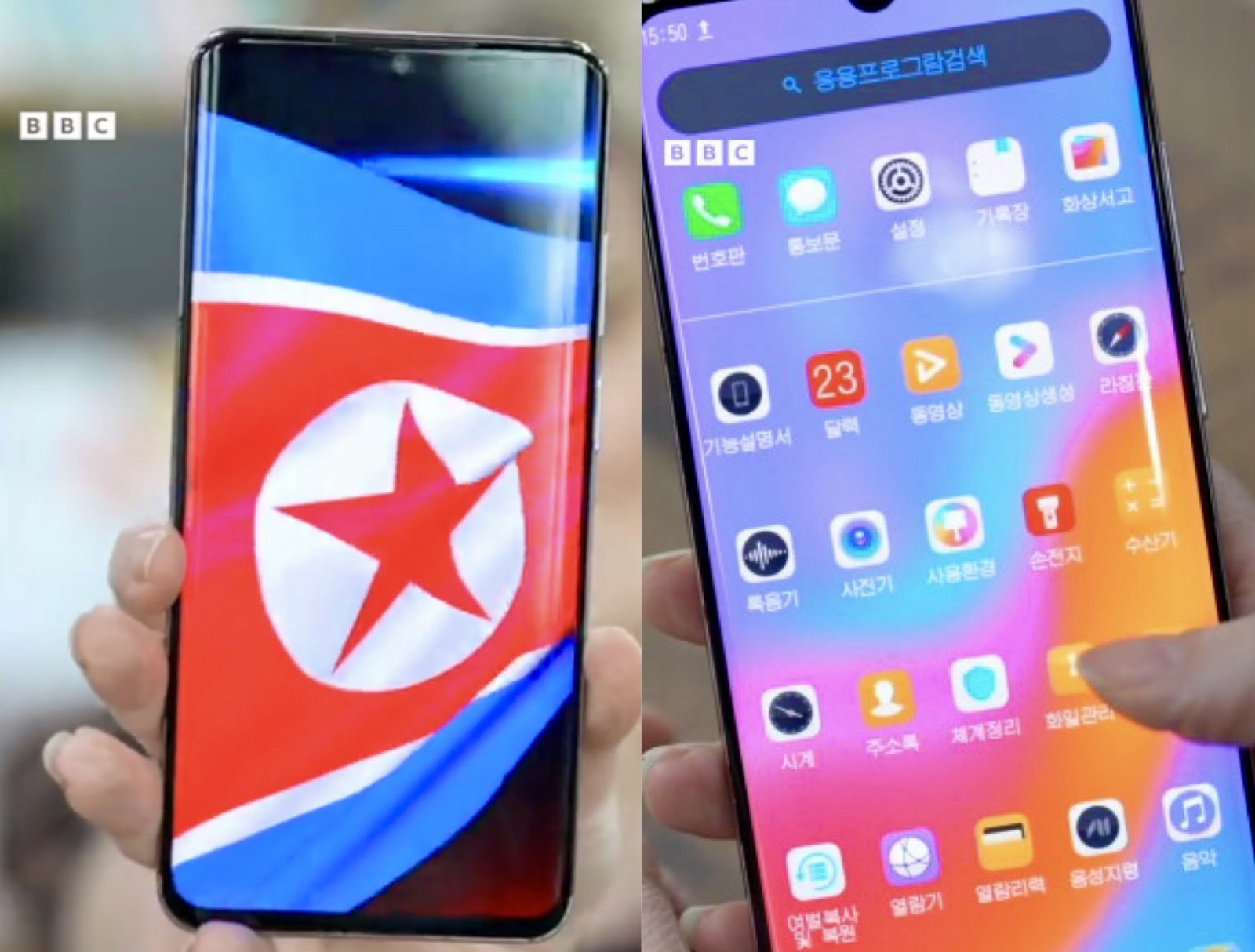
'Frozen' helps track menstrual cycles: North Korea's latest phones are in the hands of Pyongyang's elite
Translated from Korean, summarized and contextualized by DistantNews.
At a glance
News
Named sources
Context piece
- North Korea's elite in Pyongyang use high-end smartphones, costing around $750, for various services including QR code payments, taxi hailing, and accessing government-approved entertainment.
- These devices operate exclusively within the state-controlled intranet, with all external internet access and international communications blocked.
- Apps include e-wallets for grain purchases, ride-hailing, and even a women's health app tracking menstrual cycles, reflecting state control over digital life.
In North Korea, a select group of elites in Pyongyang are using high-end smartphones, priced at approximately $750, to access a range of services, including QR code payments at street stalls, taxi-hailing, and even watching Disney animations. These devices, while appearing similar to those in other countries, function strictly within the government's controlled network, limiting users to state-approved applications and content.
The smartphones feature e-wallet applications that facilitate payments for goods, public transportation fares, and taxi bookings. Users can also order food deliveries and purchase movie tickets. Notably, these e-wallets can be used to charge and redeem grain purchase coupons, a system that provides the government with greater oversight of currency circulation, exchange rates, prices, and taxes. The expansion of electronic payments allows for transaction records, aiding in the monitoring of grain distribution and preventing theft or corruption.
The top-tier smartphone sells for about $750 retail. This price is beyond the reach of most residents, so purchases and use are concentrated among the Pyongyang elite.
Beyond financial transactions, these smartphones serve as a portal for state-sanctioned entertainment. Streaming apps offer North Korean broadcasts, films, and approved content from countries like China, the former Soviet Union, and East Germany. American animated films such as 'Aladdin,' 'Moana,' 'Frozen,' 'Ratatouille,' and 'WALL-E' are also available, seemingly operating under a point-based system.
Electronic payments make it easier for the government to manage currency circulation, exchange rates, prices, and taxes.
This curated digital library functions as a countermeasure against the influx of foreign media, particularly from South Korea, which is strictly prohibited under the "Law on Rejecting Anti-Ideological and Cultural Elements." The state also provides apps for women's health and beauty, offering features like menstrual cycle tracking, makeup tutorials, skincare advice, and weight management information. One app, 'Women's Age,' even includes a quote from former leader Kim Jong Il advocating for attention to women's health.
While the smartphone's capabilities extend to health management and even include an app for ordering medicine, its usage remains tightly controlled within state-defined boundaries. Experts suggest that the North Korean regime's confidence in its ability to manage smartphone usage fuels the expansion of these digital services. The proliferation of smartphones has not led to increased access to external information, as attempting to access the global internet via smuggled SIM cards can result in severe punishment.
North Korea is cracking down on smuggled foreign videos while offering government-approved overseas content as a substitute.
DistantNews Editorial
Originally published by Dong-A Ilbo in Korean. Translated, summarized, and contextualized by our editorial team with added local perspective. Read our editorial standards.
More Stories


From Our Blog

What Gets Lost (and Found) When News Is Translated

The Critical Role of Diaspora Media in Global News

What Travellers Should Know About Countries with Restricted Press

A Digital Nomad's Guide to Following Local News

How the Same Story Looks Different in Different Countries
