


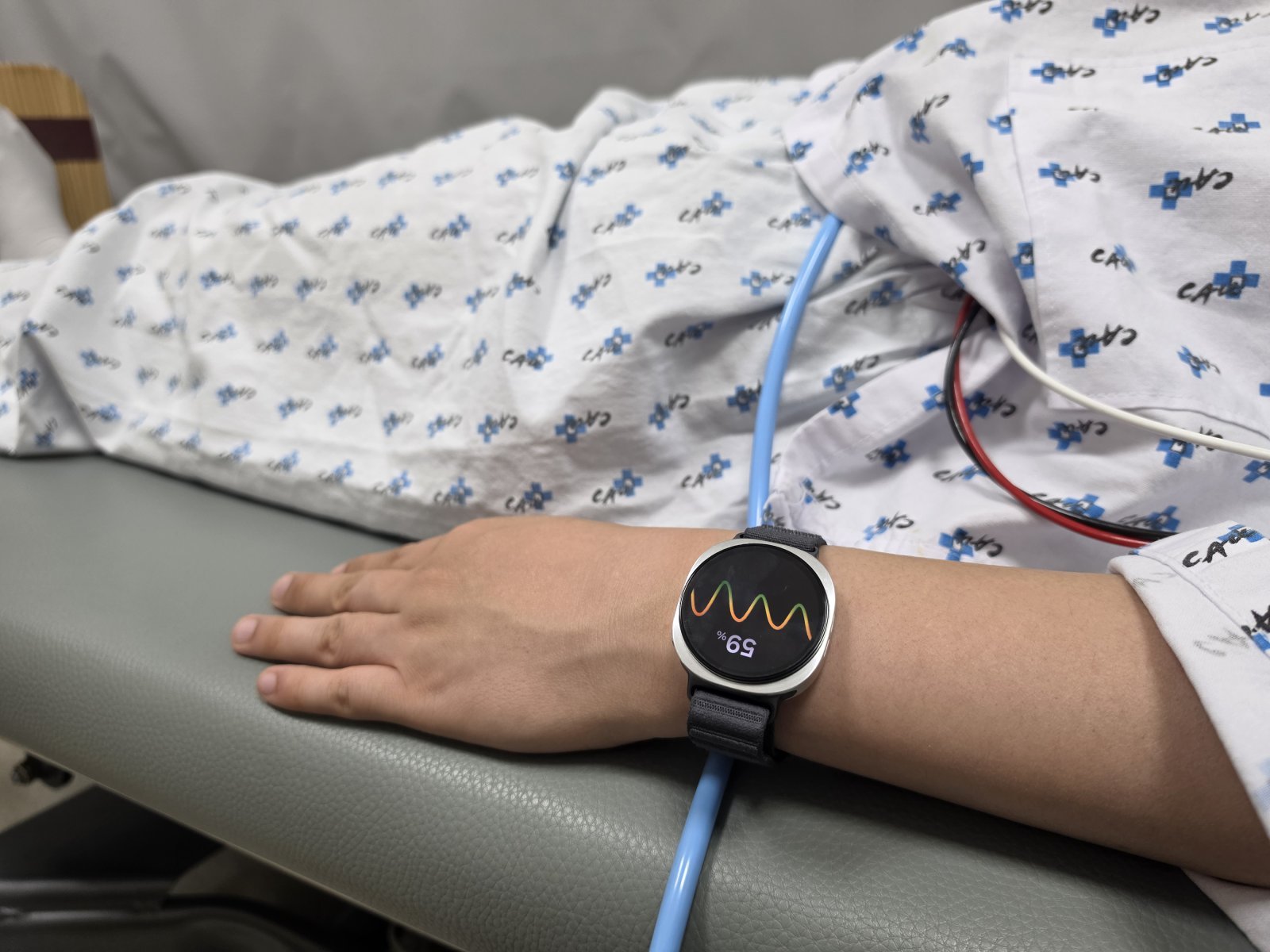
Galaxy Watch Detects 'Fainting Risk' in World First, Offering Critical Time
Translated from Korean, summarized and contextualized by DistantNews.
TLDR
- Samsung Electronics has achieved a world first by demonstrating the ability to predict vasovagal syncope using the Galaxy Watch.
- The study, conducted with Chung-Ang University Gwangmyeong Hospital, showed an 84.6% accuracy in detecting pre-syncope signs about 5 minutes before an event.
- This breakthrough, published in a European Society of Cardiology journal, could significantly aid in preventing secondary injuries from falls associated with syncope.
Dong-A Ilbo
Samsung Electronics has once again pushed the boundaries of wearable technology, achieving a groundbreaking first by proving that the Galaxy Watch can predict vasovagal syncope – a common cause of fainting – well in advance. This remarkable achievement, detailed in a joint clinical study with Chung-Ang University Gwangmyeong Hospital, demonstrates the power of integrating smartwatch biosignal analysis with artificial intelligence.
The study results predicted signs of vasovagal syncope with 84.6% accuracy about 5 minutes before the syncope occurred.
The study's findings are particularly significant because they offer a potential 'golden time' for individuals experiencing pre-syncope symptoms. By accurately detecting signs approximately five minutes before a fainting episode with an 84.6% success rate, the Galaxy Watch equips users with crucial moments to take preventative action, such as finding a safe position or seeking assistance. This is a monumental leap from reactive care to proactive health management, especially considering that falls resulting from syncope can lead to severe secondary injuries like fractures and brain hemorrhages.
Real-time detection of syncope risk can be of great help in preventing accidents for patients who have difficulty feeling the warning signs.
From our perspective at Dong-A Ilbo, this innovation highlights South Korea's leadership in the convergence of technology and healthcare. While Western media often focuses on the consumer aspects of smartwatches, we recognize their profound potential in addressing critical health challenges. This research validates the sophisticated health monitoring capabilities embedded in devices like the Galaxy Watch, moving beyond simple fitness tracking to potentially life-saving interventions.
Professor Cho Jun-hwan of Chung-Ang University Gwangmyeong Hospital rightly points out that syncope affects a significant portion of the population, with many experiencing recurrent episodes. The ability to provide real-time risk detection is invaluable for these individuals. Furthermore, as Samsung Electronics' Digital Health Team executive, Choi Min-jong, stated, this research exemplifies the shift towards preventive healthcare, a paradigm shift that wearable technology is uniquely positioned to facilitate. This is not just about a new feature; it's about redefining how we manage health and prevent sudden medical emergencies.
This study is a case that shows the possibility of shifting healthcare from post-management-centered to pre-prevention-centered through wearable technology.
DistantNews Editorial
Originally published by Dong-A Ilbo in Korean. Translated, summarized, and contextualized by our editorial team with added local perspective. Read our editorial standards.
More Stories



From Our Blog

What Gets Lost (and Found) When News Is Translated

The Critical Role of Diaspora Media in Global News

What Travellers Should Know About Countries with Restricted Press

A Digital Nomad's Guide to Following Local News

How the Same Story Looks Different in Different Countries
