


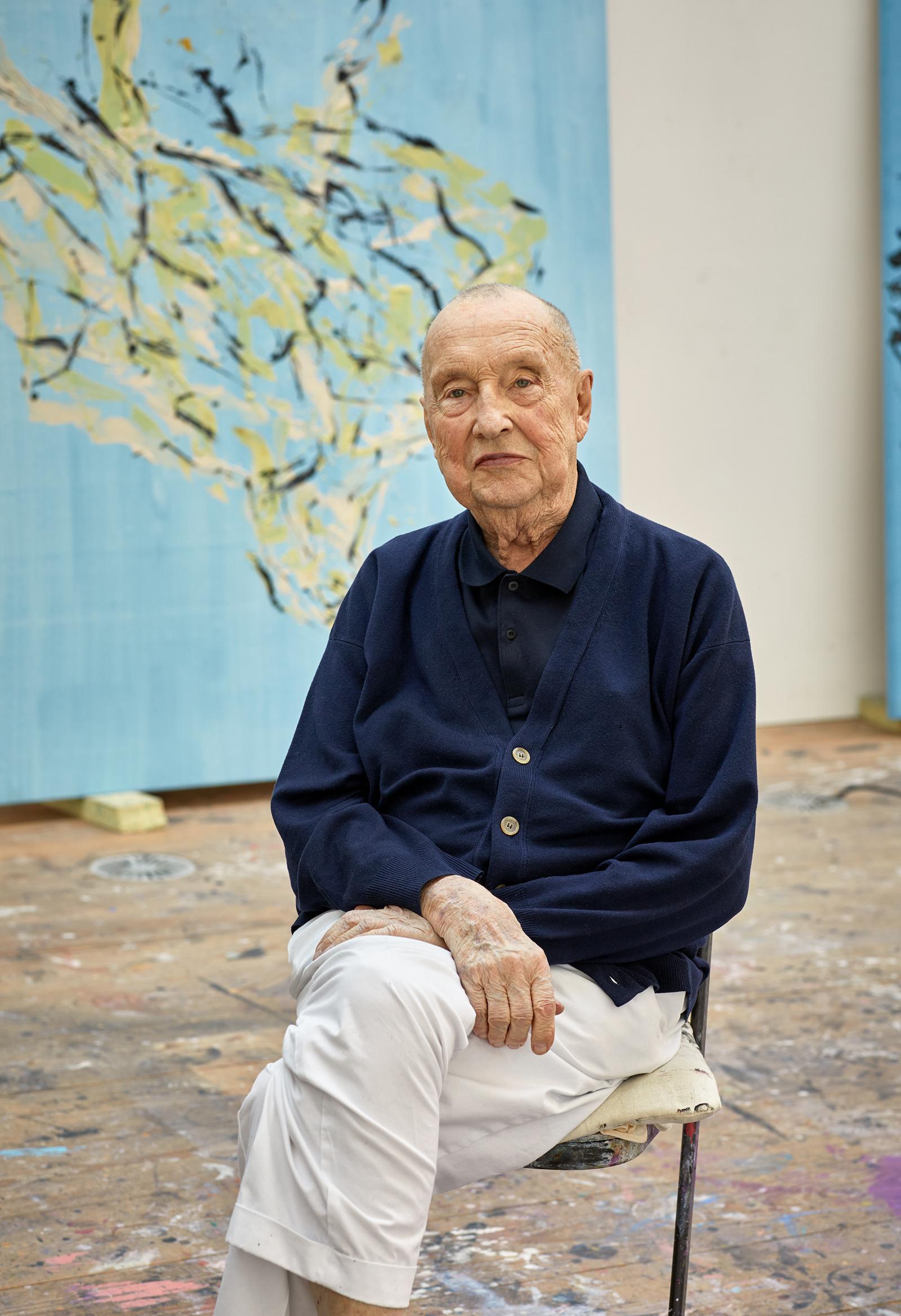
German Painter Georg Baselitz Dies at 88
Translated from Korean, summarized and contextualized by DistantNews.
TLDR
- German painter Georg Baselitz, renowned for his inverted imagery, has passed away at the age of 88.
- Baselitz, who was born in East Germany during the Nazi era and experienced the post-war turmoil, used his art to express the chaotic social conditions of the time.
- His distinctive style, characterized by bold brushwork and vibrant colors, created a unique and captivating experience for viewers.
The art world mourns the loss of Georg Baselitz, a towering figure of German post-war art, who passed away peacefully at his home at the age of 88. His gallery, Thaddaeus Ropac, confirmed his death, marking the end of an era for a painter whose work profoundly influenced global contemporary art.
Born in Deutschbaselitz, Saxony, in 1938, Baselitz's formative years were shaped by the rigid discipline of Nazi Germany and the subsequent ideological pressures of the Soviet occupation. This tumultuous backdrop profoundly informed his artistic vision. He was expelled from art school in East Germany in 1975 and faced forced labor, prompting his escape to West Germany. His early career was marked by controversy, including a ban on his first solo exhibition in 1963 due to its perceived 'immorality.'
Baselitz is most celebrated for his signature 'upside-down' paintings. This stylistic choice was more than a mere compositional device; it was a powerful statement that challenged conventional perspectives and reflected the fractured reality of post-war Europe. His works, characterized by their raw, energetic brushstrokes and striking use of color, possess a visceral quality that draws viewers into a complex emotional landscape, evoking a sense of disorientation and fascination simultaneously.
His legacy extends far beyond his unique technique. Baselitz captured the spirit of a generation grappling with the aftermath of war and division, offering a visual language that resonated with the anxieties and resilience of the era. His passing is a significant loss, but his groundbreaking work will undoubtedly continue to inspire and provoke dialogue for generations to come, solidifying his place as one of Germany's most important artistic voices.
DistantNews Editorial
Originally published by Dong-A Ilbo in Korean. Translated, summarized, and contextualized by our editorial team with added local perspective. Read our editorial standards.
More Stories


From Our Blog

What Gets Lost (and Found) When News Is Translated

The Critical Role of Diaspora Media in Global News

What Travellers Should Know About Countries with Restricted Press

A Digital Nomad's Guide to Following Local News

How the Same Story Looks Different in Different Countries
