


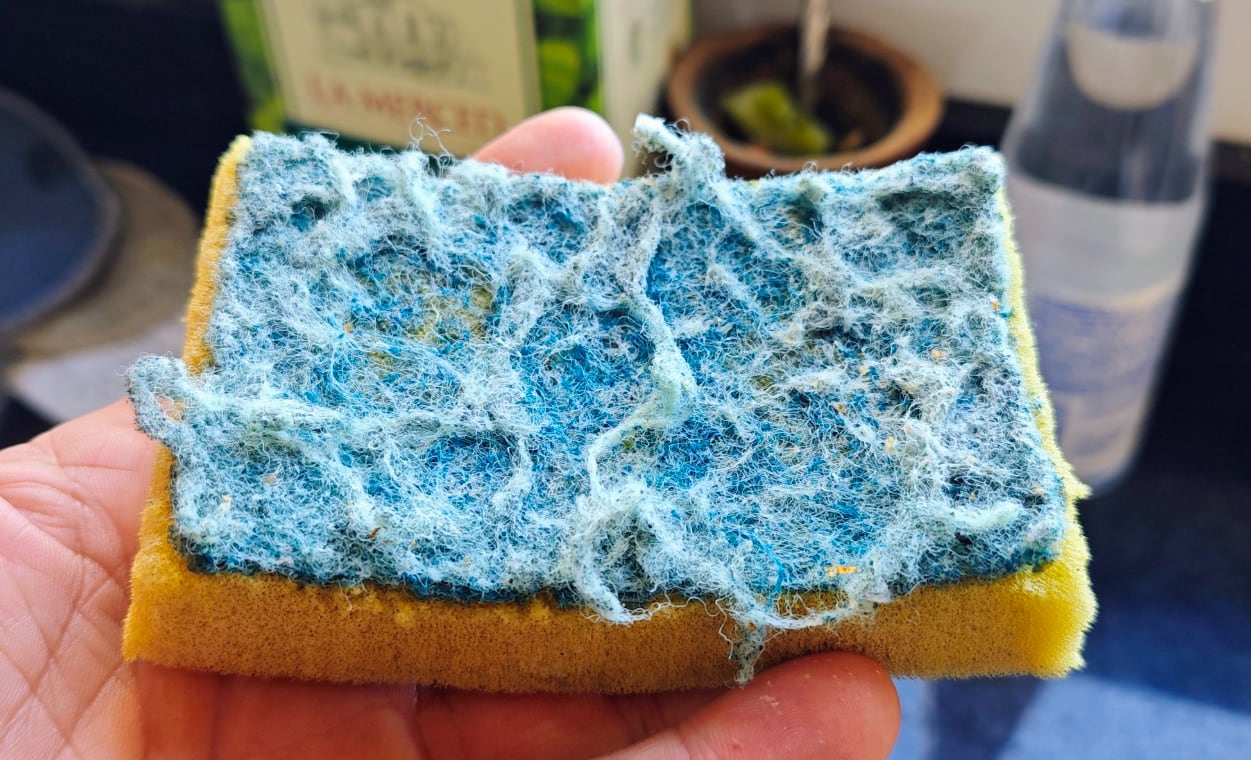
Goodbye Kitchen Sponge: The New Trend for Washing Dishes
Translated from Spanish, summarized and contextualized by DistantNews.
TLDR
- Traditional kitchen sponges made of melamine shed millions of microscopic plastic fibers during washing, contributing to microplastic pollution.
- These microplastics accumulate in the environment and enter the food chain, posing a significant ecological and health concern.
- Sustainable alternatives like natural loofahs, coconut fiber scrubbers, and cellulose sponges are gaining popularity as eco-friendly replacements.
The everyday act of washing dishes, a seemingly mundane chore, has come under scrutiny due to the environmental impact of traditional kitchen sponges. Recent research highlights a significant, yet often overlooked, problem: melamine sponges, ubiquitous in households worldwide, are shedding millions of microplastic fibers with each use.
These sponges, made from a type of plastic with a rigid, porous structure, function like a fine abrasive to remove tough grime. However, this very mechanism causes the material to wear down, releasing tiny, invisible particles into the water. When multiplied across millions of households, the scale of this plastic pollution becomes alarmingly significant. These microplastics are not just an environmental nuisance; they are a growing concern for human health as they infiltrate ecosystems and the food chain.
In response to this growing awareness, consumers are increasingly seeking sustainable alternatives. Natural loofahs, derived from a climbing plant, offer a biodegradable and effective scrubbing option. Similarly, scrubbers made from coconut fiber or crushed walnut shells provide durable, petroleum-free cleaning solutions. Cellulose sponges, made from plant-based materials, also represent a more environmentally conscious choice.
From the perspective of La Nación, this shift represents a crucial move towards greater environmental responsibility in daily life. The article emphasizes that simple changes in household products can have a collective impact on reducing plastic waste. It champions the adoption of natural and biodegradable materials, highlighting how these alternatives not only perform effectively but also align with a growing global consciousness about sustainability. The piece serves as a call to action, encouraging readers to reconsider their consumption habits and embrace eco-friendly options that protect both their homes and the planet from the pervasive threat of microplastic pollution.
DistantNews Editorial
Originally published by La Nación in Spanish. Translated, summarized, and contextualized by our editorial team with added local perspective. Read our editorial standards.
More Stories



From Our Blog

What Gets Lost (and Found) When News Is Translated

The Critical Role of Diaspora Media in Global News

What Travellers Should Know About Countries with Restricted Press

A Digital Nomad's Guide to Following Local News

How the Same Story Looks Different in Different Countries
