


Government Rescue Portal Can Mislead Users: How to Identify Nepal’s Official Flood Figures
Translated from English and summarized by DistantNews. Read the original for the full story.
At a glance
Explainer
Official statement
Ongoing story
- Nepal launched a portal to collect information about people missing, found or stranded in the Rasuwa floods and to connect users with emergency services.
- The portal displayed 17,098 missing-person reports and 12,819 people listed as still missing, figures that did not match official statistics released by the disaster authority.
- A disclaimer warns that duplicate public submissions may inflate the number of individuals represented.
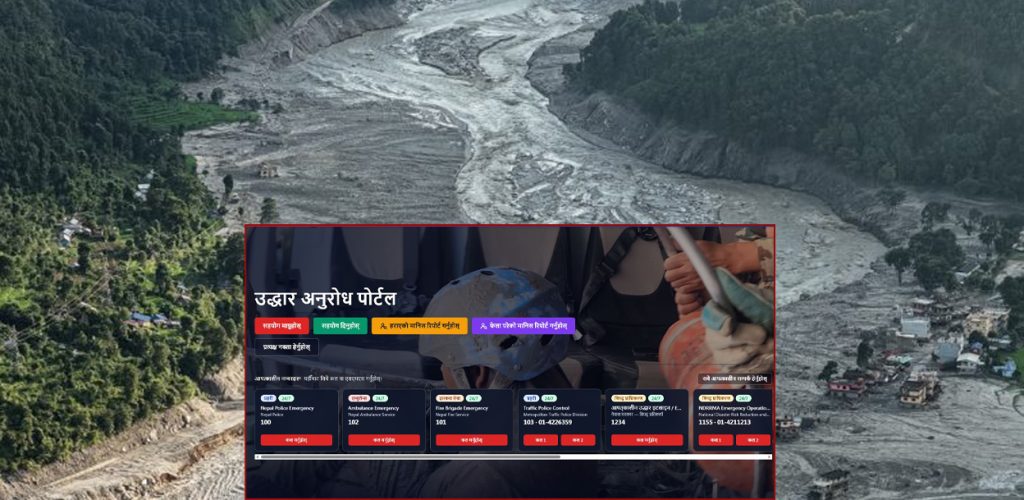
Nepal’s government rescue portal was designed to help locate people affected by the Rasuwa floods, but its figures have confused the public and spread alarming claims on social media.
Managed by the National Disaster Risk Reduction and Management Authority in coordination with the Ministry of Physical Infrastructure, the portal lets users submit information about missing people. It also lists contact numbers for police, ambulances, fire services, the disaster authority, the Red Cross and other support groups. Mobile users can tap a number to call directly, while a QR code links to the Prime Minister’s Disaster Relief Fund.
The problem lies in how the data appears. At the time of reporting, the portal showed 17,098 reports of missing people and 12,819 people still listed as missing. Users shared these numbers as official statistics, although the figures did not match those released by the disaster authority.
The portal also includes reports of people found, people awaiting reunification and resolved cases. A separate figure of 6,637 appeared under “reports in the last 24 hours,” but the category did not make clear whether it referred to people found, rescued or another type of report. Figures for missing children and older people added to the confusion.
Anyone can submit details of a missing person, or information about someone found or stranded. The portal warns that its data comes from public complaints and reports, and that the same person may appear more than once in different circumstances. As a result, the number shown may exceed the actual number of individuals.
The data have been collected based on public complaints and reports. As the same person may be reported more than once in different circumstances, the actual number of individuals may be lower than the number displayed.
About this summary
Originally published by OnlineKhabar English in English. Translated, summarized, and contextualized automatically by DistantNews, with a note on how the source frames the story. Not individually reviewed before publishing. How this works.
More Stories

From Our Blog

What Gets Lost (and Found) When News Is Translated

The Critical Role of Diaspora Media in Global News

What Travellers Should Know About Countries with Restricted Press

A Digital Nomad's Guide to Following Local News

How the Same Story Looks Different in Different Countries
