


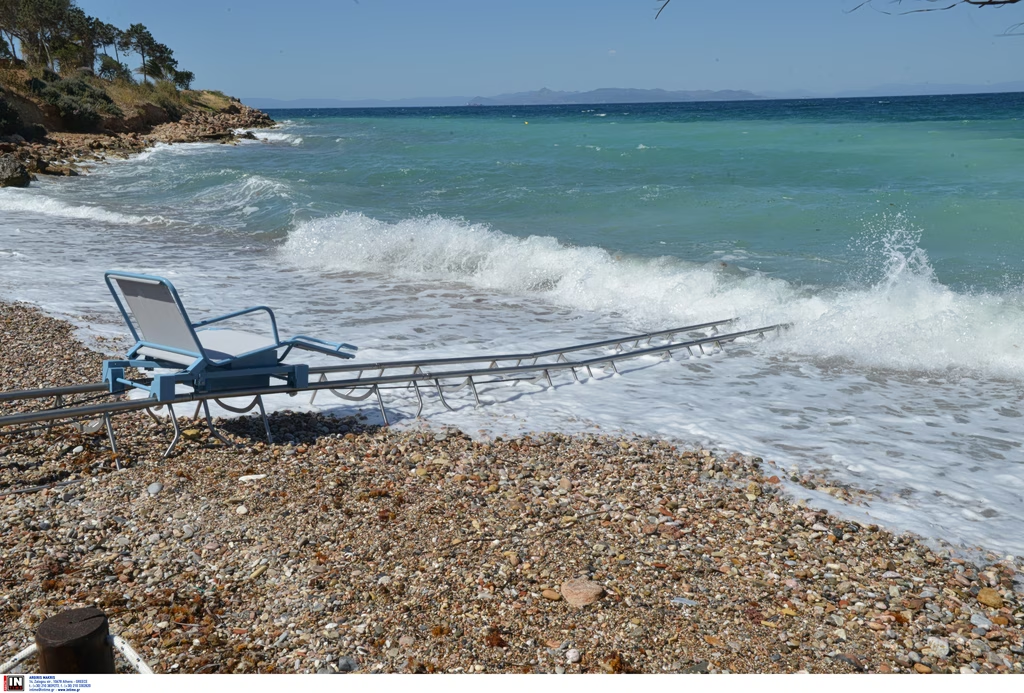
Greece: Disabled denied beach access as specialized equipment disappears
Translated from Greek, summarized and contextualized by DistantNews.
At a glance
News
Named sources
Context piece
- The National Confederation of Disabled Persons (ESAMEA) in Greece denounces numerous incidents of disabled individuals being denied access to beaches.
- Complaints highlight a severe lack of accessibility, with specialized equipment for sea access being removed or malfunctioning in many areas.
- ESAMEA urges local authorities to urgently ensure accessible and safe coastal infrastructure for all citizens with reduced mobility.
The National Confederation of Disabled Persons (ESAMEA) in Greece has reported a surge in incidents where individuals with disabilities are being excluded from accessing the country's beaches. The organization has received numerous complaints from both residents and visitors with disabilities or reduced mobility, as well as their families, detailing a significant lack of coastal accessibility.
ESAMEA has communicated these accessibility issues to the Central Union of Municipalities of Greece (KEDE) and various municipalities, including those on Milos, Mandoudi-Limni-Agia Anna, Salamina, Kamena Vourla, Paros, East Mani, and areas within the Elis regional unit. The reports indicate serious dysfunctions and oversights on Greek beaches, with specialized equipment previously facilitating sea access being removed in many locations this year.
Despite approved funding and completed procedures, the necessary equipment remains unused or is significantly delayed in installation in regions like Eastern Macedonia-Thrace and Thesprotia. In Epivates, Thessaloniki, the required access ramp is absent. On Rhodes, the systems are frequently malfunctioning, and on the islands of the Northeast Aegean, less than 50% of available access infrastructure is operational. In Zakynthos, installations planned for four beaches had not been completed by the last week of July.
ESAMEA emphasizes that this situation leads to the systematic social exclusion of individuals with mobility impairments, violating their fundamental right to recreation. The confederation reminds local authorities of their obligation to ensure accessible and safe movement for people with disabilities, chronic, or rare conditions to all public facilities. With the summer season at its midpoint, ESAMEA calls for KEDE's urgent intervention to compel municipalities to act swiftly in guaranteeing autonomous, safe, and dignified access to the coast for all citizens with reduced mobility.
DistantNews Editorial
Originally published by Ta Nea in Greek. Translated, summarized, and contextualized by our editorial team with added local perspective. Read our editorial standards.
More Stories



From Our Blog

What Gets Lost (and Found) When News Is Translated

The Critical Role of Diaspora Media in Global News

What Travellers Should Know About Countries with Restricted Press

A Digital Nomad's Guide to Following Local News

How the Same Story Looks Different in Different Countries
