

Green for cautious drivers, red for speeders: US cities test a new traffic-light idea
Translated from Polish and summarized by DistantNews. Read the original for the full story.
At a glance
In-depth
Named sources
Ongoing story
- Albuquerque and Portland are testing traffic systems that allow drivers traveling within the speed limit to receive green lights sooner.
- Albuquerque officials and a local resident reported fewer dangerous speeding incidents, while Portland recorded a drop in average speed during an initial trial.
- Researchers cautioned that Portland’s results remain preliminary, although the system appears to have potential for improving compliance.
In Albuquerque, drivers who keep to the speed limit can reach a green light sooner, while those who accelerate must stop. City officials have installed speed-sensitive signals on parts of Lead Avenue and Coal Avenue, two parallel one-way streets running through residential areas.
We are discovering that the technology itself is, in a sense, the best advertisement.
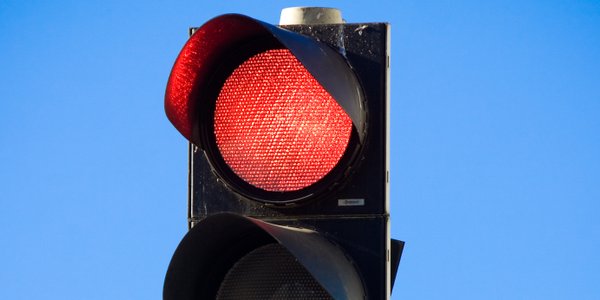
The system builds on the “rest in red” concept, in which traffic lights remain red until they detect an approaching vehicle. Albuquerque and Portland added speed sensors, turning the signals into a form of technological enforcement. Drivers traveling at or below the limit can receive a green light earlier. Drivers going too fast face a red light.
Jennifer Turner, Albuquerque’s director of urban development, said the technology itself helps promote compliance. “We are discovering that the technology itself is, in a sense, the best advertisement,” she said. She added that drivers using the corridor quickly learn that exceeding the limit means having to stop.
If you come to Albuquerque now and drive along this corridor, you will realize fairly quickly that if you exceed the speed limit, you will have to stop.
Isaac Romero, who lives along the route, said the change has been clear. Before the system was introduced, he sometimes woke at night to drivers racing to beat traffic signals or overtake other vehicles. He also saw cars overturn or leave the road after crashes. “We had an accident where the whole house shook because someone hit a tree,” Romero said. “It is a big change, because there are not as many people speeding through here now.”
We had an accident where the whole house shook because someone hit a tree.
Portland recently introduced a similar system at night on Southeast Powell Boulevard, a busy state route with a history of crashes, including fatal ones. Peter Koonce, the city official responsible for traffic signals and street lighting, called it a “virtual speed bump.” At the first intersection tested, average speed fell from 39 miles per hour to 30 miles per hour, the posted limit. Oregon State University researchers helped select the detection technology and are studying its effectiveness. David Hurwitz, the professor leading the research, said it is too early for final conclusions, but the system “seems to be working very well and has a lot of potential.”
The solution, which is intended to increase compliance with speed limits, seems to be working very well and has a lot of potential.
About this summary
Originally published by Rzeczpospolita in Polish. Translated, summarized, and contextualized automatically by DistantNews, with a note on how the source frames the story. Not individually reviewed before publishing. How this works.
More Stories

From Our Blog

What Gets Lost (and Found) When News Is Translated

The Critical Role of Diaspora Media in Global News

What Travellers Should Know About Countries with Restricted Press

A Digital Nomad's Guide to Following Local News

How the Same Story Looks Different in Different Countries
