


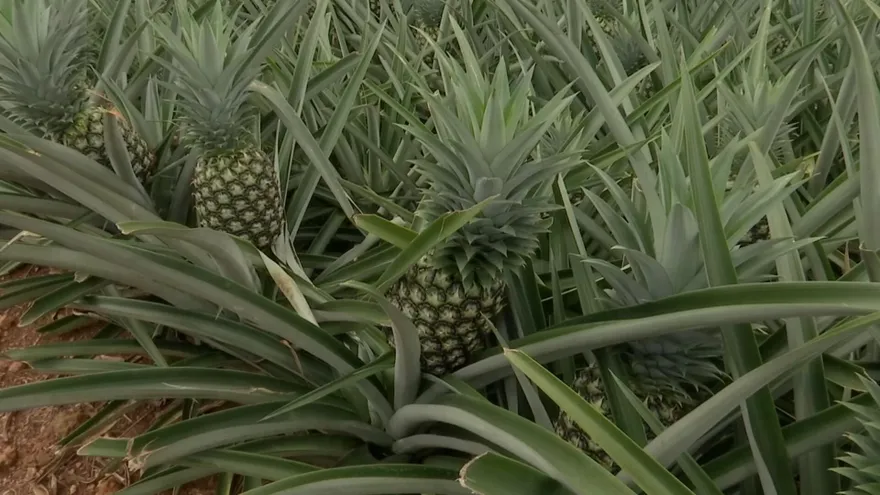
Green World: The pineapple under climate pressure
Translated from Spanish, summarized and contextualized by DistantNews.
At a glance
News
Sources not specified
Context piece
- High temperatures and reduced water availability are stressing pineapple crops, potentially affecting fruit size and weight.
- Some farms are implementing alternative water sources, like deep wells, to maintain crop hydration.
- Producing quality pineapples requires careful management of water, sun, soil nutrients, and pest control.
Pineapple cultivation, typically considered resilient, is facing significant challenges due to escalating climate pressures. Rising temperatures and diminished water supplies are inducing water stress in the plants, leading to leaf dehydration and hindering fruit development. While producers aim to maintain fruit quality, the size and weight of pineapples are notably impacted when plants lack adequate hydration.
To combat these effects, some farms are adopting innovative water management strategies. One such initiative involves the construction of a deep well, capable of supplying approximately 30 gallons of water per minute. This well, along with a generator to power the pumping system, ensures that the crops remain sufficiently hydrated even during periods of scarcity.
The task of producing high-quality pineapples is inherently demanding, requiring a delicate balance of essential elements. Ample water, sufficient sunlight, nutrient-rich soil, and consistent vigilance against pests and diseases are all critical. Threats to the crop include insects like the mealybug and scale insect, as well as various fungal diseases that can compromise the harvest.
These challenges underscore the vulnerability of even hardy crops to changing environmental conditions. The ongoing need for robust water infrastructure and integrated pest management highlights the adaptive measures required by the agricultural sector to ensure continued production in the face of climate change.
DistantNews Editorial
Originally published by TVN Panamá in Spanish. Translated, summarized, and contextualized by our editorial team with added local perspective. Read our editorial standards.
More Stories

From Our Blog

What Gets Lost (and Found) When News Is Translated

The Critical Role of Diaspora Media in Global News

What Travellers Should Know About Countries with Restricted Press

A Digital Nomad's Guide to Following Local News

How the Same Story Looks Different in Different Countries
