

Gulbenkian Museum Reopens in Lisbon After Renovation
Translated from Polish, summarized and contextualized by DistantNews.
At a glance
News
Sources not specified
Outcome reported
- The Calouste Gulbenkian Museum in Lisbon has reopened after 18 months of renovation, showcasing its vast collection of over 6,000 artifacts.
- The museum, owned by the Gulbenkian Foundation, houses a collection valued at an estimated 3.5 billion euros, amassed by Armenian businessman Galust Gulbenkian from his oil fortune.
- The renovation, costing 7.8 million euros, included restoring original materials, adding new exhibition spaces, and upgrading security and climate control systems.
The Calouste Gulbenkian Museum in Lisbon has reopened its doors after an 18-month renovation, inviting the public to once again admire one of Europe's most exceptional private art collections. The museum showcases over 6,000 artifacts amassed by the late Armenian businessman Galust Gulbenkian, a figure who built a fortune on oil trading and possessed a passion for rare art and precious objects from around the globe.
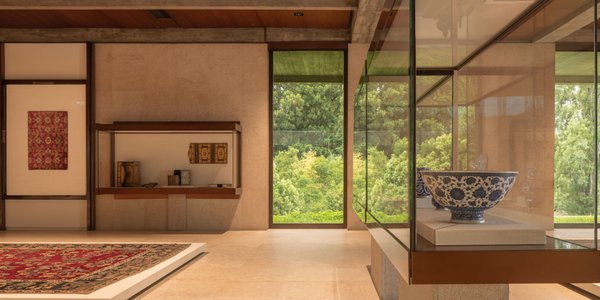
The collection, valued at an estimated 3.5 billion euros, includes coins, rare books, Renaissance tapestries, Middle and Far Eastern artifacts, and 18th-century French furniture. Some items are being displayed publicly for the first time. The museum, originally opened in 1969 to honor Gulbenkian's centenary, features a brutalist building designed by Ruy Jervis d'Athouguia, Alberto Pessoa, and Pedro Cid, with input from Georges-Henri Rivière and Franco Albini.
The recent 7.8 million euro renovation, led by architects Teresa Nunes da Ponte and Frédéric Ladonne, focused on restoring the building's original atmosphere using materials like wood, bronze, glass, and raw concrete. The project also introduced new exhibition spaces and enhanced security, temperature, and lighting systems. Visitors can now access previously restricted areas, such as the historic coin cabinet, and view rarely displayed drawings by artists like Watteau and Renoir, alongside paintings by Rubens and Turner.
DistantNews Editorial
Originally published by Rzeczpospolita in Polish. Translated, summarized, and contextualized by our editorial team with added local perspective. Read our editorial standards.
More Stories
From Our Blog

What Gets Lost (and Found) When News Is Translated

The Critical Role of Diaspora Media in Global News

What Travellers Should Know About Countries with Restricted Press

A Digital Nomad's Guide to Following Local News

How the Same Story Looks Different in Different Countries
