

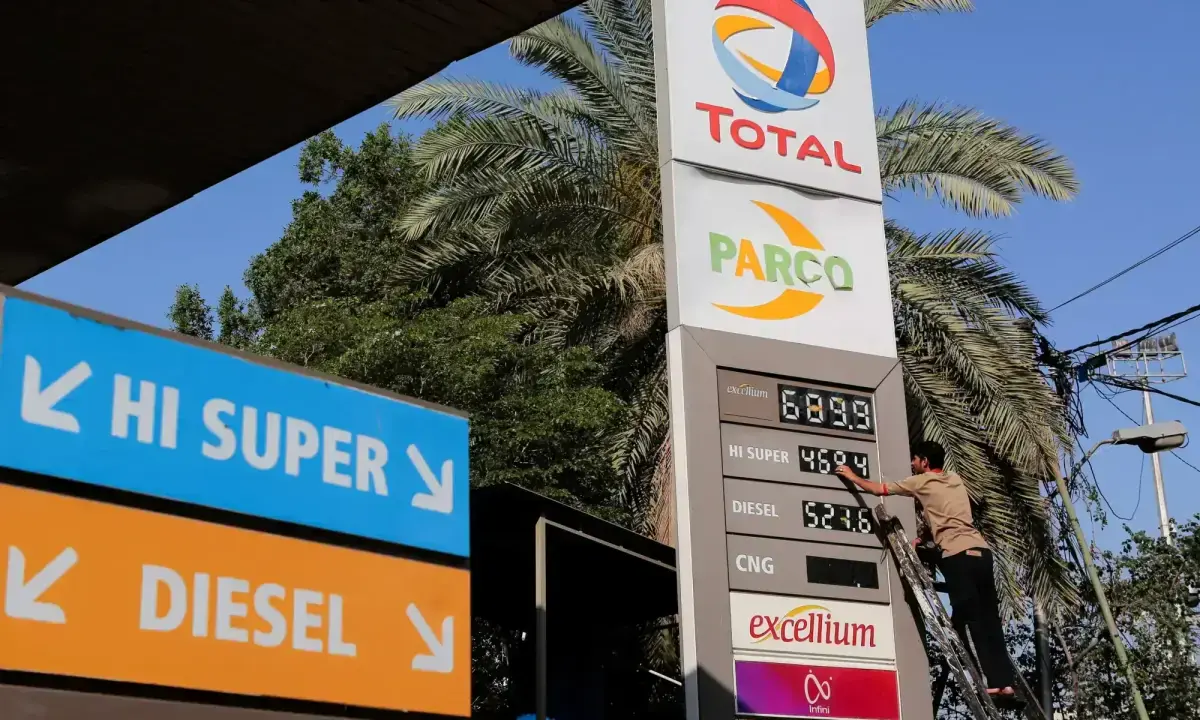

Gulf turmoil hurting Pakistan’s economic outlook
Summarized and contextualized by DistantNews.
At a glance
News
Named sources
Context piece
- Regional instability, particularly the Gulf turmoil, is negatively impacting Pakistan's economy, affecting bond and equity markets and foreign direct investment.
- Analysts are concerned the uncertainty, even if the Gulf war pauses, will deter foreign investors from Pakistan, which relies on external support to avoid default.
- Despite strong remittance growth, Pakistan faces significant external payment obligations, a large trade deficit, and high investment risks, although growing regional ties could offer future benefits.
Pakistan's economic outlook is facing significant headwinds due to ongoing regional instability, with the recent Gulf turmoil casting a long shadow over its domestic markets and foreign investment prospects. Economic stakeholders are expressing uncertainty about the duration of the current pause in the Gulf conflict, fearing that lingering instability could deter crucial foreign investment.
Even if the war does not start in the near future, the uncertainty is high enough to keep foreign investors away from the country, such as Pakistan, which faces serious problems with its external account and depends largely on friendly countries and international donors to avoid default.
Analysts note that while most countries hope for an end to the Gulf war, the business community views the situation differently. Even without an immediate escalation, the prevailing uncertainty is enough to keep foreign investors away from countries like Pakistan, which grapple with severe external account issues and depend heavily on international aid to avert default. Foreign direct investment has already seen a notable decline, dropping by 28 percent in the first 11 months of the fiscal year 2026. Domestic bond markets have also experienced outflows, with net outflows of $550 million and total outflows exceeding $2 billion.
The Pakistan Stock Exchange, despite performing well, has struggled to attract foreign capital. Data from the State Bank reveals that while inflows into the equity market reached $308 million between July 1, 2025, and June 19, 2026, outflows surpassed $1 billion. Most experts believe the investment risk in Pakistan remains high, even with stronger foreign exchange reserves and robust remittance growth, which is projected to reach $41 billion in FY26.
Despite these high inflows of remittances, the country needs to pay over $26bn in 2026-27, making the external account vulnerable, with a $35bn trade deficit in 11MFY26, which is enough to alert foreign investors.
However, Pakistan's external account remains vulnerable. The country needs to pay over $26 billion in 2026-27, coupled with a $35 billion trade deficit in the first 11 months of FY26, raising alarms for foreign investors. While Pakistan is not directly involved in the Gulf war, its participation in peace initiatives highlights the high stakes involved. Should peace efforts fail, the country could face negative repercussions. Conversely, some analysts suggest that Pakistan's expanding role in the Gulf region, fostering relations with Iran, Saudi Arabia, Oman, and Qatar, could yield economic benefits if a peace deal succeeds. Industry sources indicate that trade with Iran, in particular, could see a significant boost following the Iranian president's recent visit, though specific business agreements were not detailed.
Although Pakistan is not involved in the Gulf war, the country is now part of the peace deal, which shows the high stakes for Pakistan in this tense Gulf situation.
DistantNews Editorial
Originally published by Dawn. Summarized and contextualized by our editorial team with added local perspective. Read our editorial standards.
More Stories
From Our Blog

What Gets Lost (and Found) When News Is Translated

The Critical Role of Diaspora Media in Global News

What Travellers Should Know About Countries with Restricted Press

A Digital Nomad's Guide to Following Local News

How the Same Story Looks Different in Different Countries
