


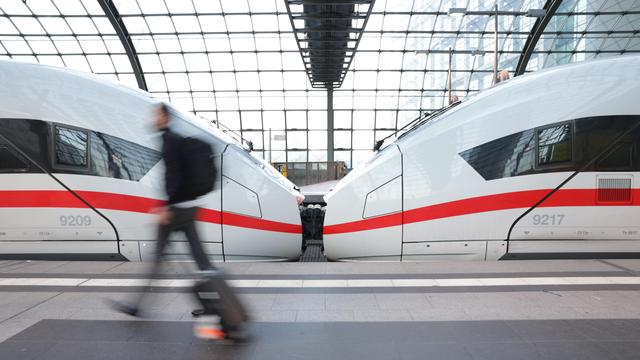
Hamburg-Berlin trains struggle with punctuality post-renovation
Translated from German, summarized and contextualized by DistantNews.
At a glance
News
Named sources
Ongoing story
- Only 25.8% of long-distance trains between Hamburg and Berlin were on time between mid-June and mid-July, despite recent renovations.
- Deutsche Bahn cites ongoing residual work, software updates, and technical acceptance tests as reasons for the delays.
- The 280-kilometer route underwent a major renovation costing 2.7 billion euros, exceeding the initial budget.
Despite a costly, months-long renovation, train punctuality on the vital Hamburg-Berlin route has plummeted, with only about one in four long-distance trains arriving on time. Between mid-June and mid-July, just 25.8% of services met their schedules, a significant drop from already poor performance levels, according to Deutsche Bahn.
The railway company attributes the persistent delays to ongoing residual work, technical acceptance tests, and software updates required for high-speed operations. A spokesperson stated that software improvements in the Nauen and Büchen signal boxes are expected in the coming weeks. Additionally, remaining defects are being addressed, and optimizations are being made based on operational experience, necessitating further nighttime closures in September.
In the coming weeks, software updates in the Nauen and Büchen signal boxes will bring noticeable improvements.
The 280-kilometer line recently underwent a comprehensive overhaul from August 2025 to June 2026. This extensive project included replacing 165 kilometers of track, nearly 250 sets of points, and modernizing 28 stations. The final cost reached 2.7 billion euros, substantially exceeding the originally estimated 2.2 billion euros.
This poor performance follows a period where punctuality was already below par, reportedly around 49.6%. The recent extensive renovation, intended to improve the line's efficiency and reliability, has thus far failed to deliver timely services, leaving passengers frustrated.
Residual defects are being eliminated and optimizations carried out across the entire route, which could only be identified during ongoing operations.
DistantNews Editorial
Originally published by Die Zeit in German. Translated, summarized, and contextualized by our editorial team with added local perspective. Read our editorial standards.
More Stories


From Our Blog

What Gets Lost (and Found) When News Is Translated

How the Same Story Looks Different in Different Countries

The Critical Role of Diaspora Media in Global News

What Travellers Should Know About Countries with Restricted Press

A Digital Nomad's Guide to Following Local News
