

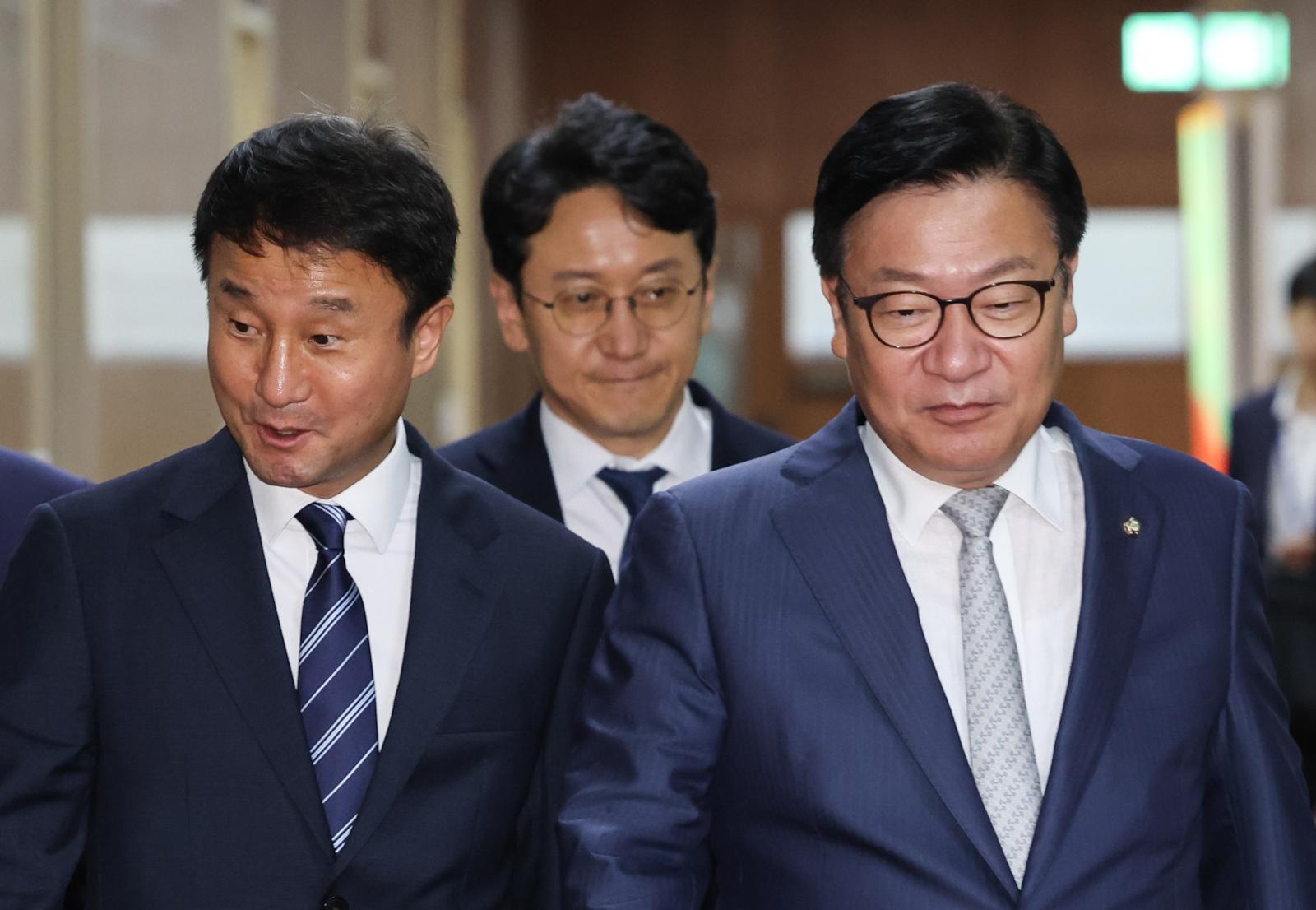

Han Dong-hoon expelled for 'criminal acts,' not just misconduct, says interim party leader
Translated from Korean, summarized and contextualized by DistantNews.
At a glance
News
Named sources
Context piece
- Jang Dong-hyuk, interim leader of the People Power Party, stated that Han Dong-hoon was expelled from the party for "criminal acts," not just "improper conduct."
- Jang argued that Han's expulsion was based on criminal behavior, implying criticism of Han's call for the party leader's resignation.
- The comments come amid internal party disputes regarding disciplinary actions and eligibility for readmission after leaving the party.
Jang Dong-hyuk, interim leader of South Korea's conservative People Power Party, directly addressed the expulsion of independent lawmaker Han Dong-hoon, asserting that Han was removed from the party due to "criminal acts," not merely "improper conduct."
Speaking on the YouTube channel New Daily TV, Jang stated, "Assemblyman Han Dong-hoon was expelled for criminal acts, not for improper conduct. I hope he considers what he was expelled for before criticizing the permanent ban on readmission for those who engaged in improper conduct."
Assemblyman Han Dong-hoon was expelled for criminal acts, not for improper conduct. I hope he considers what he was expelled for before criticizing the permanent ban on readmission for those who engaged in improper conduct.
The People Power Party expelled Han in January over allegations that his family members posted critical remarks about former President Yoon Suk-yeol and his wife on the party's public bulletin board. Jang's emphasis on "criminal acts" appears to be a pointed response to Han's recent calls for Jang's resignation as party leader.
Victory in war is not achieved by the number of soldiers, but by whether the organization can unite and fight with one mind. The biggest minus is attacking our own side.
Jang had previously stated in a closed-door Supreme Council meeting on March 6 that individuals who committed "serious improper conduct" should be permanently banned from readmission, even if party rules needed to be amended. While Jang denied targeting Han directly, his subsequent remarks highlighting the nature of Han's expulsion have fueled speculation.
Jang further clarified his stance on readmission bans, explaining that his comments were directed at individuals who left the party to run as independents during local elections. He argued that the lack of fear regarding expulsion or readmission bans encourages such behavior, as individuals often return to the party after elections. "Victory in war is not achieved by the number of soldiers, but by whether the organization can unite and fight with one mind," Jang stated, emphasizing party unity. He also criticized "subtraction politics," defining it as attacking one's own party members, and specifically called calls for the party leader's resignation "subtraction politics."
There is no greater subtraction than attacking our own side. Asking the party leader to step down is subtraction politics.
DistantNews Editorial
Originally published by Hankyoreh in Korean. Translated, summarized, and contextualized by our editorial team with added local perspective. Read our editorial standards.
More Stories

From Our Blog

What Gets Lost (and Found) When News Is Translated

The Critical Role of Diaspora Media in Global News

What Travellers Should Know About Countries with Restricted Press

A Digital Nomad's Guide to Following Local News

How the Same Story Looks Different in Different Countries
