


Handke's 'Snow of Yesterday, Snow of Tomorrow' explored in Salzburg
Translated from German, summarized and contextualized by DistantNews.
At a glance
In-depth
Named sources
Context piece
- A stage adaptation of Peter Handke's "Yesterday's Snow, Tomorrow's Snow" premiered at the Salzburg Festival, exploring themes of aimless wandering and existential resignation.
- Director Jossi Wieler splits Handke's solitary narrator into two characters, portrayed by Jens Harzer and Marina Galic, who engage in a dialogue that reflects the text's inherent contradictions.
- The production's premiere, occurring shortly after a staging of Goethe's "Faust," has prompted comparisons between the two works' explorations of human striving and existential searching.
A new stage production of Peter Handke's "Yesterday's Snow, Tomorrow's Snow" has premiered at the Salzburg Festival, offering a contemplative exploration of aimless wandering and a resigned outlook on life. The play centers on an introspective figure grappling with a sense of inner emptiness and a lack of purpose, famously articulated by the line, "There is nothing more to order within, and certainly not in the innermost – nothing more to discover that holds it together – less than nothing."
To participate in the world game, even if not à la ,Faust’.
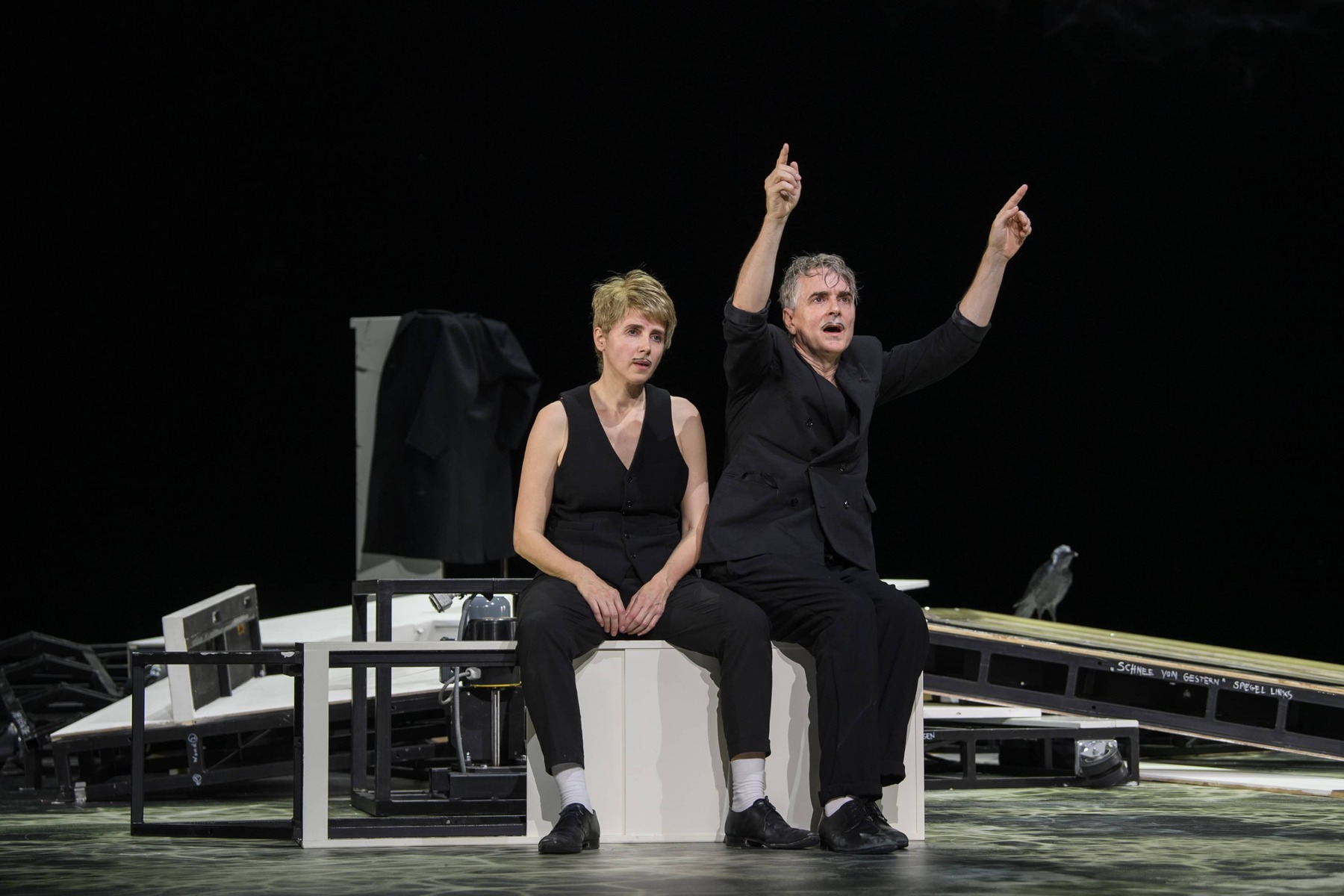
Director Jossi Wieler's interpretation diverges from Handke's original text by dividing the solitary narrator into two distinct characters, played by Jens Harzer and Marina Galic. This choice transforms the internal monologue into an organic dialogue, highlighting Handke's penchant for internal contradiction and self-argument. The actors, who are a couple in real life, bring an intimate and practiced dynamic to their roles, often interacting physically, interrupting each other, and engaging in playful conflict.
The production's premiere, coincidentally scheduled just two days after a staging of Goethe's "Faust" by director Ulrich Rasche, has invited thematic comparisons. Rasche's "Faust" featured characters compelled to move restlessly on a rotating disc, a concept that some observers noted could have complemented Handke's wandering protagonist. Wieler's staging, however, eschews such mechanical devices, focusing instead on the actors' dialogue and interaction.
There is nothing more to order within, and certainly not in the innermost – nothing more to discover that holds it together – less than nothing.
The visual presentation of the play further enhances its atmosphere. Harzer and Galic are costumed in matching midnight-gray coats, dark, worn suits without shirts, white socks, and dusty black shoes, all adorned with small mustaches. They inhabit a cluttered stage, strewn with the debris of furniture, creating a setting that evokes a sense of disarray and existential weariness. The pairing of the actors and their stylized appearance have drawn comparisons to characters from Samuel Beckett's plays, known for their absurdist and existential themes.
Wanderer, where are you?
DistantNews Editorial
Originally published by Die Presse in German. Translated, summarized, and contextualized by our editorial team with added local perspective. Read our editorial standards.
More Stories


From Our Blog

What Gets Lost (and Found) When News Is Translated

The Critical Role of Diaspora Media in Global News

What Travellers Should Know About Countries with Restricted Press

A Digital Nomad's Guide to Following Local News

How the Same Story Looks Different in Different Countries
