

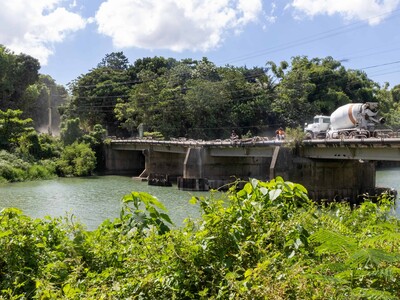
Hato Nuevo-Quita Sueño bridge remains deteriorated and without railings
Translated from Spanish and summarized by DistantNews. Read the original for the full story.
At a glance
News
Named sources
Context piece
- The Hato Nuevo-Quita Sueño bridge in the Dominican Republic remains in a state of significant deterioration, lacking essential safety railings.
- The unsafe structure poses a risk to motorcycles, cars, and even heavy trucks that use it to travel between communities.
- Despite past repairs and over a decade of authorities addressing the issue, the bridge's condition persists, with residents concerned about potential accidents.
The bridge connecting Hato Nuevo in Manoguayabo with the Quita Sueño municipal district in Haina continues to be a significant safety hazard due to its severe deterioration. Five months after its poor condition was first highlighted, the structure still lacks railings and protective barriers, leaving users exposed to the risk of falling into the Haina River below.
Vehicles of all sizes, including motorcycles, cars, all-terrain vehicles, and even large trucks and cement carriers, regularly traverse this vital link between communities. The absence of safety features poses a constant danger not only to drivers but also to pedestrians who must share the narrow space with passing vehicles.
Residents have expressed long-standing concerns about the bridge's state. Although authorities have addressed the bridge's intervention over the past decade, with various repairs undertaken, the structural problems persist. Locals report that railings have been destroyed by vehicle impacts or stolen by individuals for scrap metal, exacerbating the safety issues.
The bridge serves as a crucial passage for residents of several communities, including La Pared, Quita Sueño de Haina, Batey Bienvenido, and Hato Nuevo, Manoguayabo. The ongoing neglect of this vital infrastructure highlights a persistent problem that puts hundreds of users at risk daily.
About this summary
Originally published by Diario Libre in Spanish. Translated, summarized, and contextualized automatically by DistantNews, with a note on how the source frames the story. Not individually reviewed before publishing. How this works.
More Stories


From Our Blog

What Gets Lost (and Found) When News Is Translated

The Critical Role of Diaspora Media in Global News

What Travellers Should Know About Countries with Restricted Press

A Digital Nomad's Guide to Following Local News

How the Same Story Looks Different in Different Countries
