


Heatwaves and Real Estate: South Korea's Intertwined Crises
Translated from Korean, summarized and contextualized by DistantNews.
At a glance
Analysis
Sources not specified
Context piece
- South Korean society is grappling with the intertwined issues of extreme heat and the real estate market, linking natural phenomena to social structures.
- The article highlights how heat impacts are unevenly experienced due to differences in housing and urban environments, citing a significant temperature gap within Seoul.
- It critiques housing policy's focus on asset value over its role as social infrastructure for climate resilience, contrasting South Korea's approach with New York City's urban forest initiatives.
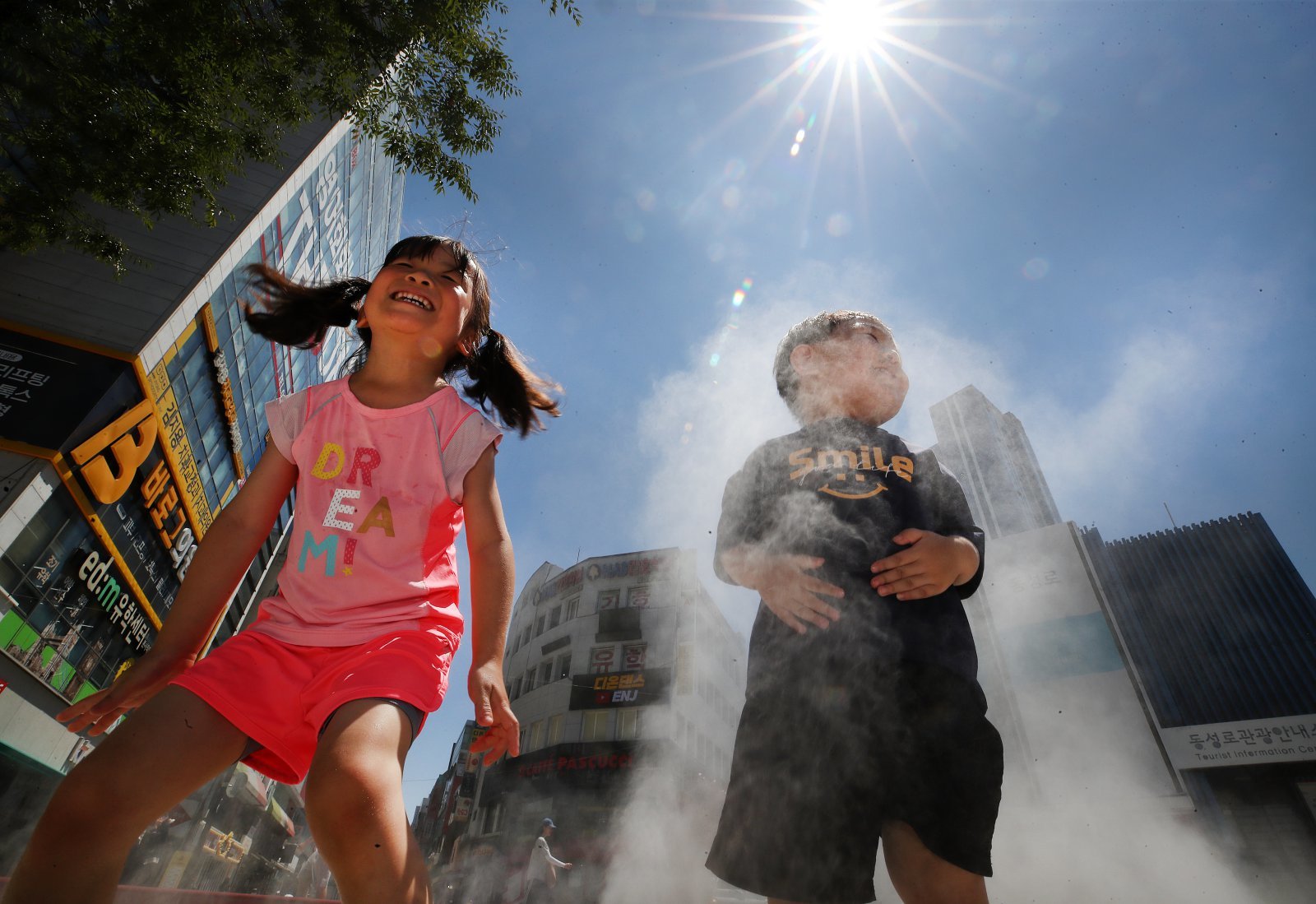
This summer, South Korea finds itself intensely focused on two critical issues: the scorching heatwaves and the volatile real estate market. While extreme heat is a natural phenomenon linked to climate change, its impact is deeply felt within homes and neighborhoods, creating a direct connection between environmental conditions and the housing sector.
Heatwaves arrive equally, but the ability to cope with them is experienced unequally due to differences in coping capacity.
Sociologist Eric Klinenberg's analysis of heatwaves reveals that while heat arrives equally, the ability to cope with it is profoundly unequal, often dictated by social structures. His study of the 1995 Chicago heatwave identified factors like social isolation among the elderly, decaying public facilities, and poor housing conditions as contributors to higher mortality rates in certain areas. This disparity is evident even within a single city like Seoul, where temperature differences of over 12 degrees Celsius were recorded between neighborhoods during a heatwave last year. These variations are attributed to differences in building density, the prevalence of asphalt and concrete, and the availability of green spaces like parks and forests.
Urban forests lower surrounding temperatures by 3 to 7 degrees Celsius.
The role of trees and parks in mitigating heat is significant, with urban forests capable of lowering surrounding temperatures by 3 to 7 degrees Celsius. This effect is already reflected in the real estate market through terms like 'forest-adjacent property' (supsekwon). However, the article argues that in South Korea, housing is primarily viewed as an asset rather than a living space. Consequently, disparities in asset ownership are translating into unequal capacities to withstand natural disasters like heatwaves. Parks and forests are increasingly seen as private assets rather than essential public infrastructure for citizen well-being.
Housing is viewed as an asset rather than a living space, and asset disparity has expanded to disparity in coping capacity against natural disasters like heatwaves.
Recent government proposals, such as the 2026 tax reform package that gradually increases property tax burdens for owners of ultra-high-priced and non-residential properties, have faced strong opposition, labeled as 'punitive taxation' or 'tax bombs.' The debate largely overlooks the crucial aspect of housing as an environment intertwined with social infrastructure like green spaces. In contrast, New York City's Mayor Eric Adams's plan to increase tree canopy cover to 30% of the city's area by 2040 underscores a recognition of housing environments as infrastructure for climate well-being and environmental justice. This focus on the public function of land and space for citizen health offers a significant contrast to South Korea's predominantly asset-centric housing policies.
New York City Mayor Eric Adams's plan to cover 30% of the city's area with tree canopy by 2040.
DistantNews Editorial
Originally published by Hankyoreh in Korean. Translated, summarized, and contextualized by our editorial team with added local perspective. Read our editorial standards.
More Stories


From Our Blog

What Gets Lost (and Found) When News Is Translated

The Critical Role of Diaspora Media in Global News

What Travellers Should Know About Countries with Restricted Press

A Digital Nomad's Guide to Following Local News

How the Same Story Looks Different in Different Countries
