


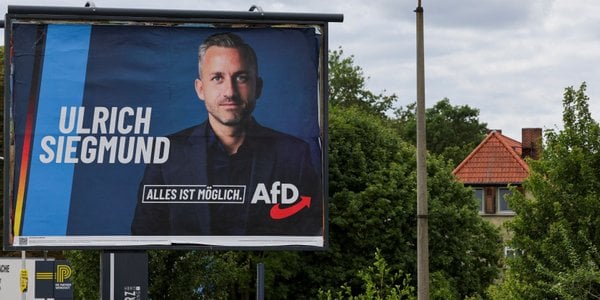
High Tension Before Saxony-Anhalt Elections; AfD Opponents Terrified
Translated from Polish and summarized by DistantNews. Read the original for the full story.
At a glance
News
Named sources
Context piece
- The Alternative for Germany (AfD) party is polling at 43% ahead of the Saxony-Anhalt state elections.
- Opponents express fear and surprise at the party's strong showing.
- A prominent economist notes that many voters are hesitant to openly declare support for the AfD.
Saxony-Anhalt is bracing for elections marked by significant tension, with the Alternative for Germany (AfD) party showing a commanding 43% in recent polls. This level of support has instilled fear among opponents and raised eyebrows among political observers and economists alike.
The strong polling numbers for the AfD stand in contrast to the sentiments expressed by some within the state. Professor Reint Gropp, who heads a key economic institute in Saxony-Anhalt, shared with Rzeczpospolita his surprise at the party's public appeal. "I don't know anyone who would openly admit they want to vote for AfD," he stated, suggesting a potential disconnect between private voter intentions and public declarations.
This sentiment hints at a complex electoral landscape where voters might be reluctant to voice their support for the AfD publicly, possibly due to social pressure or the party's controversial platform. The upcoming elections in Saxony-Anhalt are therefore being watched closely, not only for their outcome but also for the underlying dynamics of voter sentiment in the region.
I don't know anyone who would openly admit they want to vote for AfD.
About this summary
Originally published by Rzeczpospolita in Polish. Translated, summarized, and contextualized automatically by DistantNews, with a note on how the source frames the story. Not individually reviewed before publishing. How this works.
More Stories



From Our Blog

What Gets Lost (and Found) When News Is Translated

The Critical Role of Diaspora Media in Global News

What Travellers Should Know About Countries with Restricted Press

A Digital Nomad's Guide to Following Local News

How the Same Story Looks Different in Different Countries
