

Hormuz Insurance Premiums Soar, Threatening Global Food and Oil Supplies
Translated from English, summarized and contextualized by DistantNews.
TLDR
- Insurance premiums for vessels transiting the Strait of Hormuz have surged dramatically due to heightened military tensions.
- This increase threatens global oil and food supplies, particularly impacting vulnerable nations.
- Experts warn that the situation risks collapsing the international legal framework protecting trade and could lead to severe economic disruption.
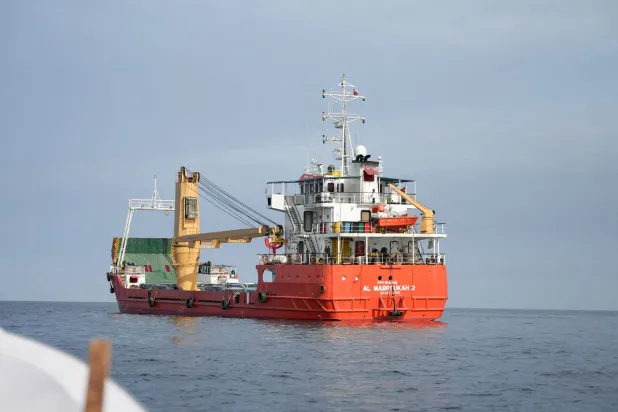
The strategic Strait of Hormuz, a critical artery for global energy and trade, is now under intense pressure not just from military posturing but from a burgeoning insurance crisis. War risk insurance premiums have skyrocketed, with costs for a single voyage of a large oil tanker potentially reaching millions of dollars, a stark contrast to the pre-escalation figures. This dramatic financial burden is a direct consequence of the escalating military tensions in the region, turning a vital maritime passage into a high-stakes gamble for international shipping.
Rabih El-Amine, head of the Lebanese Executives Council, powerfully described the Strait as the "single lung through which the global economy breathes." His words underscore the dire implications of its potential closure or disruption. Beyond the immediate impact on oil flows, the crisis poses a significant threat to the supply of essential goods like food and medicine, particularly for the world's poorest countries. The ripple effects are already being felt, with natural gas prices in Europe soaring and jet fuel becoming scarce in some airports. The potential for oil prices to reach $200 per barrel looms if the situation persists.
it has become the single lung through which the global economy breathes. When that lung is threatened, it is not only oil that suffocates, but food, medicine, and hope as well.
However, the concern extends beyond energy markets. The Strait of Hormuz is also a crucial conduit for agricultural exports, including a substantial portion of global urea shipments. India, for instance, relies heavily on the region for its fertilizer needs. The consequent surge in urea prices directly impacts agricultural production costs, leading to higher bread prices. El-Amine highlights that the heaviest burden falls not on wealthy nations but on impoverished families in Africa and South Asia, pushing an estimated 45 million people to the brink of acute food insecurity. This disparity in the impact of geopolitical crises is a critical, yet often overlooked, aspect of the current situation.
Asharq Al-Awsat's reporting emphasizes that this is not merely an economic or logistical challenge but a potential breakdown of the international legal and commercial framework that underpins global trade. When major insurers withdraw coverage, it signals a crisis of trust and a potential collapse of the system. The article frames this as a "moment of truth" for global shipping and international law, urging a resolution that considers the disproportionate impact on vulnerable populations and upholds the principles of free and secure trade.
When fertilizer prices rise, bread prices follow. The heaviest burden is not borne by European or American farmers, but by poor families in Africa and South Asia, where an estimated 45 million people are now on the brink of acute food insecurity.
DistantNews Editorial
Originally published by Asharq Al-Awsat in English. Translated, summarized, and contextualized by our editorial team with added local perspective. Read our editorial standards.
More Stories



From Our Blog

What Gets Lost (and Found) When News Is Translated

The Critical Role of Diaspora Media in Global News

What Travellers Should Know About Countries with Restricted Press

A Digital Nomad's Guide to Following Local News

How the Same Story Looks Different in Different Countries
