


Household loans surge by 6 trillion won in two months amid 'debt-to-invest' and housing demand
Translated from Korean, summarized and contextualized by DistantNews.
At a glance
News
Sources not specified
Context piece
- South Korean household debt has increased by over 6 trillion won in the past two months, surpassing the year-end balance for the first time this year.
- The rise is driven by increased "debt-to-invest" (bitu) demand fueled by a booming stock market and demand for home purchases in the Seoul metropolitan area.
- Banks are facing pressure to manage loan volumes strictly, especially with potential interest rate hikes looming.
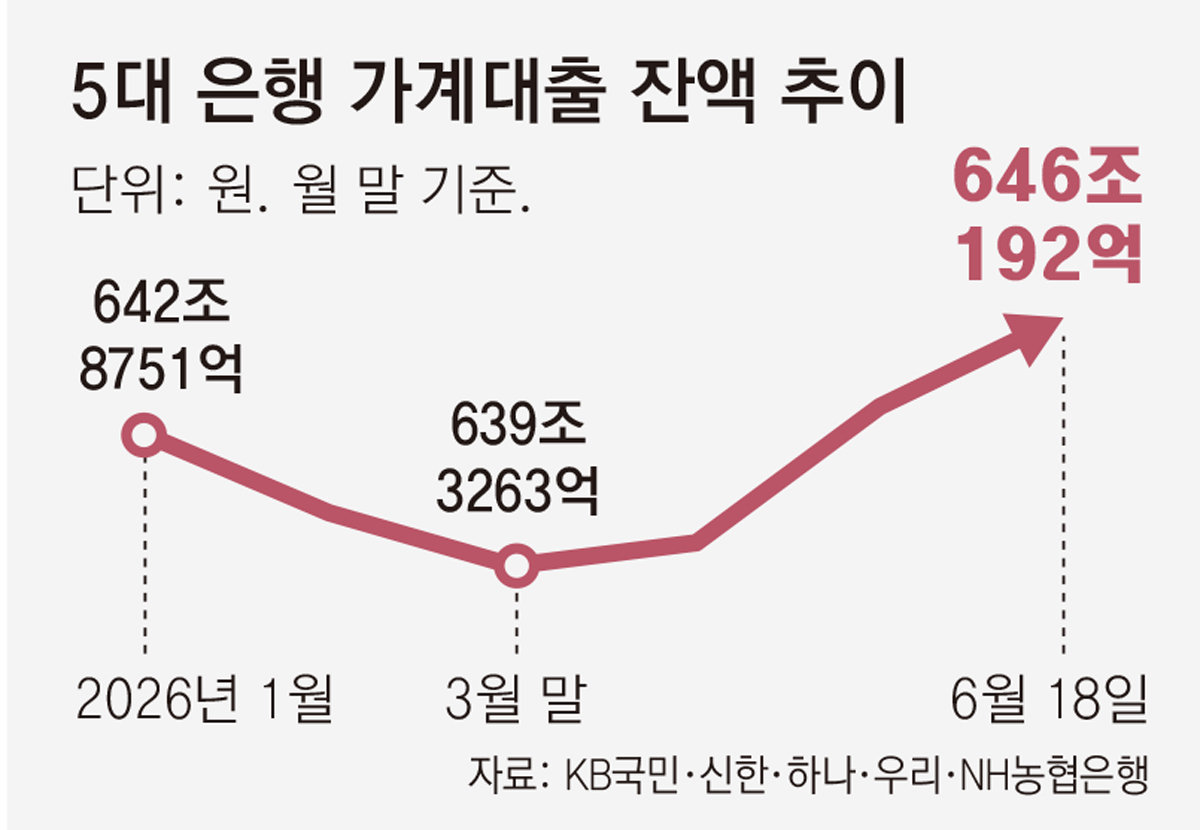
South Korean household debt is accelerating its growth after a period of slowdown, with total household loans at the five major banks increasing by over 6 trillion won in the last two months alone. This surge has pushed the total outstanding household loans past the 646 trillion won mark, exceeding the balance at the end of last year for the first time in 2024.
The primary drivers behind this rapid increase are twofold: a surge in "debt-to-invest" (bitu) activity, where individuals borrow money to invest in the stock market, and a renewed demand for home purchases, particularly in the Seoul metropolitan area. Personal credit loan balances have climbed by approximately 4 trillion won in just over a month and a half, significantly contributing to the overall debt growth.
Simultaneously, mortgage loan balances have reached a record high of 614.5352 trillion won. Banks had been actively managing household lending throughout the year, keeping balances below year-end figures. However, this trend reversed sharply in May, with the total loan amount increasing significantly. This sudden reversal puts pressure on banks that had set targets to limit household loan growth for the year.
With the Bank of Korea expected to consider further interest rate hikes, financial authorities and experts are calling for stricter loan management to alleviate household financial burdens. Concerns are mounting that rising interest rates on mortgages could significantly increase repayment burdens for households, potentially leading to reduced disposable income, decreased consumption, and a slowdown in domestic demand.
For low-income households, mortgage loans, if interest rates rise, the burden of repaying principal and interest will increase, and disposable income is expected to decrease rapidly. As income decreases, consumption will shrink, and domestic demand will be shaken.
DistantNews Editorial
Originally published by Dong-A Ilbo in Korean. Translated, summarized, and contextualized by our editorial team with added local perspective. Read our editorial standards.
More Stories



From Our Blog

What Gets Lost (and Found) When News Is Translated

The Critical Role of Diaspora Media in Global News

What Travellers Should Know About Countries with Restricted Press

A Digital Nomad's Guide to Following Local News

How the Same Story Looks Different in Different Countries
