

How Andy Warhol Created His Own Legend
Translated from Polish and summarized by DistantNews. Read the original for the full story.
At a glance
In-depth
Named sources
Context piece
- A Kraków exhibition examines Andy Warhol’s path from commercial design to pop-art icon and highlights his use of repetition, technology and mass media.
- The show includes more than 50 original works, album covers, films, Polaroids, posters, textiles and clothing, with some pieces displayed in Poland for the first time.
- International loans include works from private collections and institutions such as The Andy Warhol Museum in Pittsburgh and The Andy Warhol Foundation for the Visual Arts.
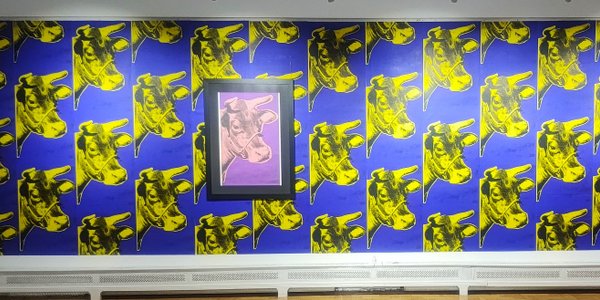
Andy Warhol’s legend began well before his most familiar pop-art images, and a new exhibition in Kraków focuses on that journey. “Andy Warhol. From Line to Legend” presents the artist’s working methods, his commercial projects and the media experiments that helped shape his public identity.
The exhibition at the Palace of Art brings together more than 50 original drawings, screen prints, Polaroids, posters and films. It also includes album and book covers, magazines, textiles and clothing. Some of the works are being shown in Poland for the first time, including original fabrics Warhol designed in the 1950s with printed motifs of buttons, shells, pretzels and ice cream.
The textile designs are accompanied by a display of nylon and silk dresses. It is not known whether Warhol made the garments himself, but the fabric designs were his. The exhibition’s curator, Wojtek Piotr Onak, says the show presents Warhol as an artist who embraced technology and treated every medium, from paper and fabric to film and computers, as a language of art.
Album covers form another major part of the display. Belgian journalist and collector Guy Minnebach lent designs including the banana cover for The Velvet Underground & Nico’s 1967 debut and the zipper sewn into a jeans photograph for The Rolling Stones’ “Sticky Fingers” in 1971. Warhol also created the cover for the Stones’ “Love You Live” in 1977, using his own Polaroids of the band.
Other covers feature Warhol-style portraits of Paul Anka, Liza Minnelli, Diana Ross, Aretha Franklin and John Lennon. For Lennon’s posthumous “Menlove Ave” album, Warhol used a photograph by Iain Macmillan and added colored neon reflections around the singer’s face. The show also includes typographic work, such as the asymmetrical lettering on a Thelonious Monk album. Loans came from collectors in Britain, Belgium, Poland and the United States, as well as Target Gallery London, The Andy Warhol Museum and The Andy Warhol Foundation. The exhibition is being presented only in Kraków.
We show Warhol as an artist who was not afraid of technology and understood that every medium, from paper and fabric to film and computers, could become a language of art. This exhibition is also a story about us, about the courage needed to move beyond established patterns and about art that forces us to look at the world again.
About this summary
Originally published by Rzeczpospolita in Polish. Translated, summarized, and contextualized automatically by DistantNews, with a note on how the source frames the story. Not individually reviewed before publishing. How this works.
More Stories



From Our Blog

What Gets Lost (and Found) When News Is Translated

The Critical Role of Diaspora Media in Global News

What Travellers Should Know About Countries with Restricted Press

A Digital Nomad's Guide to Following Local News

How the Same Story Looks Different in Different Countries
